Free Baby Scratch Mittens Pattern (Newborn, 0-6 Months)
Closed-tip cream mittens with a ribbed cuff and a small button tab — the small, fast project that solves a real newborn problem.
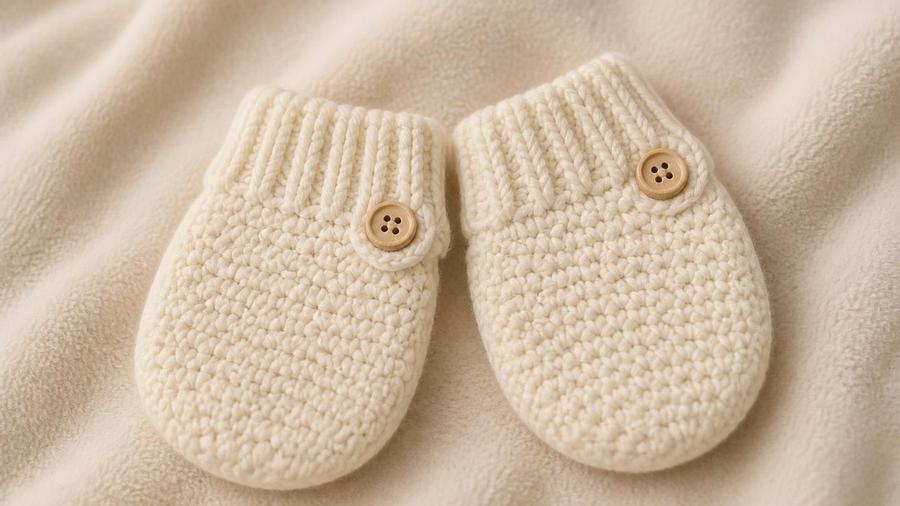
Nobody warns you about newborn fingernails until you're living with them. They're sharp, they grow fast, and a baby has zero awareness of where their own hands are going, which means a fresh scratch across a tiny cheek is genuinely common in the first few weeks. Scratch mittens are the low-effort fix, and I've made more pairs of these than almost anything else on this site, usually as a small add-on to a bigger baby gift, tucked into the same box as a blanket or a cardigan almost as an afterthought that ends up getting used the most.
This is a genuinely quick, satisfying project: a short ribbed cuff for stretch and grip, a few plain rounds for the hand, and a closed tip with no opening at all. There's no thumb gap, no finger shaping, nothing that a newborn's undeveloped hand coordination would need anyway. A small button tab at the cuff adds a bit of extra snugness without any long tie or cord anywhere near the wrist, and the whole pair typically takes well under an hour once you've made your first one.
Below is the full pattern in US terms, along with a note on exactly how this differs from our existing kids fingerless mitts pattern, sizing across the newborn window, and the small mistakes that make a pair less snug than it should be. If you haven't worked in the round before, our magic ring tutorial covers the basics.
Because it's such a small, fast project, this is also one of the easiest patterns on the site to keep a few pairs of on hand before you actually need them. A single pair uses barely any yarn, so it's worth making two or three at once the first time you sit down with this pattern, since a spare pair means you're never caught without one while the other is in the wash.
Materials
- About 40–60 yards of worsted-weight yarn
- 4mm (US G-6) crochet hook
- 2 small buttons, about ½in / 1.3cm diameter
- Yarn needle and scissors
Abbreviations (US terms)
| Abbr. | Means |
|---|---|
| ch | Chain |
| sc | Single crochet |
| BLO | Back loop only |
| st(s) | Stitch(es) |
| dec | Sc 2 sts together (decrease) |
| rnd(s) | Round(s) |
See our abbreviations glossary for the full list including UK terms.
Gauge
15 sc and 16 rounds measures about 4in / 10cm square with a 4mm hook and worsted yarn. Gauge matters here since a mitten that's too loose will simply slip off.
Notes
- Written in US terms, worked in a continuous spiral. Make 2, one for each hand (the pattern is identical for both).
- Fully closed at the fingertip end, with no thumb opening, unlike our kids fingerless mitts pattern for older children.
- Sizes given are 0–3 and 3–6 months (sizing notes below).
Pattern
Chain 15, join with a slip stitch to form a ring, being careful not to twist. Work 6 rounds of single crochet in the back loop only. Working consistently in the back loop creates the stretchy, ribbed texture visible in the photo. (15 sts each round)
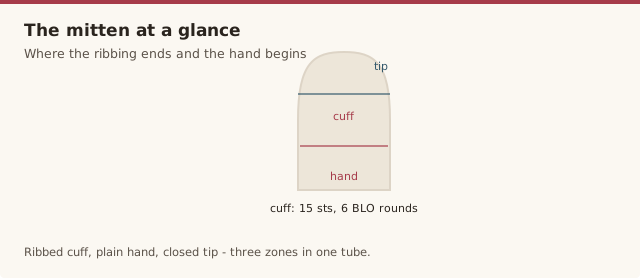
Continue in the round, working single crochet through both loops as usual (not back loop only) for 5 rounds even. (15 sts each round)
Round 1: [sc 3, dec] around. (12)
Round 2: dec around. (6) Fasten off, leaving a short tail. Weave through the remaining stitches, pull closed, and weave in the end firmly, since this seam takes the most handling of any part of the mitten. No stuffing is needed; the mitten stays soft and flat.
Cut a short length of yarn or crochet a tiny 6-stitch chain-and-sc strap. Sew one end securely to the top edge of the cuff, and add a small 1-chain buttonhole loop at the other end. Sew a button to the opposite side of the cuff to align with the loop, giving a small amount of adjustable snugness without a long tie. This detail is genuinely optional; the ribbed cuff alone holds the mitten on well for most babies, so feel free to skip the strap and button entirely for the simplest possible version.
How this differs from our kids mitts
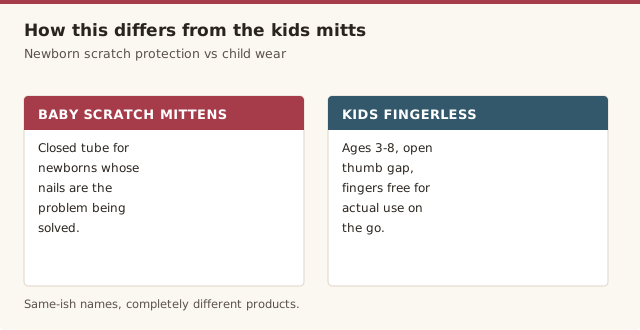
It's worth being explicit about this, since the names sound similar: our existing kids fingerless mitts pattern is for ages 3 to 8, worked as an open tube with a thumb gap, designed to keep hands warm while leaving fingers free for actual use. These baby scratch mittens are the opposite kind of product, built for newborns whose hands don't need dexterity yet and whose sharp nails are the actual problem being solved. The construction reflects that difference completely: no thumb opening, no finger shaping, a fully closed tip, and a much smaller overall size.
If you're making a set of newborn items and wondering whether to include both patterns, the short answer is you generally won't need to. A newborn wears scratch mittens for a matter of weeks, not years, and by the time hand dexterity and warmth become the priority instead of scratch protection, a baby has usually outgrown the smaller scale of this pattern anyway and is ready for something closer to the kids mitts sizing.
Sizing by age
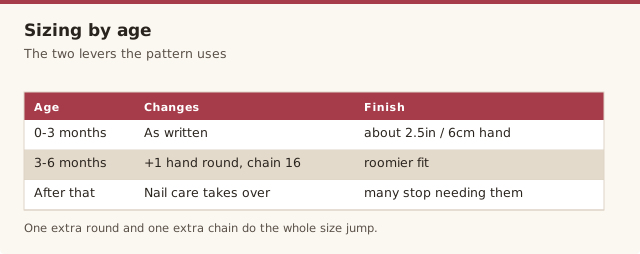
As written, this pattern fits 0–3 months, with a finished hand length of about 2.5in / 6cm from cuff to tip. For 3–6 months, work 1 extra round in the hand section before closing the tip, and add 1 extra stitch to the foundation chain (16 instead of 15) for a slightly roomier fit. Many babies stop needing scratch mittens somewhere in this window as nail trimming becomes part of the routine and hand movements become more deliberate, so it's worth making the smaller size first rather than assuming you'll need the larger one.
If you're not sure which size to make as a gift before the baby has arrived, the 0–3 month size is the safer default, since newborn scratching is most intense in the first few weeks and a slightly snug fit is easier to manage than a mitten so loose it works itself off during sleep.
Choosing yarn and hook size
A soft worsted-weight yarn with a 4mm hook gives a snug, warm mitten without adding bulk to such small hands. Choose a machine-washable acrylic, cotton-acrylic blend, or superwash wool, and avoid anything with a rough or fuzzy texture, since these sit directly against a baby's skin for extended periods. Our yarn weight guide covers fiber choices in more detail if you're unsure what to pick.
Since this project uses so little yarn, it's also a genuinely good candidate for a small leftover ball you already have on hand from a bigger project, as long as the fiber content and softness are appropriate for a newborn's skin.
Care & washing
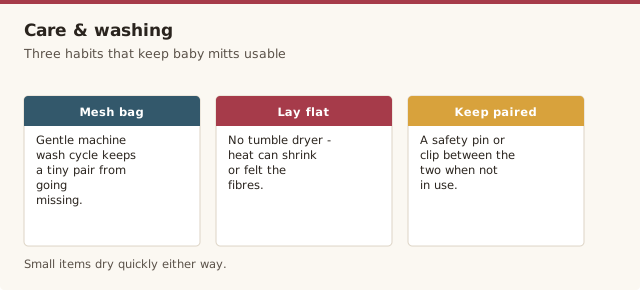
Machine wash on a gentle cycle inside a mesh laundry bag, which protects the small buttons and keeps a pair of tiny mittens from disappearing into the folds of bigger laundry. Lay flat to dry rather than tumble drying, since heat can shrink or felt some fibers, and a small item like this dries quickly either way. It's also worth attaching a small safety pin or clip between the two mittens when they're not in use, purely so the pair doesn't get separated in the wash or the diaper bag.
Common mistakes & fixes
Fix: check that the ribbed cuff rounds were worked consistently in the back loop only; skipping this detail even for one round noticeably reduces the stretch and grip that keeps the cuff snug.
Fix: pull the fastening tail through evenly and snugly when closing the final round, and weave the end back through a few stitches on the inside rather than leaving a bulky knot.
Fix: count rounds carefully on both, and lay them flat side by side to compare length before fastening off either one.
Fix: check your gauge swatch; loose stitches at this small a scale are more noticeable than on a larger project, and sizing down your hook by half a millimeter usually tightens things up.
Fix: sew the strap on with several secure passes through a sturdy anchor point rather than a single loose stitch, and check it periodically along with the button itself.
Our pick
Lion Brand Pound of Love Yarn
A soft, machine-washable worsted-weight yarn with good stitch definition, well suited to a small, snug project like these mittens.
View on Amazon →Frequently asked questions
How are these different from your kids fingerless mitts pattern?
They're a completely different product for a completely different age. The kids fingerless mitts pattern is for ages 3-8 and has an open thumb and finger area for dexterity. These baby scratch mittens are for newborns 0-6 months, fully closed at the tip with no opening at all, and exist specifically to stop a baby from scratching their own face with sharp newborn nails.
What age are these scratch mittens for?
The pattern as written fits 0-3 months. A sizing note is included for scaling up to 3-6 months, though many babies stop needing scratch mittens once their nails can be trimmed regularly and their hand movements become more controlled, often somewhere in that window.
Why are the mittens closed at the tip instead of having a thumb opening?
A newborn's hand coordination isn't developed enough for a thumb opening to matter yet, and a fully closed tip gives complete, reliable scratch protection without any gap a fingernail could work through. Older babies and toddlers, who need actual hand dexterity, are better served by an open pattern like our kids fingerless mitts.
How do the mittens stay on a newborn's hands?
A snug ribbed cuff worked in back-loop-only stitches provides most of the stretch and grip needed to stay on. A small button tab adds a little extra snugness without any long tie or cord around the wrist.
What yarn and hook size should I use for newborn mittens?
A soft worsted-weight yarn with a 4mm hook gives a snug, warm fabric without excess bulk on such small hands. Choose a machine-washable acrylic, cotton blend, or superwash wool with no rough or scratchy texture.
Can I wash crochet baby mittens in the machine?
Yes, as long as the yarn is machine-washable. Wash on a gentle cycle inside a mesh bag to protect the small buttons, and lay flat to dry.
CrochetGuides is a participant in the Amazon Services LLC Associates Program. As an Amazon Associate we earn from qualifying purchases, at no extra cost to you.