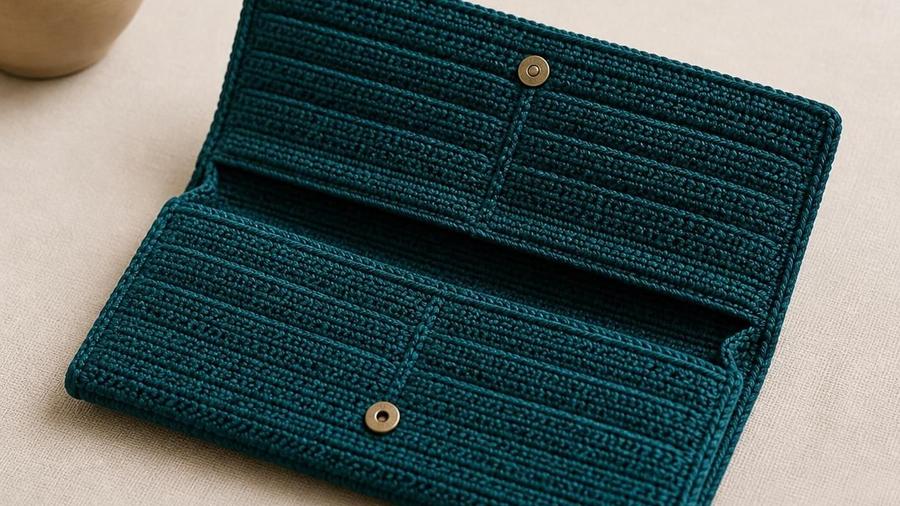
A folded bifold crochet wallet with dedicated card-slot pockets, a bill compartment, and a secure snap closure, worked in dense cotton fabric.
Updated 2026 · US terms · About 4.5x3.5in folded
Our existing coin purse pattern gets a specific job done well: it holds loose change behind a metal frame that snaps shut with a satisfying click. It has never been the right answer for someone who wants somewhere to keep actual cards, and I finally sat down to solve that gap properly rather than trying to stretch the coin purse into something it was never built to be. A wallet needs a completely different structure: a flat fold rather than a frame, dedicated pockets that hold cards without gripping them so tightly they're hard to pull out, and fabric dense enough to hold its own folded shape without any metal support at all.
This pattern covers all three of those requirements directly: a tightly worked main body panel dense enough to fold and hold its shape unassisted, separate small card-slot pockets stitched on at the bottom and sides only so cards slide in and out from the open top, and a snap closure placed by folding the finished, empty wallet first and marking the exact spot, rather than guessing beforehand.
A crocheted wallet like this makes a genuinely distinct, useful gift specifically because it solves a different problem than most of the small crochet accessories already on this site. Where a coin purse, a bookmark, or a scrunchie are all things people enjoy but don't necessarily need, a wallet gets picked up and used literally every single day, which is exactly why the fabric density and the closure reliability matter more here than in almost any other small project on this site.
Worked in single crochet through both loops, tightly, in a dense worsted-weight cotton yarn.
Distinct from our coin purse pattern, this has card slots and a flat fold-over closure rather than a metal frame.
Go down a hook size from what the yarn label recommends and work tightly for a firm, structural fabric.
Pattern
Main body
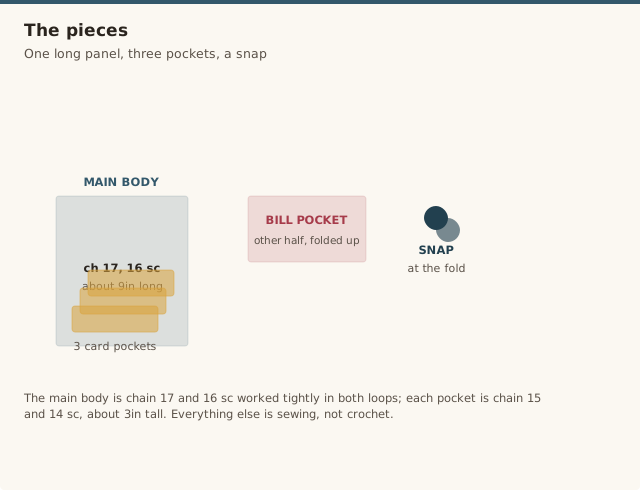
Ch 17, turn. Row 1: sc in 2nd ch from hook and each ch across (16), turn. Rows 2 onward: ch 1, sc through both loops in each st across, turn. Repeat until the rectangle measures about 9in long (the full unfolded length), keeping tension tight and even throughout.
Card-slot pockets (make 3)
Ch 15, turn. Row 1: sc across (14), turn. Repeat rows for about 3in of height, working at the same tight tension as the main body. Fasten off leaving a tail for sewing.
Assembly, pockets
Position the three pockets, slightly offset in height (like a fan of cards) or stacked directly on top of each other, onto one half of the main body. Sew each pocket along its bottom edge and both side edges only, leaving the top edge completely open so a card can slide in.
Assembly, fold and closure
Fold the finished, empty main body panel in half along its width to find the natural fold line. With the wallet still folded and empty, mark the exact position for both halves of the snap with pins. Unfold, sew each half of the snap to its marked position on the inside faces, then fold and test the closure before considering the wallet finished.
Bill compartment
On the half of the main body without card pockets, fold up the bottom few inches and sew the side edges to form an open-top pocket sized to hold folded bills. Check the depth against actual folded banknotes before finishing that seam permanently.
Getting fabric dense enough to hold shape
A wallet has no frame, no rigid insert, nothing structural at all beyond the fabric itself, which means the fabric has to do all the work a coin purse's metal frame would otherwise handle. Single crochet worked through both loops, at a tension tighter than you'd use for a typical project, and with a hook a full size smaller than the yarn label recommends, produces a noticeably denser fabric than the same stitch worked at standard tension. That density is the entire reason this wallet can fold and hold its shape on its own.
If your first swatch feels floppy rather than structural, don't assume a different stitch pattern is needed, try going down another hook size first. It's easy to underestimate just how much smaller a hook needs to be to meaningfully change fabric density; going down half a size often isn't enough, while a full size down usually is.
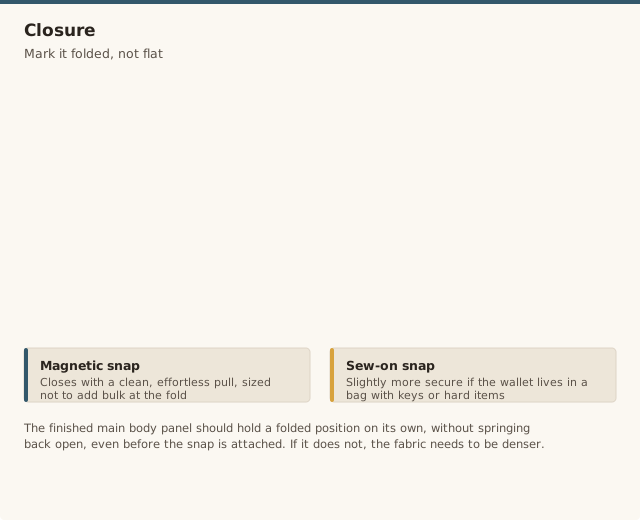
Worked correctly, the finished main body panel should hold a folded position on its own, without springing back open, even before the snap is attached. If it doesn't, that's a reliable sign the fabric needs to be denser rather than a sign that something else in the construction is wrong.
Attaching pockets that actually work
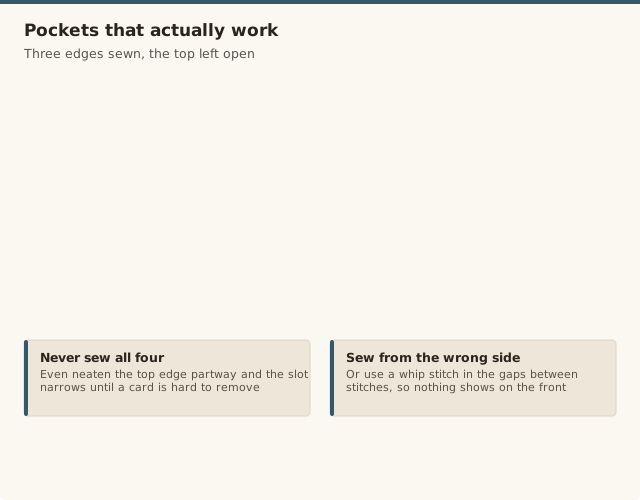
The instruction to sew each card pocket only along its bottom and side edges, leaving the top completely open, matters more than it might seem on first read. Sewing a pocket closed along all four sides would obviously trap a card inside with no way to remove it, but even sewing the top edge just partially, to "neaten" the opening, tends to narrow the usable slot enough to make sliding a card in and out unnecessarily difficult.
Leave a small amount of ease in the side-seam stitching as well, rather than pulling it snug against the pocket panel's edges. A pocket sewn on with zero ease grips a card tightly enough to make one-handed removal awkward, while a small amount of slack lets a card slide freely without the pocket looking loose or poorly made from the outside.
Sew from the wrong side of the fabric wherever the construction allows, or use a whip stitch that sits in the natural gaps between stitches rather than through the visible face of the work, since visible sewing stitches on the front of a wallet read as an unfinished detail even when the actual construction underneath is solid.
Sizing and layout variations
The dimensions given here fit standard-size cards comfortably with a little ease, but it's worth double-checking against your own cards before starting, since some transit passes and hotel key cards run slightly larger than a standard bank card and won't fit a pocket sized too tightly around the smaller standard. Add a quarter inch of width to each pocket panel if you know you'll be carrying anything outside the standard card dimensions regularly.
A longer, trifold layout is a reasonable variation once you're comfortable with the bifold construction: work the main body panel roughly 50% longer, fold it in thirds instead of in half, and add a fourth card slot to the additional panel created by the extra fold. The same dense-fabric and pocket-attachment principles apply directly, only the overall proportions change.
For a slimmer, minimalist version with fewer pockets, two card slots plus the bill compartment is often plenty for someone who carries mostly digital payment and just needs an ID, one card, and a little cash. Removing a pocket doesn't require any other adjustment to the pattern, the main body panel and closure stay exactly the same regardless of how many card slots you choose to include.
Structure and closure mistakes
Mistake: the wallet fabric is too floppy to hold its folded shape.
Fix: use a firmer cotton yarn and go down a hook size from what the yarn label suggests, working tightly, since a wallet needs much denser fabric than most crochet projects.
Mistake: the card slots are sewn on too tightly, making cards hard to remove.
Fix: leave a small amount of ease when stitching each card pocket's side seams rather than pulling them snug, and test with an actual card before finishing all the pockets.
Mistake: the snap closure doesn't align once the wallet is folded.
Fix: fold the finished, empty wallet closed first and mark the exact snap placement with pins before sewing either half of the snap on, rather than guessing the position beforehand.
Mistake: the bill compartment is too shallow, so cash falls out.
Fix: check the compartment depth against actual folded banknotes before finishing that seam, not just against a generic measurement.
Mistake: visible sewing stitches show on the right side where the card pockets attach.
Fix: sew the pocket panels on from the wrong side wherever the construction allows, or use a whip stitch that sits in the space between stitches rather than through the visible surface of the fabric.
Our pick for the snap closure
Hardware
KAM Snaps Magnetic Snap Closures, 14mm
A genuinely strong magnetic snap that closes with a clean, effortless pull, sized well for a small dense-fabric wallet without adding noticeable bulk at the fold.
Whatever layout you settle on, work a full test swatch of the main body fabric before committing to the actual wallet-sized rectangle, checking both the density and the finished fold behavior. A few extra minutes spent confirming the fabric holds its shape at swatch scale saves having to redo an entire main body panel after discovering the tension was too loose only once the whole piece was finished.
Wallet FAQ
How is this different from the coin purse pattern?
The coin purse has no card slots and closes with a metal kiss-lock frame, while this wallet folds flat bifold-style, holds multiple cards in dedicated pockets, and closes with a snap at the fold. They're built for genuinely different jobs, loose change versus cards and cash.
What yarn holds structure best for something that gets handled daily?
A sturdy worsted-weight cotton, worked tightly with a hook a size smaller than the yarn label suggests, gives the dense, firm fabric a wallet needs to hold its folded shape without a frame. A looser or fuzzier yarn won't hold structure the same way even in the same weight category.
How many card slots does this pattern include, and can more be added?
This pattern includes three card-slot pockets as written, and additional slots can be added in the same construction method, sewn on at the bottom and sides only, as long as the wallet's overall thickness when folded still feels reasonable to you.
Magnetic snap versus sew-on snap for the closure?
A magnetic snap closes with a satisfying, effortless pull and works well on a firm, dense fabric like this one, while a sew-on snap is a slightly more secure choice if the wallet will be dropped in a bag with keys or other hard items that could catch a magnetic snap open.
How much yarn does the project take?
About 90-120 yards of worsted-weight cotton, depending on how many card slots you add and the wallet's final dimensions.
Can a zipper coin pocket be added?
Yes, a small zippered pocket sewn into the bill compartment, or as its own additional panel, is a reasonable addition once you're comfortable with the base construction, though it does add a sewing step beyond what this pattern covers as written.
Nora has been teaching crochet for 12 years, from absolute beginners to people coming back to the craft after decades away. She started CrochetGuides to write the clear, honest instructions she wishes she'd had when she was learning — the ones that actually work the first time.
CrochetGuides is a participant in the Amazon Services LLC Associates Program. As an Amazon Associate we earn from qualifying purchases, at no extra cost to you.