How to Block a Crochet Project (And When You Actually Need To)
What blocking does, the three common methods, and how to tell whether your project actually needs it.
In my classes I can always tell who has blocked before, because they're the only ones who don't look surprised when their finished project sits flat. The mistake I see most often is treating blocking as optional and then wondering why two garment panels won't match. A few years back a student brought in twenty-four granny squares for a blanket, every one a slightly different size, and she was ready to abandon the whole project. We spent an afternoon spraying, pinning, and waiting, and by evening each square sat square against the ruler. Blocking didn't fix her stitching — her squares were already good — it just let them show it. That one extra step was the difference between a blanket she loved and one she never finished.
When blocking actually helps
Blocking is worth doing for:
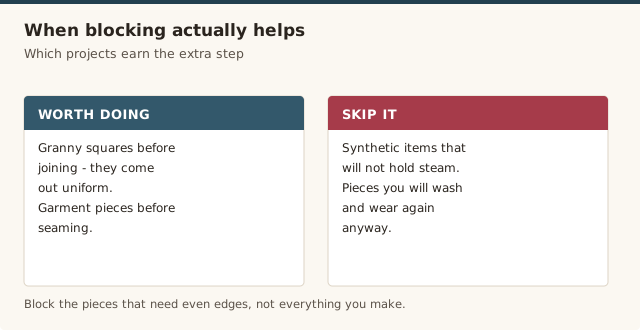
- Granny squares before joining them — makes edges straighter and squares more uniform in size, covered in our granny square tutorial.
- Garment pieces before seaming, so panels lie flat and match up correctly.
- Lace or open-stitch patterns, where blocking opens up the stitch pattern and makes it visible.
- Curled edges on single crochet pieces — also addressed in our common mistakes guide.
It's rarely worth it for amigurumi (stuffing already holds the shape) or heavily textured stitches, where flattening can actually hide the texture you were trying to show.
Three common methods
Wet blocking
Submerge the piece in cool water until fully damp, gently squeeze out excess (don't wring), then pin it flat to the finished dimensions on a blocking mat or towel. Leave to dry completely before unpinning. Works best on natural fibres like wool and cotton.
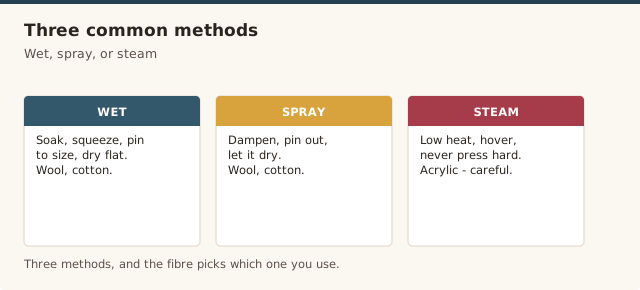
Spray blocking
Pin the piece to shape first, then mist it with water from a spray bottle until damp, rather than fully submerging it. Gentler and faster than wet blocking, and a reasonable middle ground for pieces you don't want to fully soak.
Steam blocking
Hold a steamer or iron on a steam setting a few centimetres above the pinned piece — never touch the iron directly to the fabric. This is the method that actually works on acrylic, since acrylic fibres respond to heat rather than water. Go slowly and check often; too much heat can flatten stitches permanently.
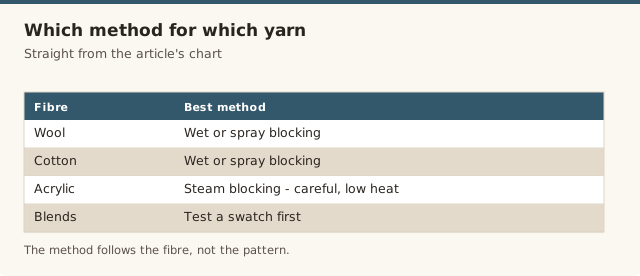
Table: which method for which yarn
| Fibre | Best method | Why, and what to watch |
|---|---|---|
| Wool | Wet or spray blocking | Wool has natural elasticity and spring, so it stretches to a shape and springs back. Full wet blocking gives the most even, permanent result. Watch for it growing when you soak it — measure before and after. |
| Cotton | Wet or spray blocking | Cotton has almost no elasticity, so it holds exactly the shape you give it, which makes wet blocking precise and predictable. Steam alone is often enough and much faster. |
| Acrylic | Steam blocking, with care | Acrylic is a plastic-based fibre, so heat changes it permanently. Hold the iron above the fabric and never touch it, or the piece will melt. Overheating "kills" the fibre: it permanently loses elasticity and goes limp and shiny, which some people do on purpose for drape. Note that blocking won't reliably make acrylic bigger or smaller, so measure before you start. |
| Alpaca | Wet blocking, pinned to the exact size you want | Alpaca has almost no memory, so once it changes shape it tends to stay there, and it can grow when handled while wet. Pin it to the exact finished measurements, not slightly larger, and handle it gently rather than wringing or twisting. |
| Mohair and other halo yarns | Wet blocking, pinned loosely | Mohair blooms dramatically when wet, which is what gives it its signature fuzz. Don't pin tightly or the pins flatten the halo and become hard to find, and let it dry completely untouched so the fibres can fluff out. |
| Blends | Test a swatch first | Behaviour depends on the dominant fibre, and blends vary a lot between products. Wash or steam a small offcut before committing to a method. |
| Novelty and fluffy yarns | Steam blocking | Bouclé and brushed yarns hide their own structure, so pinning flat doesn't do much. Steam and let the fibres settle instead of forcing them into position. |
Whatever the fibre, dry the piece completely flat before using or storing it. A blocked piece that's still slightly damp will take the shape of wherever you leave it, which undoes the work you just did.
What you actually need
Blocking doesn't require a big kit. At minimum you need something to pin into and something rustproof to pin with: a foam blocking mat is worth owning if you block often, but a clean towel laid over carpet works for an occasional project. Rustproof T-pins hold shape without leaving marks or rust spots on damp fabric — regular sewing pins can leave a stain if left in too long.
A spray bottle filled with plain water covers spray blocking entirely. Blocking wires, which thread through the edge of a piece to keep straight lines perfectly straight, are a nice upgrade for garment panels but not something a beginner needs to buy before a first attempt.
Common mistakes & fixes
Fix: this usually means it was pulled to fit a size larger than the pattern intended, rather than pinned to the actual finished measurements. Measure and pin to the pattern's stated dimensions, not as far as the damp fabric will physically stretch.
Fix: this isn't a technique error — acrylic fibres simply don't respond much to water the way wool and cotton do. Switch to steam blocking instead, holding the steamer a few centimetres above the fabric rather than touching it directly.
Fix: both are usually better left unblocked. Stuffing already holds an amigurumi's shape, and flattening textured stitches like popcorns or bobbles under pins can press the texture flat instead of highlighting it.
A demonstration of wet blocking, useful for seeing how a piece changes shape before and after.
Frequently asked questions
What does blocking actually do to a crochet project?
Blocking dampens the fibres and lets you reshape and flatten the piece as it dries, which relaxes uneven tension, straightens curled edges, and can adjust the finished dimensions slightly.
Do all yarn fibres block the same way?
No. Natural fibres like wool and cotton hold a blocked shape well. Acrylic yarn barely responds to wet blocking and needs steam blocking instead, done carefully, since heat can flatten or damage the stitches if overdone.
Does every crochet project need to be blocked?
No. Amigurumi and most toys are never blocked. Blocking mainly helps flat pieces like garment panels, blankets, and granny squares, where an even, flat finish matters for the final look or for joining pieces together.
What equipment do I actually need to block a crochet project?
At minimum, something to pin into (a foam blocking mat, or even a clean towel over carpet) and rustproof T-pins. A spray bottle covers spray blocking, and blocking wires are a nice-to-have for straight garment edges but not required for most beginner projects.
Can I over-block a crochet project?
Yes. Stretching a piece too aggressively to hit exact dimensions can permanently distort the stitches, especially on natural fibres that reshape easily when wet. Pin to the pattern's stated measurements rather than pulling as far as the fabric will physically go.
How long does a blocked crochet project take to dry?
Most pieces dry overnight, though wool and other thick natural fibres can take a full 24 hours. Don't unpin while the piece is even slightly damp, or it will dry back into its old shape.
Can I block a crochet blanket without buying blocking mats?
Yes. A clean, dry towel spread over carpet or a spare bed works for an occasional project, as long as your pins are rustproof. A dedicated set of blocking mats is only worth buying if you block regularly.
CrochetGuides is a participant in the Amazon Services LLC Associates Program. As an Amazon Associate we earn from qualifying purchases, at no extra cost to you.