Four Crochet Mistakes, and How to Fix Them Fast
Curling edges, mystery holes, and tension creep — diagnosed and solved.
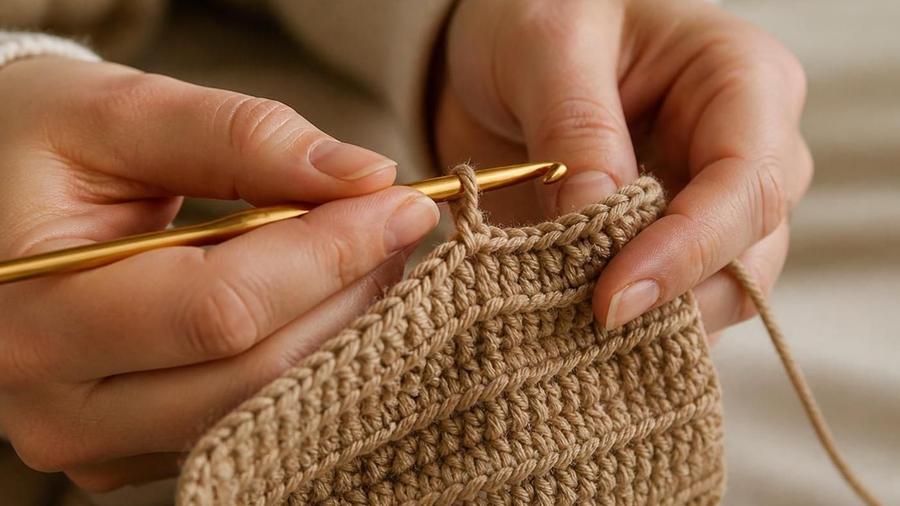
In my first year of teaching, a student frogged an entire baby blanket because she was convinced she'd ruined it, when the real problem was a single skipped stitch at the edge of a row that had snowballed into a wobbling border. I still think about how much work she lost to something that should have been a five-minute fix. Over twelve years I've learned that the mistakes people bring to my classes aren't endless — they're the same handful of problems wearing different disguises. Curling edges, mystery holes, tension that loosens as the evening goes on, and rows that quietly change width are the four I see again and again. Name them once and they stop being disasters.
Your project curls at the edges
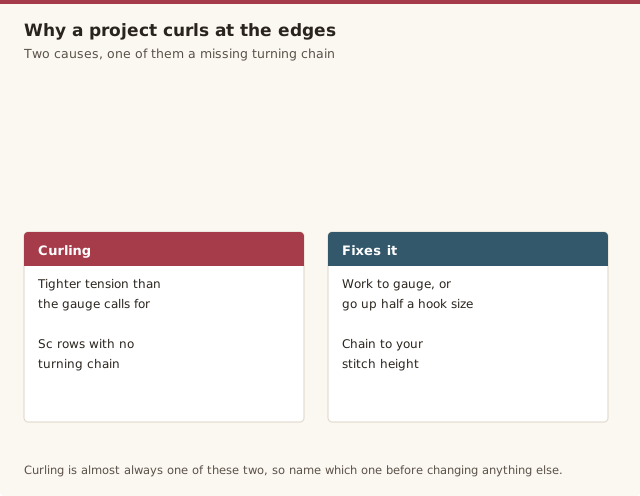
Cause: tension tighter than the pattern's gauge, or single crochet rows without a turning chain that matches stitch height.
Fix: go up half a hook size and re-check your gauge swatch. If it's a single crochet piece, confirm you're using the turning chain height the pattern specifies. Not sure which hook to try next? See our hook size guide and our conversion chart. For the full breakdown, including how to fix a piece that's already curling, see our dedicated guide to fixing curling edges.
Unexplained holes in the fabric
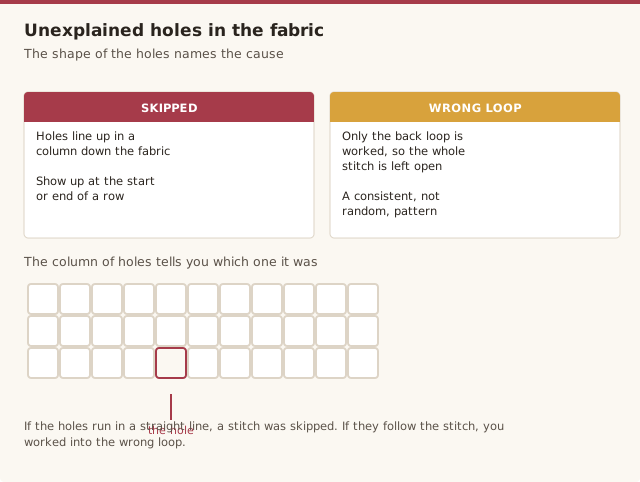
Cause: a skipped stitch, most often at the start or end of a row, or working into the wrong loop.
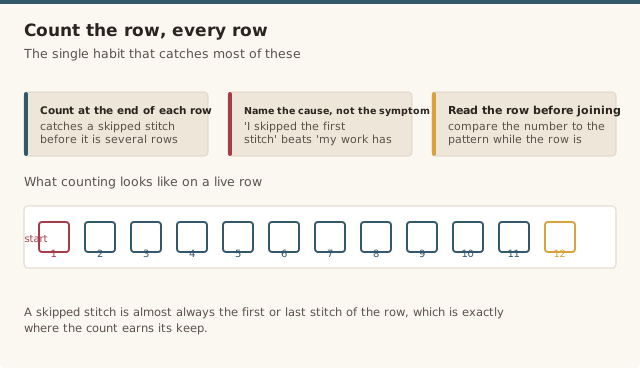
Fix: count stitches at the end of every row while learning. If you find a hole after the fact, it's usually faster to frog back to it than to try to patch it invisibly. A set of stitch markers makes it much easier to spot exactly where a row starts and ends.
Tension gets looser as you go
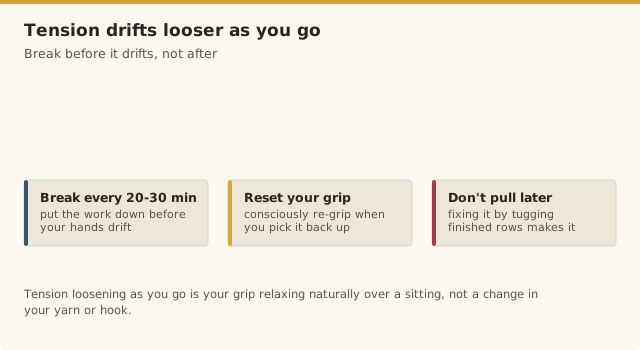
Cause: your grip relaxes naturally the longer you crochet in one sitting.
Fix: take short breaks every 20–30 minutes and consciously reset your grip when you pick the work back up, rather than trying to correct it by pulling stitches tighter later. If gauge itself is unfamiliar territory, our guide to reading a pattern covers it in more depth.
Rows get wider or narrower without you increasing or decreasing
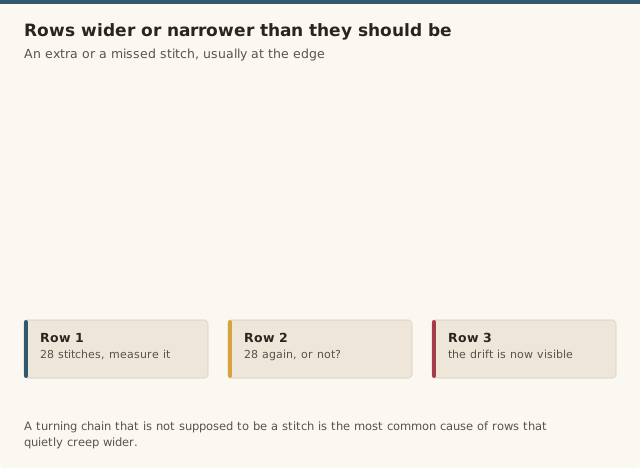
Cause: an accidental extra stitch (often the turning chain being counted as a stitch when it shouldn't be) or a missed stitch at the row's edge.
Fix: check the pattern's instructions on whether the turning chain counts as a stitch — this single detail causes more width drift than almost anything else.
A stitch slips off the hook and a few rows start to unravel
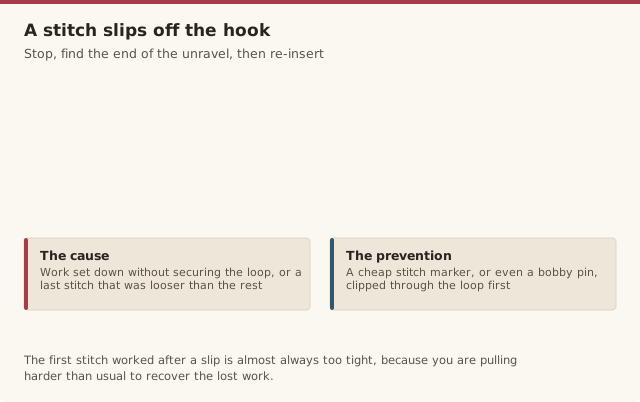
Cause: the work was set down without securing the loop, or the last stitch worked was looser than the rest and slid free on its own.
Fix: stop crocheting the moment you notice, before adding new stitches makes the unraveled loop harder to find. Pull gently on the working yarn to see exactly how far it's come undone, then re-insert your hook into the last correct stitch from the front, matching the loop orientation of the surrounding stitches, before picking back up where you left off. A cheap stitch marker or even a bobby pin clipped through the working loop before setting the project down prevents this from happening at all.
A rundown of frequent beginner mistakes and simple fixes, useful for spotting the same issues in your own work.
Frequently asked questions
Why does my crochet project curl at the edges?
Curling is almost always caused by tension that's tighter than the pattern's gauge, or by working single crochet in straight rows without turning chains that match your stitch height. Going up half a hook size usually resolves it.
Why do I have random holes in my crochet fabric?
Small unintended holes usually come from accidentally skipping a stitch, most often the first or last stitch in a row, or from working into the wrong loop. Counting stitches at the end of each row catches this before it's several rows old.
How do I fix uneven tension across a project?
Tension typically loosens as a crocheter relaxes over a session. Taking short breaks and consciously resetting your grip every few rows keeps tension more consistent than trying to force it tighter later.
What do I do if a stitch slips off my hook and starts to unravel?
Stop immediately rather than continuing to crochet, since new stitches will make the unraveled loop harder to find. Pull gently on the working yarn to see how far it unravels, then re-insert your hook into the last correct stitch from the front, matching the loop orientation of the stitches around it, before continuing.
Why does my yarn keep splitting or fraying as I crochet?
This is usually the hook, not the yarn. A hook with a sharper or more angular head can catch individual plies of a loosely spun yarn. Try a hook with a smoother, more rounded head, or switch to a tighter-plied yarn if splitting continues across different hooks.
Should I frog my whole project to fix one mistake?
Usually not. If the mistake is recent, frog back to it only. If it's a small hole or skipped stitch, patching or working a repair is often invisible once the piece is finished and blocked, so frogging everything is rarely the quickest fix.
How do I stop making the same mistake over and over?
Name the specific cause rather than the symptom. Once you can say "I skipped the first stitch of the row" instead of "my work has holes," the fix becomes routine, and counting stitches at the end of each row is the single habit that catches it earliest.
CrochetGuides is a participant in the Amazon Services LLC Associates Program. As an Amazon Associate we earn from qualifying purchases, at no extra cost to you.