Free Crochet Baby Lovey Pattern for Beginners
A small comfort blanket with a soft amigurumi head, sized to be easy for a baby to hold.
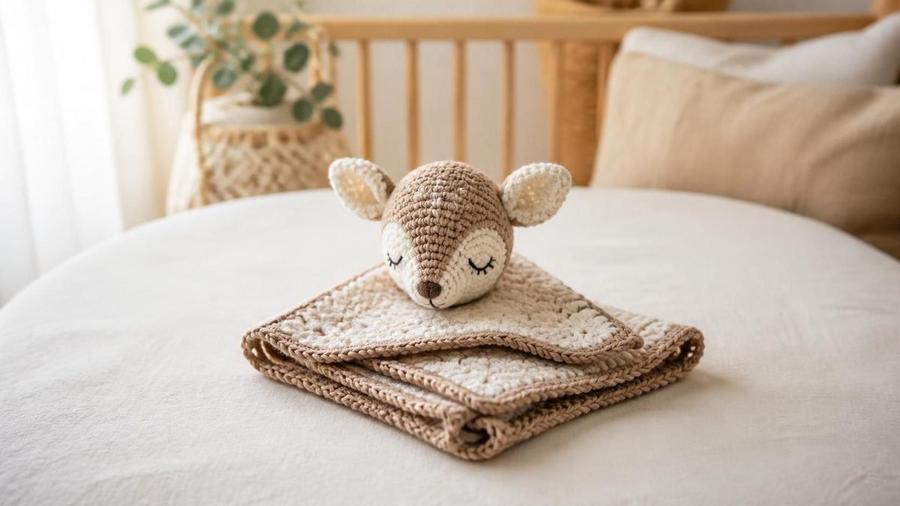
When my sister asked me for a baby shower gift, I almost started a full blanket before remembering what actually gets used: the small thing the baby can hold, not the big thing folded on the chair. I made her a lovey in an evening, and two years later it's still the toy that goes in every bag and every cot photo. In my classes since, it's the project I recommend to anyone who wants something quick that still feels special, because it pairs a soft square you can crochet almost in your sleep with a little amigurumi head that teaches you increases and decreases. It's the rare gift that's easy to make and genuinely impossible to outgrow.
This lovey combines a small flat square, using the same technique as our dishcloth pattern, with a soft amigurumi head from our mini ball pattern sewn onto one corner. Two familiar techniques combined into one genuinely useful baby gift.
Materials
- 1 skein soft, machine-washable worsted-weight yarn (about 80–100 yards)
- 4.5mm (US size 7) crochet hook for the blanket square
- 3.5mm hook for the amigurumi head
- A small amount of polyester fiberfill stuffing
- Embroidery thread, for a safe stitched face
- Stitch marker, scissors, and a yarn needle
Abbreviations (US terms)
| Abbr. | Means |
|---|---|
| ch | Chain |
| sc | Single crochet |
| st(s) | Stitch(es) |
| inc | 2 sc in same stitch (increase) |
| dec | Sc 2 sts together (decrease) |
| rnd(s) | Round(s) |
See our abbreviations glossary for the full list including UK terms.
Gauge
14 sc and 16 rows measures about 4in / 10cm square with a 4.5mm hook and worsted yarn. Gauge isn't critical for the blanket square, though tighter tension on the head keeps the stuffing from showing.
Notes
- Written in US terms. The blanket square uses the flat technique from our dishcloth pattern; the head uses the amigurumi technique from our mini ball pattern.
- Use soft, machine-washable yarn labelled safe for babies.
- Embroider the face rather than using safety eyes for a fully child-safe finish.
Pattern
Chain 36.
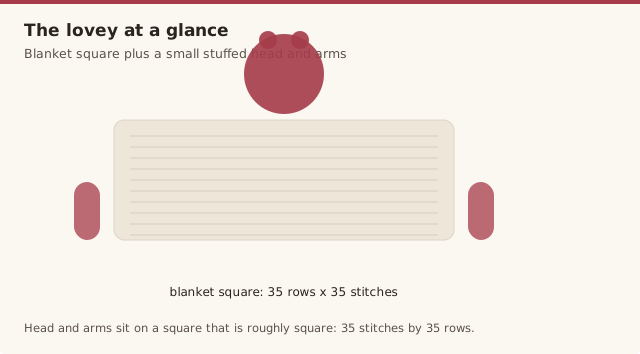
Single crochet in the 2nd chain from the hook, and in each chain across. Turn. (35 sts)
Chain 1, single crochet in each stitch across. Turn. (35 sts each row)
Repeat until the piece is square, roughly 35 rows for this gauge. Fasten off and weave in ends.
Using the 3.5mm hook, make a magic ring, 6 sc into ring, place marker. (6 sts)
Inc in every st around. (12 sts)
[sc 1, inc] around. (18 sts)
Sc in every st around, no shaping. (18 sts each round)
[sc 1, dec] around. (12 sts)
Begin stuffing firmly.
Dec in every st around, adding final stuffing. (6 sts)
Fasten off, leaving a long tail for sewing.
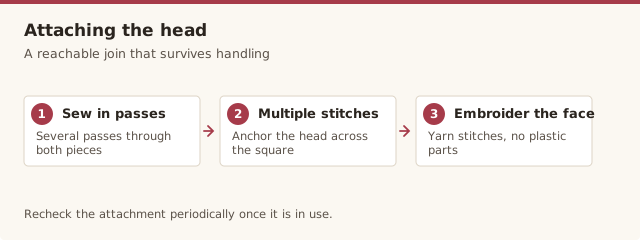
Embroider a simple face onto the head with embroidery thread. Sew the head securely onto the centre of one edge of the blanket square, using small, tight stitches through several stitches on both pieces.
A demonstration of crocheting a baby lovey with an animal head attached to a blanket square, useful for seeing how the two pieces are joined.
Choosing safe yarn
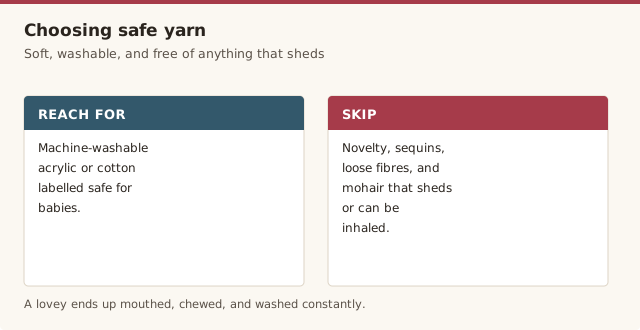
Yarn choice matters more for a baby item than almost any other project, since a lovey ends up mouthed, chewed, and washed constantly. A soft, machine-washable acrylic or cotton yarn labeled safe for babies is the easiest starting point — avoid novelty yarns with loose fibers, sequins, or anything that could shed small pieces, and skip mohair or other fuzzy yarns that can irritate delicate skin or shed fibers a baby might inhale.
Color and dye matter too, though less urgently: a light or pastel shade in a reputable, widely available yarn brand is a safe default if you're unsure about a specific dye lot. If the yarn is a gift for a baby with a family history of skin sensitivity, a quick wash of the finished item before gifting removes any manufacturing residue and is generally a good habit regardless. For more on picking the right fibre and weight, our yarn weight guide walks through the options.
Gifting a lovey
A lovey makes a lovely baby shower gift, but it's worth pairing it with a short, friendly note about age recommendations rather than assuming the parents already know. New parents get a lot of gifts fast, and a small card mentioning "best for around 3 months and up, once baby has head and neck control" takes the guesswork out of when to introduce it.
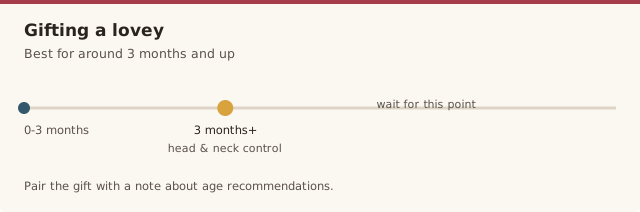
If you're making one for a specific baby who's already a few months old, ask the parents about any known sensitivities before choosing yarn, and consider making two or three in different simple colors so the family always has a spare on hand for laundry day — a genuinely appreciated practical touch that a single lovey doesn't offer.
It's worth resisting the urge to add extra flourishes that seem cute but add risk: buttons, ribbons, tiny bows, or anything glued or tied on rather than securely crocheted or sewn all introduce small parts that don't belong on an item meant for a baby to mouth and handle unsupervised. Keeping the design as simple as the original pattern — a plain embroidered face, a soft square, nothing extra — is part of what makes a handmade lovey a genuinely safe gift rather than just a cute one.
Common mistakes & fixes
Fix: sew the head on with several passes of yarn through multiple stitches on both pieces, and recheck the attachment periodically once the lovey is in use.
Fix: embroider the face with yarn or embroidery thread instead — it's just as expressive and removes a potential small-parts risk entirely.
Fix: stuff firmly and evenly, working the fiberfill into the sides as you go rather than just filling the center, and add a little extra just before closing the final round.
Fix: check the yarn label before starting and choose a machine-washable acrylic or cotton blend — a lovey gets washed often, and hand-wash-only yarn adds real friction for the parents.
Our pick
Fairfield Poly-Fil Premium Fiber Fill, 32oz
Enough for this project and future amigurumi patterns, staying soft and fluffy over time.
View on Amazon →Frequently asked questions
What is a baby lovey?
A lovey is a small comfort item combining a soft square of blanket fabric with a small stuffed head or animal shape attached, sized to be easy for a baby to hold and carry.
Is a crochet lovey safe for a newborn?
Loveys and other soft toys are generally recommended for babies old enough to have some head and neck control, typically from around 3 months, rather than newborns, and should always follow current safe sleep guidance from a pediatrician.
How do I attach the head to the blanket square on a lovey?
Sew the head securely to the centre of one edge of the blanket square using the tail left from finishing the head, going through several stitches on both pieces rather than just a few anchor points.
Is it OK to give a handmade lovey as a baby shower gift?
Yes, with a short note about age recommendations included, since the parents will want to know it's intended for a slightly older baby with head and neck control rather than a newborn, and should check current safe sleep guidance before use.
How do I wash a crochet baby lovey?
Hand wash or use a gentle cycle in a mesh laundry bag with mild, fragrance-free detergent, then lay flat to dry. Check the yarn label to confirm it's machine-washable before choosing a cycle.
How often should I check a lovey for wear once a baby is using it?
It's worth a quick check every few weeks, and any time it comes out of the wash, for loose stitches, a loosening head attachment, or fraying yarn, since these are the areas most likely to wear with regular handling and chewing.
What yarn should I use for a baby lovey?
A soft, machine-washable acrylic or cotton yarn labelled safe for babies is the best choice, since a lovey gets mouthed and washed constantly. Avoid novelty or mohair-type yarns with loose fibres that could shed or irritate a baby's skin.
CrochetGuides is a participant in the Amazon Services LLC Associates Program. As an Amazon Associate we earn from qualifying purchases, at no extra cost to you.