Corner to Corner (C2C) Crochet: Complete Beginner Tutorial
The stitch behind graphic crochet blankets, built diagonally in small blocks — easier than it looks.
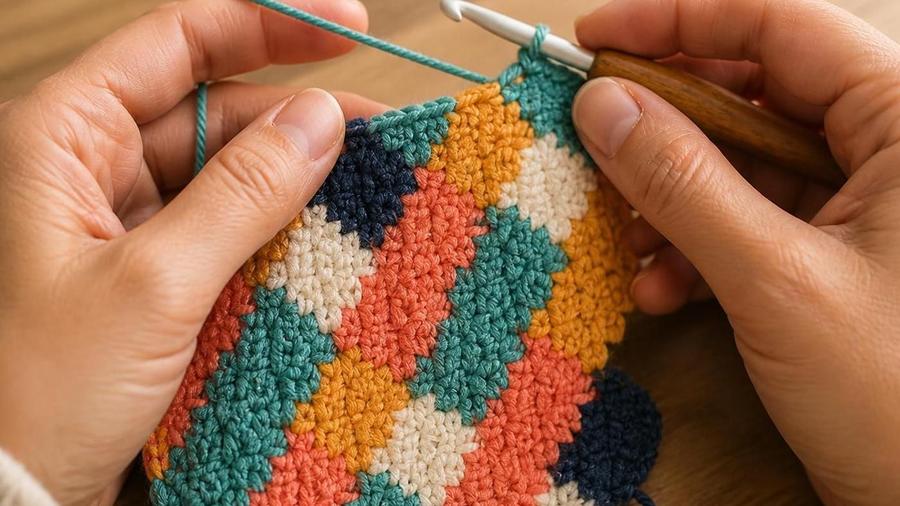
In my classes, corner to corner is the technique that scares people the most before they start and delights them the most once they try it. I had one student who spent a year telling me she'd "get to C2C when she was a proper crocheter," because every picture she'd seen online showed graphic dog blankets and pixel-art scenes that looked impossibly advanced. When she finally sat down with a scrap of yarn, she laughed out loud at the end of the first row — it was nothing but the double crochet she'd been doing for months, just arranged diagonally in small blocks, one added or removed per row. The "advanced" look comes entirely from the graph you follow, not from any stitch you don't already know. Once that clicks, the rest is just counting.
What you need
- A 5.0mm hook (see our hook buying guide if you don't have one)
- Worsted-weight yarn in one or more colours
- Scissors and a yarn needle for weaving in ends
Making your first block
Steps
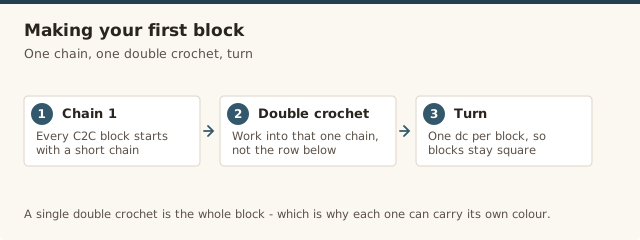
- Chain 6.
- Double crochet in the 4th chain from the hook, then double crochet in each of the remaining 2 chains. This is your first block. (1 block)
Increasing: growing the triangle
Steps (repeat for each new row while increasing)
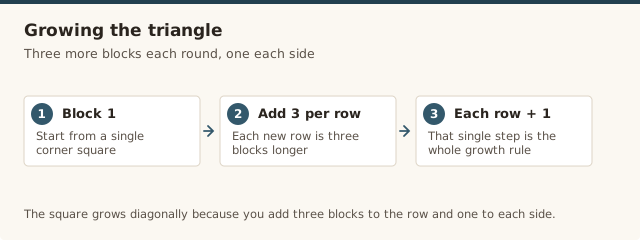
- Chain 6, turn.
- Double crochet in the 4th chain from hook, then in each of the remaining 2 chains — this makes your new block.
- Slip stitch into the first double crochet of the previous block to join, then chain 3 and double crochet 3 more times into the next chain-3 space of the previous row's block.
- Continue in this way, adding one block per row, until your piece is as wide as you want the finished project to be.
Decreasing: bringing it back to a square
Steps (once you've reached your desired width)
- Instead of chaining 6 to start a new block, slip stitch across the first block of the previous row to skip it entirely.
- Chain 3, then double crochet 3 times into the next chain-3 space to continue the row with one fewer block than before.
- Repeat, losing one block per row, until only a single block remains.
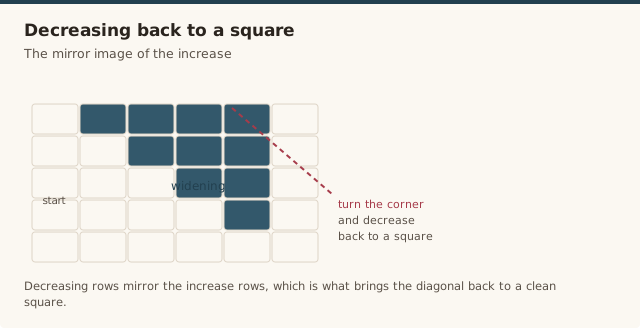
A tutorial on the corner-to-corner stitch, useful for seeing the diagonal block increases and decreases explained step by step.
Changing colours for graphic designs
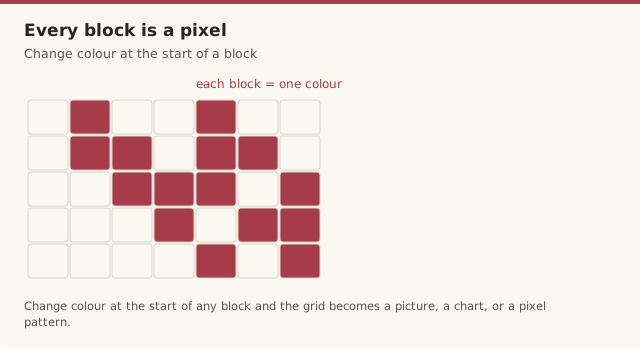
Once you're comfortable with the increase and decrease structure, changing yarn colour at the start of any block lets you build up pixel-style images or patterns, since each block reads as one "pixel" on a grid. Many free C2C graphs are written specifically for this technique, listing which colour each block should be.
Reading a C2C graph
A C2C graph is just a grid where every coloured square stands for one block, arranged to match the diagonal shape the stitch naturally builds. Reading one starts from a single corner square at the bottom, exactly where your first block sits, and works outward diagonally row by row — the same increase-then-decrease structure covered above, just with a colour assigned to each block instead of one colour throughout. If you're comfortable with written patterns but new to grids, our guide to reading a pattern is a good companion while you adjust.
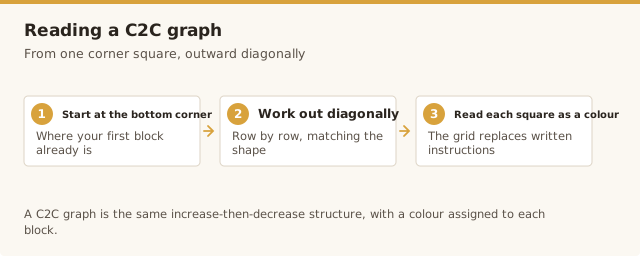
Most free graphs are designed so the widest diagonal row of the grid lines up with the point where you switch from increasing to decreasing. Before starting, count the total blocks across the widest row of the graph and make sure it matches how many increase rows you plan to work, so the image doesn't run out of graph before your piece reaches full width.
Common mistakes & fixes
Fix: C2C tension can drift more than flat single crochet rows. Keep your chain-3 turning consistent and check your block count against the row before, using our common mistakes guide if drifting continues.
Fix: count your blocks against the graph's row at the end of every row, not just occasionally. A one-block miscount early on shifts every colour placement for the rest of the piece, and it's much easier to catch and fix on the row it happened rather than several rows later.
Fix: this happens when the colour switch is made mid-block instead of exactly at its start. Change colour on the last yarn-over of the final stitch of a block, so the new colour begins cleanly at the very first stitch of the next one.
Frequently asked questions
What is corner to corner (C2C) crochet?
C2C is a technique that builds a project diagonally from one corner to the opposite corner using small blocks of double crochet, commonly used for graphic blankets and pixel-style designs since each block can easily be a different colour.
Is C2C harder than regular crochet?
The stitches themselves are the same double crochet and chain used in many patterns; what's different is the counting and turning logic, which takes a bit of practice but isn't technically more advanced than basic crochet.
What is C2C crochet best used for?
C2C is especially popular for blankets and wall hangings with graphic or pixel-art designs, since each square block in the grid can be worked in a different colour to build up an image.
How do I read a C2C graph or pattern chart?
Each coloured square on the graph represents one block, and the grid is worked starting from a bottom corner, one diagonal row of blocks at a time, exactly matching the increase and decrease structure of the stitch itself. Most graphs are read bottom-to-top and corner-to-corner, matching the direction the piece is actually crocheted in.
Why do my colour changes look blurry or bleed into the next block?
This usually happens when the colour change is made mid-block instead of exactly at the start of a new one. Always switch colour on the last yarn-over of the final stitch of a block, so the new colour appears cleanly at the very start of the next block rather than partway through the previous one.
Can I make a C2C rectangle instead of a square?
Yes — to make a rectangle, once you reach the shorter width, increase on one edge while decreasing on the other at the same time, which keeps one side growing while the other stops. This lets the piece keep its diagonal structure while becoming longer than it is wide.
What yarn and hook are best for a C2C blanket?
Worsted-weight yarn with a 5mm (H) hook is the most common choice, since it produces blocks big enough to show a pixel design clearly while still being easy to count. A medium, smooth yarn without much halo also helps the colour changes read crisply.
CrochetGuides is a participant in the Amazon Services LLC Associates Program. As an Amazon Associate we earn from qualifying purchases, at no extra cost to you.