Continental vs. English Crochet Style: Which Are You Using?
Two different ways of holding the yarn, both producing identical stitches. Here's how to tell which one you're already doing, and whether switching is worth it.
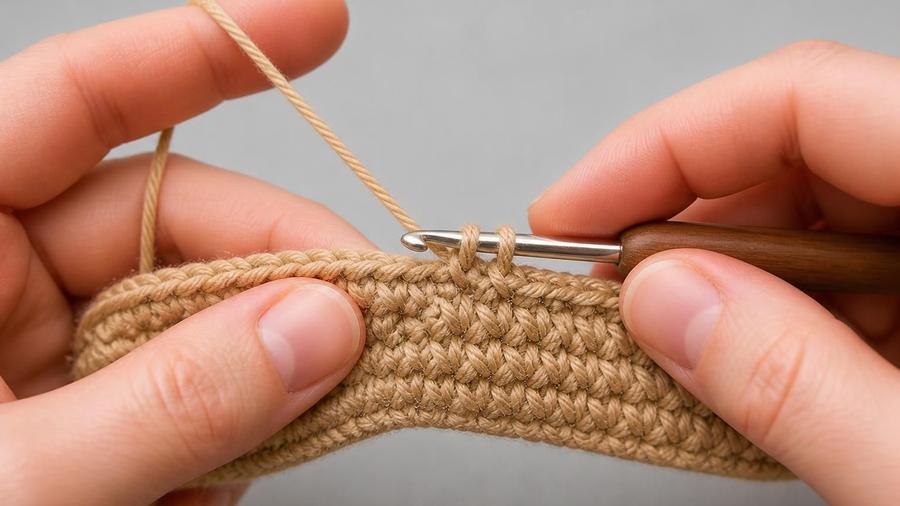
A student once asked me, quite seriously, whether she was crocheting "wrong" because her yarn hand didn't move the way mine did in a video she'd been watching. I asked her to show me, and within about ten seconds it was obvious what was actually going on: she wasn't doing anything wrong, she was doing continental style, and the video she'd learned from was demonstrating English style. Both produce identical stitches. Nobody had ever told her these were two different named methods, just that there was apparently a "correct" way to hold the yarn, and hers didn't match what she was watching.
This mix-up happens constantly, because most tutorials only show one style, usually whichever one the teacher personally uses, without mentioning that a second, equally valid method exists. If you've ever watched a crochet video and thought "that's not how I hold the yarn at all," you've probably just been looking at the other style, not a mistake.
This guide lays out what continental and English crochet actually are, how to tell which one you're doing without a video to compare against, the real pros and cons of each, and why switching later in your crochet life, while possible, is a bigger undertaking than it might sound.
What the two styles actually are
Continental and English crochet aren't different stitches, different terminology systems, or different regions' patterns; they're two different ways of physically holding and tensioning the yarn while crocheting. Every stitch you know, chain, single crochet, double crochet, and so on, can be worked in either style, and the finished fabric is identical either way. The difference lives entirely in your hands, specifically in which hand does most of the yarn-controlling work and how.
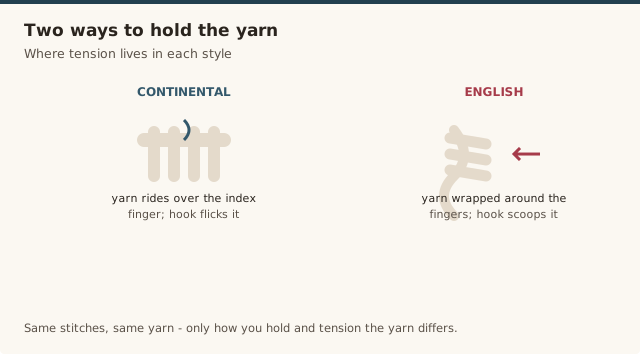
The names come from a rough (and not entirely precise) geographic association: continental style is more commonly associated with mainland European crocheters and knitters, while English style is more associated with the UK and North America, though in practice both styles are used worldwide and neither is tied strictly to any one country today.
Continental style, step by step
Steps
- Drape the yarn over the index finger of your non-hook hand (the left hand, for a right-handed crocheter), then weave it lightly through your remaining fingers to add tension.
- Hold your hook in your other hand as usual, resting near the work.
- To yarn over, tilt the hook slightly and let the tensioned yarn on your index finger catch against it, or flick your index finger down slightly to bring the yarn to the hook.
- Complete the stitch as normal, pulling the caught yarn through the required loops.
- Keep your yarn hand largely stationary between stitches, letting the small finger flick do most of the yarn-over motion.
The defining feel of continental style is that the yarn hand does comparatively little large movement. Once the yarn is tensioned correctly across the fingers, most of the actual "yarn over" action happens with a small, controlled finger motion rather than a bigger wrist or hand movement, which is part of why continental crocheters and knitters often describe it as faster once it's fully learned.
English style, step by step
Steps
- Wrap the yarn around the fingers of your non-hook hand, often around the pinky and back over the index finger, to create tension.
- Hold your hook in your other hand.
- To yarn over, move the hook itself over or around the tensioned yarn strand to scoop it, rather than relying on the yarn hand to bring the yarn to the hook.
- Complete the stitch as normal.
- Feed a small amount of slack yarn through the tensioning fingers as needed between stitches, since the hook hand is doing more of the reaching.
The defining feel of English style is more motion at the hook itself, since it's the hook reaching to the yarn rather than the yarn being flicked to the hook. Many crocheters find this style intuitive because it closely mirrors how a lot of people first pick up a hook without any formal instruction, letting the dominant hand do most of the active work.
Side-by-side comparison
| Aspect | Continental | English |
|---|---|---|
| Where tension is held | Across the fingers of the non-hook hand, often the index finger | Wrapped around the fingers of the non-hook hand, often index and pinky |
| Where most motion happens | A small flick of the index finger | A larger reach or scoop of the hook |
| Common perception | Often described as faster once learned | Often described as more intuitive to pick up initially |
| Two-colour work | Slightly easier to hold a colour in each hand | Also possible, but less commonly the default setup |
| Finished stitch | Identical to English style | Identical to continental style |
Which one should you learn
If you're brand new to crochet, the honest answer is whichever one a tutorial you're already following happens to teach, since both are equally valid and there's no advantage to hunting down a specific style before you've even learned your first stitch. Consistency and practice matter far more for your early speed and tension than which style you picked. Our basic crochet stitches guide walks through the fundamental stitches themselves, which work the same way regardless of which yarn-hold style you use to make them.
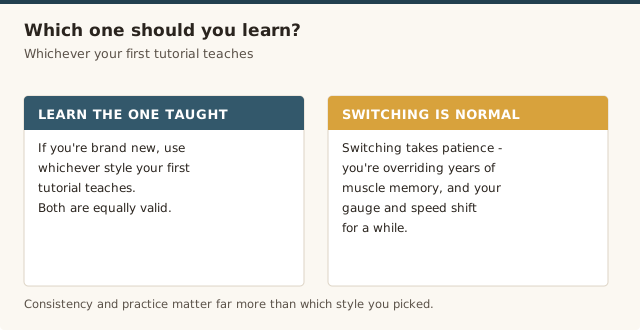
If you've been crocheting for a while and are curious whether switching is worth it, the honest answer is: probably not, unless you have a specific reason, like hand strain, a colourwork project that would benefit from holding two yarns, or simple curiosity. Style is a personal habit your hands have built over time, and there's rarely a compelling reason to overhaul it once it's working for you.
Switching styles later
It's absolutely possible to switch, or to become comfortable in both styles, but it takes patience. Your hands have built years of muscle memory around your current style's motion, and relearning a different one means consciously overriding that memory stitch by stitch for a while. Expect your gauge and speed to be inconsistent for at least a few projects while your hands adjust, and don't be surprised if you unconsciously slip back into your original style under time pressure or when you're tired.
A gentler approach than trying to switch fully is to practice the second style specifically for situations where it offers a real advantage, two-handed colourwork being the most common example, while keeping your original style for everything else. That way you're building a second skill deliberately rather than trying to unlearn a habit that already works fine for most of your crocheting.
Common mistakes & fixes
Fix: check whether the video is simply showing the other style rather than a correction to yours. If your finished stitches look right and your fabric comes out even, your style is working, regardless of which one it is.
Fix: re-check the specific finger path for your style; continental and English tension the yarn across different fingers, and mixing the two setups often causes the yarn to slip loose rather than hold steady tension.
Fix: this can happen in either style if your grip is too tight or your tensioning hand is held in a strained position. Take regular breaks, loosen your overall grip, and consider whether your current style's specific hand position is contributing before assuming a full style switch is the only fix.
Fix: practice a new style on a separate swatch first, not on a project you care about the outcome of. Switching mid-row or mid-project before the new style feels natural almost always shows up as a visible tension shift in the fabric.
Fix: speed comes overwhelmingly from practice and familiarity, not from which style you use. A crocheter with years of English-style experience will almost always outpace someone who just switched to continental, regardless of continental's reputation for efficiency.
Frequently asked questions
How do I know which style I'm already using?
Watch which hand controls the yarn and how it moves during a yarn over. If your yarn-holding hand's index finger flicks the yarn onto the hook from underneath while staying relatively still, that's continental. If your hook hand reaches over or around the yarn to scoop it, with the yarn hand mostly just feeding slack, that's English.
Is one style faster than the other?
Continental is often described as faster because the yarn hand's motion is smaller, but the real speed difference between any two crocheters usually comes down to practice and familiarity with their own style, not which style they picked. A highly practiced English-style crocheter will outpace a beginner continental crocheter every time.
Can I switch from English to continental (or the reverse) after years of crocheting?
Yes, plenty of experienced crocheters do, usually to try to ease hand strain or speed up a specific technique like colourwork. It takes patience, since your hands have to relearn a motion that used to be automatic, and most people find their gauge and speed dip for a few projects before it evens back out.
Does my style affect my gauge?
Style itself doesn't set your gauge; your personal tension does, and that's consistent within your own hands regardless of which style you use. What matters for gauge is being consistent with yourself, not matching someone else's style or grip.
Which style is better for colourwork with two yarns?
Continental has a practical edge here, since it's more common for continental crocheters to hold one colour in each hand, one continental-style and one English-style, and alternate between them without constantly dropping and picking up yarn. This isn't a strict rule, though, and colourwork is achievable in either single style with practice.
Is continental crochet the same as continental knitting?
They share the same underlying idea, tensioning the yarn over the left hand's fingers (for a right-handed crocheter) rather than wrapping it around the right hand, but they're separate skills specific to their own craft. Knowing continental knitting doesn't automatically teach you continental crochet, though the general yarn-hold habit can transfer somewhat.
Do patterns specify which style to use?
No, patterns describe the stitches and steps to work, not how to physically hold your yarn, since the finished stitch looks identical regardless of which style produced it. Style is a personal technique choice that sits underneath whatever pattern you're following.
CrochetGuides is a participant in the Amazon Services LLC Associates Program. As an Amazon Associate we earn from qualifying purchases, at no extra cost to you.