Crochet vs Knitting: Which Should You Learn First?
An honest comparison for absolute beginners: speed, cost, and how forgiving each craft is when you make a mistake.
In twelve years of teaching, the crochet vs knitting question is the one I'm asked most, almost always by someone standing in a yarn shop holding one hook and a pair of needles, trying to pick a side before they've made a single stitch. I remember a student who spent a full term convinced she was bad at yarn because knitting kept dropping stitches on her, then picked up a hook in week six and finished a whole dishcloth in an afternoon. It wasn't talent — it was that crochet only asks you to manage one loop at a time. That single difference in how the two crafts behave while you're learning is worth more than any list of pros and cons.
Side by side
| Crochet | Knitting | |
|---|---|---|
| Tools needed to start | One hook | A pair of needles (often two sizes as you progress) |
| Active stitches at once | One loop on the hook | A full row of live stitches |
| Fixing a mistake | Unravel back to the error, restart from there | Dropped stitches can run down several rows before you notice |
| Typical learning curve | Comfortable basics within a few sessions | Basics take longer; tension consistency takes practice |
| Fabric result | Denser, sturdier, less stretch | Finer, stretchier, better drape for fitted garments |
| Best first projects | Dishcloths, granny squares, amigurumi | Garter-stitch scarves, dishcloths |
Why crochet is usually the easier starting point
The core reason comes down to how many stitches are "live" at once. In crochet, you only ever have one loop on your hook — if you stop, put it down, or make a mistake, there's nothing else that can unravel while you're not looking. In knitting, an entire row sits on your needles, and a dropped stitch can quietly run several rows down before you spot it.
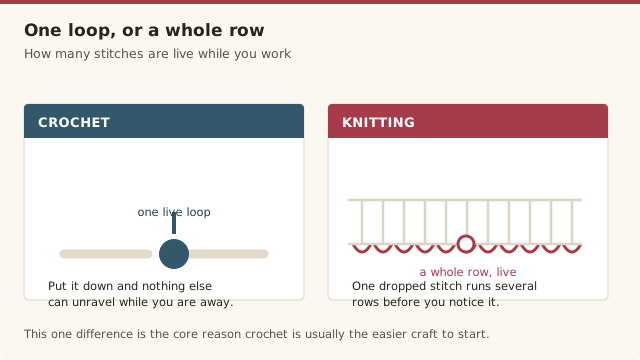
That single difference is why most people find crochet faster to get comfortable with. Once you've got the two basic stitches down (our basic crochet stitches guide covers them), our 5 easiest first projects guide walks through what to make next.
Where knitting has the edge
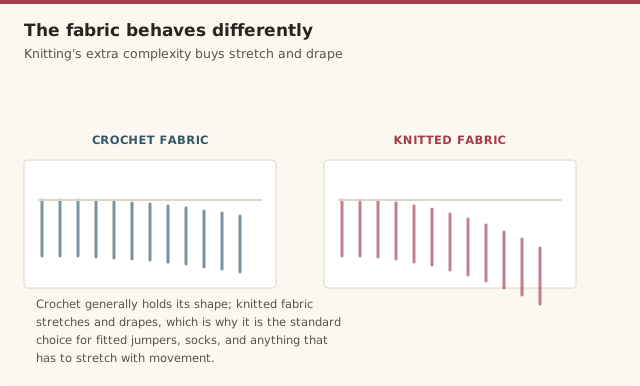
Knitting isn't harder for the sake of it — the extra complexity buys you fabric that behaves differently. Knitted fabric stretches and drapes in a way crochet generally doesn't, which is why knitting is the standard choice for fitted jumpers, socks, and anything that needs to stretch with movement. If that's specifically what you want to make, it may be worth the steeper start.
What you need to try crochet first
If the comparison above has you leaning towards crochet, you only need two things to start: a hook (our hook buying guide covers sizing) and a light-coloured worsted-weight yarn (see our yarn weight guide for why the weight matters more than the colour).
Can you learn both?
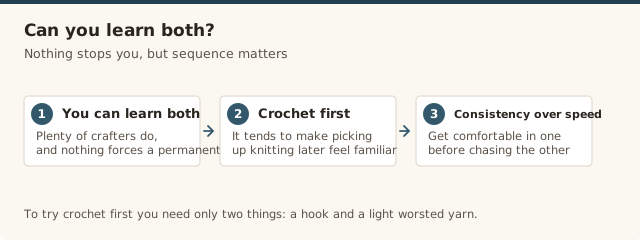
Plenty of crafters do, and there's no rule saying you have to pick a side permanently. Learning crochet first tends to make picking up knitting later a bit smoother, since a lot of the yarn handling, tension awareness, and general comfort with a repetitive hand motion carries over even though the actual mechanics are different. Some crocheters never bother with knitting at all and that's equally fine — the two crafts overlap in output more than they overlap in technique.
Worth knowing either way: a crochet hook is the standard tool for rescuing a dropped knitting stitch, so even a crochet-only crafter benefits from owning one small hook if a knitting friend ever needs a hand.
Common misconceptions
Reality: many crafters use both, picking whichever suits a given project's fabric needs. Starting with one doesn't close the door on the other later.
Reality: one hook or one pair of needles is enough to find out if a craft suits you. Buying a large kit upfront for something you haven't tried yet often means half of it goes unused.
Reality: a crochet hook is the standard tool for catching a dropped stitch and working it back up through the loose ladder of rows it left, even for someone who's never crocheted anything else.
Frequently asked questions
Is crochet or knitting easier for a complete beginner?
Crochet is generally easier to start with. It uses one hook and one active loop, so dropped stitches are rare and mistakes are easy to unravel and fix, compared to knitting's two needles and multiple live stitches.
Which is cheaper to start, crochet or knitting?
Crochet is usually cheaper to start, since a single hook costs a few pounds and one skein of yarn is enough to begin. Knitting typically requires a pair of matching needles, and some projects need circular or double-pointed needles as you progress.
Can you make the same things with crochet and knitting?
There's significant overlap for blankets, scarves, and hats, but each craft has things it does better: knitting produces stretchier, finer fabric suited to fitted garments, while crochet is faster for dense items like amigurumi and produces sturdier, less stretchy results.
Can you learn both crochet and knitting, or should you pick one?
Plenty of crafters do both, using each for what it does best rather than treating them as competing choices. Learning crochet first tends to make the switch to knitting easier, since the yarn handling and tension habits carry over even though the mechanics differ.
Can a crochet hook help fix a knitting mistake?
Yes, a crochet hook is the standard tool for picking up a dropped knit stitch and working it back up through the ladder of loose rows it left behind, which is one small way the two crafts overlap in practice even though they're worked differently.
Is it worth learning crochet if I already knit?
Yes, many knitters pick up crochet for edgings, borders, and dense items like bags or amigurumi that knitting handles less naturally. The two crafts share yarn-handling habits, so the transition is easier than starting from scratch.
Which is faster to work up, crochet or knitting?
Crochet is generally faster for a given amount of yarn, because each stitch uses more yarn and builds height more quickly than a knit stitch. Knitting tends to produce a finer, more economical fabric, which is why it is often preferred for fitted garments.
CrochetGuides is a participant in the Amazon Services LLC Associates Program. As an Amazon Associate we earn from qualifying purchases, at no extra cost to you.