How to Fix a Dropped Stitch & Safely Unravel a Row
A dropped stitch isn't a disaster. Here's how to spot one, decide how far back to unravel, and pick your work back up without losing your place.
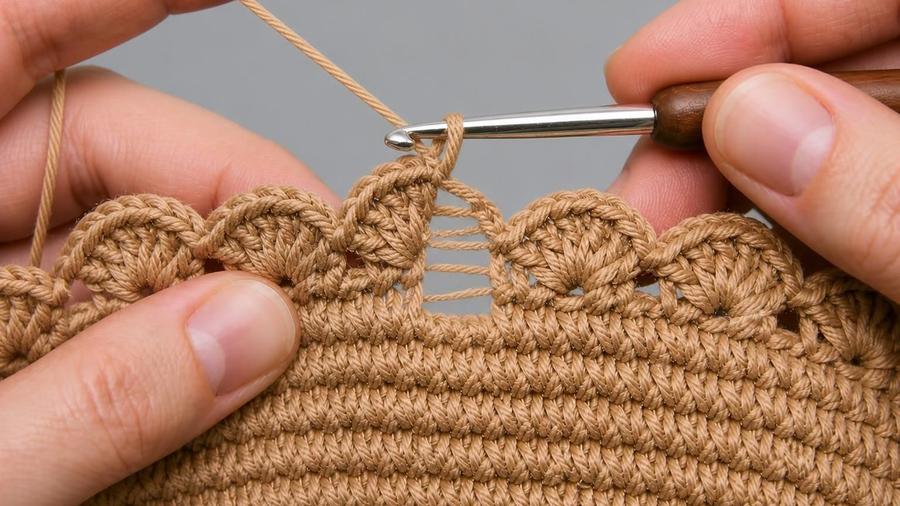
The first time I dropped a stitch off my hook mid-row, I genuinely thought I'd ruined the whole project. I'd set my work down for maybe thirty seconds to answer the door, come back, and found a loose, unraveling loop where a neat row of single crochet had been a moment earlier. My instinct was to start over completely, rip the whole thing out and begin from the foundation chain, which felt safer than trying to figure out exactly what had gone wrong.
That instinct, it turns out, is almost always overkill. A dropped stitch is a small, localized problem, and fixing it usually means unraveling back a short, specific distance rather than starting over. Crochet actually has an advantage over knitting here: a single dropped loop in crochet generally just sits there, a bit loose, rather than cascading down through the rows below it the way a knitting ladder can. That gives you time to notice it and fix it calmly rather than racing against unraveling fabric.
This guide covers exactly what a dropped stitch is, how to decide how far back you actually need to unravel, the safe way to do that unraveling (sometimes called "frogging"), and how to pick your work back up cleanly afterward so the fix is invisible in the finished piece.
What a dropped stitch actually is
A dropped stitch happens one of two ways: either an active loop slips off your hook, usually from setting the work down without securing it, a sudden tug on the yarn, or simply losing focus mid-motion; or a stitch gets accidentally skipped entirely while you're working across a row, leaving a small gap where one should be. Both show up as the same kind of flaw, a visible hole, an uneven edge, or a stitch count that doesn't match what your pattern expects.
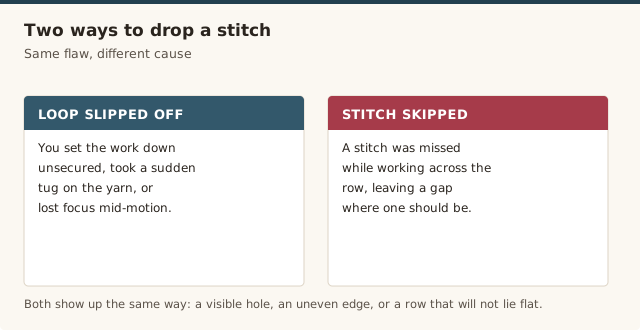
Crochet's structure means a dropped stitch, unlike a dropped knitting stitch, doesn't automatically run down through the rows beneath it. Each crochet stitch locks into the one below it as it's made, so a loose loop at the top of the work generally stays put rather than unraveling on its own. That gives you a real window to notice and fix the problem before it becomes bigger.
Deciding how far back to unravel
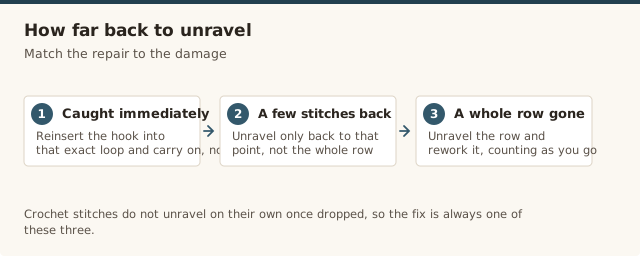
Not every dropped stitch needs a full row unraveled. If you catch it immediately, the loop still active and untouched by any stitches worked after it, you may only need to reinsert your hook into that exact loop and keep going from there, no unraveling required at all. If a stitch was skipped a few stitches back in your current row, unraveling just back to that point, rather than the whole row, is usually enough. If the problem is further back, already worked over by a full row or more above it, or in a rounded piece where isolating one stitch cleanly isn't realistic, unraveling the entire row or rows back to a stable point is the more reliable option, even though it feels like a bigger step backward.
Unraveling (frogging) a row, step by step
Steps
- Identify the exact stitch or row you need to unravel back to, counting carefully so you know your stopping point before you start pulling anything out.
- Remove your hook from the working loop.
- Gently pull the working end of the yarn, the tail currently attached to your ball or skein, which will release the most recent stitch.
- Continue pulling steadily, one stitch releasing at a time, working backward row by row or stitch by stitch toward your target point.
- Slow down as you approach your stopping point, since it's easy to overshoot by a stitch or two if you're pulling too quickly.
- Stop exactly at your planned point, leaving the last stitch you want to keep fully intact.
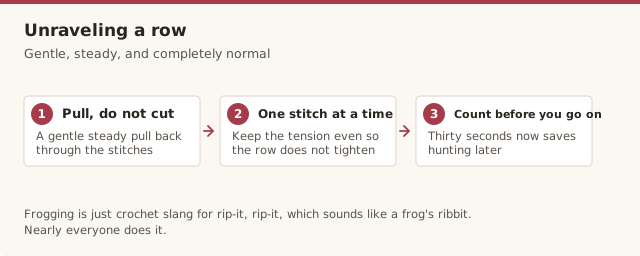
This gentle, steady pulling motion is what "frogging" refers to, a bit of crochet slang based on the phrase "rip it, rip it," which sounds a little like a frog's ribbit. It's a completely normal, common part of crocheting, not a sign of failure, and most crocheters end up frogging some portion of nearly every project they make.
Picking your work back up cleanly
Steps
- Look at the top of your last remaining complete stitch. It should form a small "V" shape made of two loops, exactly like every other stitch in the row.
- Insert your hook under both loops of that V, the same insertion point you'd use during normal crocheting.
- Snug the loop already on your hook (or a fresh loop if you removed the hook entirely) so it sits securely, not too tight and not loose enough to slip.
- Count your stitches across the row so far and compare against your pattern's expected count at that point, confirming you stopped unraveling in the right place before continuing.
- Continue crocheting the row as normal.
Taking a moment to count stitches before continuing is worth the extra thirty seconds; it's much easier to catch a miscount here, right after unraveling, than several rows later once more stitches have been built on top of an error.
Preventing dropped stitches
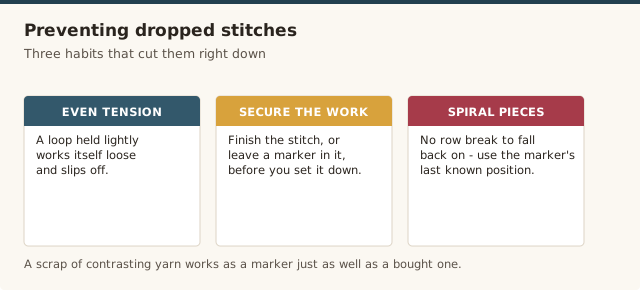
A few habits meaningfully reduce how often this happens. Keep a light, even tension on your hook so a loop doesn't easily work itself loose and slip off; this is especially relevant if you tend to hold your hook loosely between sessions. When setting your work down, even briefly, get in the habit of either finishing the current stitch or slipping a stitch marker (or a scrap of contrasting yarn) through your active loop, so a sudden bump or a curious pet can't pull the loop free unnoticed. And if you're working with a slippery or very fine yarn, both of which make loops more prone to slipping off a hook, consider a hook with a slightly deeper throat, which holds an active loop a bit more securely.
A few trickier cases
Amigurumi and other rounded, continuous-spiral pieces deserve a special note, since there's no row break to unravel back to cleanly the way there is in flat rows. Unraveling a spiral round means pulling back through whatever portion of the current round you've completed, then carefully picking the loop back up at exactly the right stitch, using your stitch marker's last known position as your anchor point. This is exactly why keeping a stitch marker moving consistently, round after round, matters so much on spiral projects: it gives you a reliable reference point to return to if something needs fixing. If the general topic of tracking rounds and rows is still unfamiliar, our crochet mistakes and fixes guide covers the more common tension, curling, and hole problems that come up separately from a dropped stitch specifically.
Common mistakes & fixes
Fix: slow down as you approach your planned stopping point, and count stitches as you go rather than pulling in one continuous motion until you decide to stop.
Fix: look specifically for the small V shape at the top of the last complete stitch, and insert under both loops of that V, the same insertion point used throughout normal crocheting.
Fix: count your stitches immediately after reinserting your hook and before continuing, comparing against your pattern's expected count at that exact row or round.
Fix: rely on your stitch marker's position as your anchor, and if it was accidentally pulled out during unraveling, count back to the last full round's known stitch total to re-establish your position before placing a new marker.
Fix: pull gently rather than yanking during unraveling, and if you're using a delicate or textured yarn prone to this, try to minimize how many times you rework the same section, since repeated frogging is genuinely harder on some fibers than others.
Fix: pause and actually assess how far back the problem goes before pulling anything out. Most dropped stitches only need a small, localized fix, not a full restart, even though the instinct to start over can feel like the "safe" option.
Frequently asked questions
What exactly is a dropped stitch in crochet?
A dropped stitch is a loop that's slipped off your hook without being completed, or a stitch that's been accidentally skipped entirely while working a row, leaving a small hole or gap in the fabric. Unlike knitting, crochet stitches don't unravel automatically once dropped, so a dropped stitch usually just sits there as a visible flaw until you fix it.
Is frogging the same as unraveling?
Yes, "frogging" is crochet slang for unraveling your work, based on the phrase "rip it, rip it," which sounds like a frog's ribbit. It refers to deliberately pulling out stitches to redo a section, exactly the same thing as unraveling.
How far back should I unravel for a dropped stitch?
Only as far as you need to. If the dropped stitch is in your current row, you may only need to unravel back to it and reattach your hook, without frogging the whole row. If it's several rows back, or in a rounded piece where a loose loop has already been worked over, unraveling the whole row (or several) may be the more reliable fix.
Can I fix a dropped stitch without unraveling at all?
Sometimes, if the dropped loop is still large and intact and hasn't been worked over by subsequent stitches. Reinsert your hook into the loop, and either continue working from there if it's your current row, or use a smaller hook or crochet hook trick to rework just that one stitch if it's a row below without unraveling everything above it.
How do I stop losing stitches off my hook in the first place?
Keep enough tension on your hook that a loop can't easily slip off, take care when setting your work down mid-row, and consider a hook with a slightly deeper throat if you find loops slipping off frequently. Placing a stitch marker or scrap of yarn through your active loop before a break also protects against this.
Will unraveling damage my yarn?
Generally no, for most yarns, though very delicate, fuzzy, or textured yarns can show some wear if unraveled and reworked repeatedly. Pull gently rather than yanking, and if you're working with a yarn prone to splitting or fraying, try to get the row right the first time rather than planning on frogging as a fallback.
How do I know exactly where to reinsert my hook after unraveling?
Look for the last complete stitch's top loop (the V shape) and insert your hook under both loops of that stitch, the same insertion point you'd use to keep working normally. Double-check your stitch count against the pattern before continuing, to confirm you stopped unraveling at the right point.
CrochetGuides is a participant in the Amazon Services LLC Associates Program. As an Amazon Associate we earn from qualifying purchases, at no extra cost to you.