Free Half Double Crochet Scarf Pattern for Beginners
A thicker, softer, faster-working scarf using one stitch taller than our single crochet version.
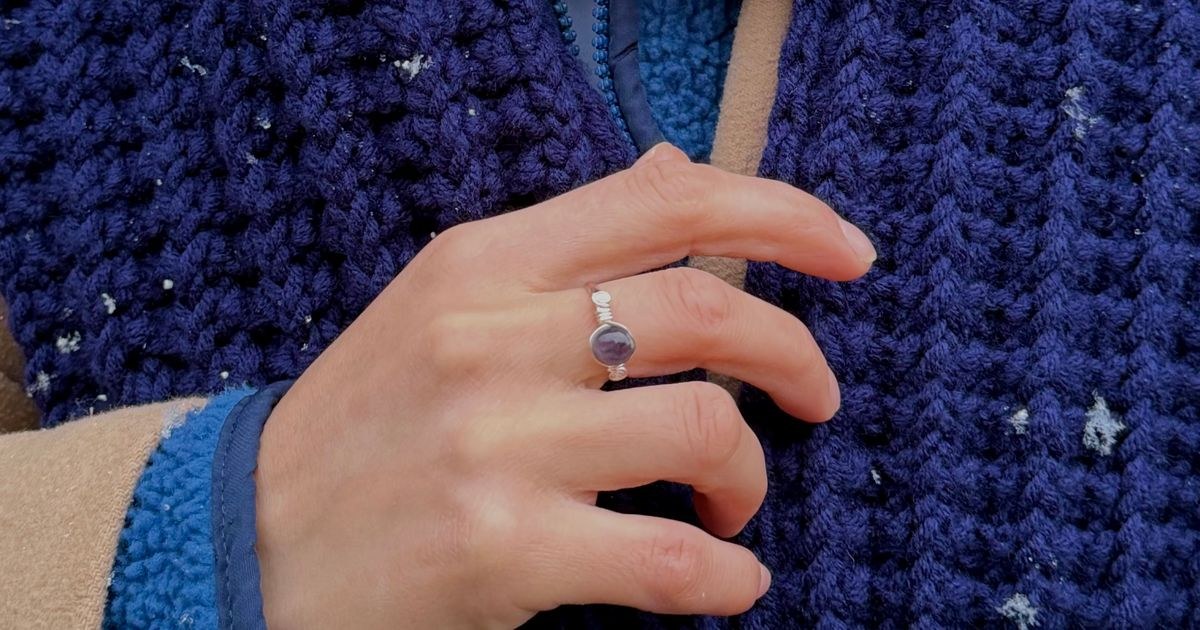
The single crochet scarf was the first pattern I ever wrote for this site, and for a long time I genuinely believed it was the only scarf worth making. Then a reader emailed to ask whether half double crochet would work instead, because her hands tired easily over a long scarf worked in the tighter stitch. I tried it that same afternoon and felt faintly silly for not trying it sooner. Same simple one-row repeat, same beginner-friendly structure, but the taller stitch makes a softer fabric with more drape and it works up noticeably faster. Now half double crochet is the version I reach for when I want a scarf that finishes quickly, or when a student's hands need a gentler stitch.
If you've already made our single crochet scarf, this version uses the same one-row-repeated structure, just with half double crochet instead. The taller stitch produces a softer, more drapey fabric and works up noticeably faster for the same finished length.
Materials
- 3–4 skeins worsted-weight yarn (about 500–600 yards total)
- 5.5mm (US size I) crochet hook
- Scissors
- Yarn needle, for weaving in ends
Abbreviations (US terms)
| Abbr. | Means |
|---|---|
| ch | Chain |
| hdc | Half double crochet |
| st(s) | Stitch(es) |
New to abbreviations? Our abbreviations glossary covers US and UK terms side by side.
Gauge
12 hdc and 10 rows measures about 4in / 10cm square with a 5.5mm hook and worsted yarn. Gauge isn't critical here; a scarf is forgiving on exact width.
Notes
- Written in US terms. Check our abbreviations glossary first if you usually work in UK terms.
- Half double crochet uses about a third less yarn length per row than single crochet, so this scarf finishes faster for the same length.
- Stop whenever the scarf reaches your desired length, typically 60–70in / 150–180cm for an adult.
Quick comparison: hdc vs sc scarf
| Single crochet | Half double crochet | |
|---|---|---|
| Fabric | Dense, firm | Softer, more drape |
| Speed | Slower | Roughly 30% faster |
| Best hook | 5.0mm | 5.5mm |
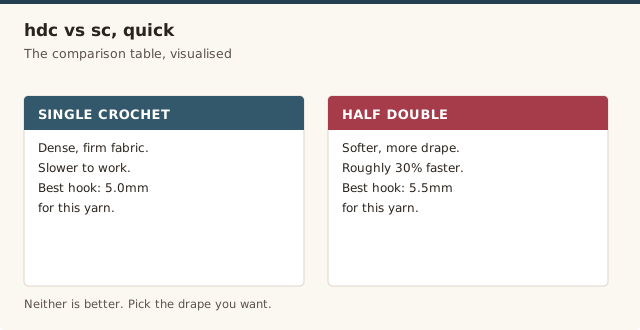
Neither stitch is objectively better — it comes down to what you want the finished scarf to feel like and how much hand fatigue is a factor. Single crochet makes a denser fabric that blocks wind well, which suits a scarf meant mainly for warmth. Half double crochet trades a little of that density for drape and speed, which suits a scarf meant to be worn more loosely or finished as a gift on a deadline.
Pattern
Chain 21.
Hdc in the 3rd chain from the hook, and in each chain across. Turn. (19 sts)
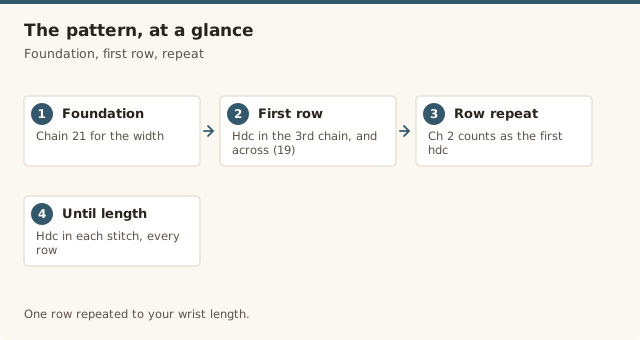
Ch 2 (counts as first hdc), hdc in each stitch across. Turn. (19 sts)
Repeat this row until the scarf reaches your desired length. Check your stitch count every few rows — it should stay at 19 throughout.
Fasten off, leaving a 6in / 15cm tail. Weave in all ends with a yarn needle.
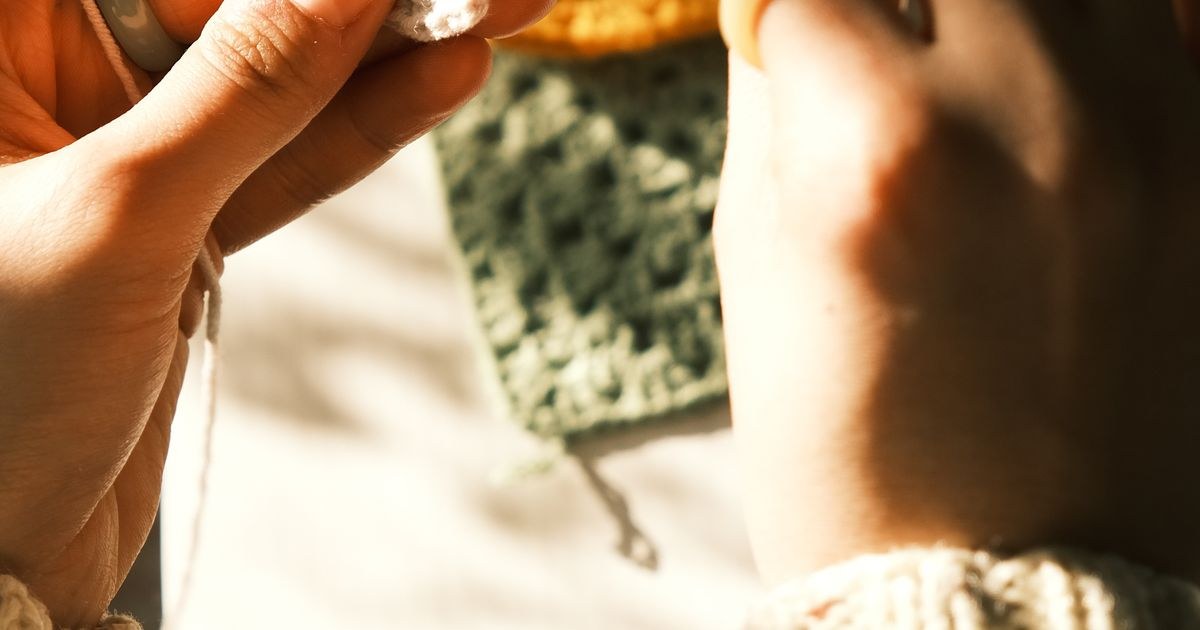
A demonstration of a scarf worked entirely in half double crochet, useful for seeing the hdc stitch repeated in rows to build width.
Adding a border or fringe
The scarf is complete and wearable as-is, but a simple single crochet border tidies up the side edges and gives the finished piece a slightly more polished look. Work one round of single crochet evenly around all four sides, working 3 stitches into each corner to keep it from puckering, then fasten off and weave in the tail.
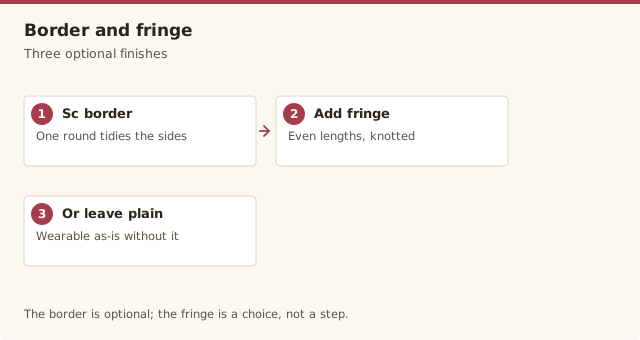
Fringe is an easy way to dress up either short end. Cut yarn strands roughly twice your desired fringe length plus an inch for the knot, fold a small bundle in half, and pull the folded loop through a stitch along the edge with your hook before pulling the ends through the loop and tightening. Trim all the fringe even once it's attached, working across a flat surface so both ends match.
A contrasting yarn color makes for a nice detail on either the border or the fringe without committing to stripes across the whole scarf. Half a skein in a complementary shade is usually plenty for one round of border stitches or a full set of fringe, so this is also a good way to use up small leftover amounts from other projects instead of buying yarn specifically for it.
Blocking & care
Half double crochet fabric usually lies fairly flat straight off the hook, but a light steam block still helps even out any unevenness in tension and softens the texture slightly. Pin the finished scarf to rough dimensions on a towel, hover a steam iron just above the surface without pressing down, and let it dry fully before unpinning.
For care afterward, hand-washing in cool water and laying flat to dry protects the drape from the stretching a washing machine or dryer can cause, particularly with a taller, looser stitch like half double crochet. Check the yarn label for anything unusual, but this is the safest default for most worsted-weight acrylic and wool-blend yarns.
When storing the scarf between seasons, folding it loosely rather than rolling it tightly helps it keep its drape, since a tight roll left for months can press a crease into the fabric that's hard to steam back out. A drawer or a soft storage bag out of direct sunlight also keeps the color from fading over a long off-season.
Common mistakes & fixes
Fix: count your stitches every few rows while the count is still easy to fix, and see our common mistakes guide for how to spot and correct a dropped or added edge stitch.
Fix: treat the ch-2 as your first hdc for the row and work your next stitch into the second stitch from the hook, not the first — consistency here matters more than which convention you pick.
Fix: join new yarn at the start or end of a row whenever possible, and weave in the tail along the edge where it's least noticeable.
Fix: drape a tape measure or an existing scarf around your neck the way you'd wear the finished piece before deciding it's long enough — 60–70in works for most adults, but personal preference varies more than the "standard" length suggests.
Our pick
Cotton worsted-weight yarn, 3-pack
Three coordinating skeins in one order, close to what this scarf needs, with room to add a fourth for extra length.
View on Amazon →Frequently asked questions
What is the difference between a single crochet and half double crochet scarf?
Half double crochet is a taller stitch than single crochet, producing a thicker, softer, more drapey fabric and working up roughly 30% faster for the same length, since fewer rows are needed.
Is half double crochet harder to learn than single crochet?
Not significantly. It adds one extra motion (yarn over before inserting the hook) compared to single crochet, which most beginners pick up within the first few stitches of practice.
How much yarn do I need for a half double crochet scarf?
A standard adult scarf in half double crochet uses roughly 500 to 600 yards of worsted-weight yarn, slightly less than the same length in single crochet since the stitch is taller and faster.
Can I add fringe or a border to this scarf?
Yes — a simple single crochet border around all four sides tidies the edges, and fringe can be added afterward by cutting yarn strands and knotting them through the short ends with a crochet hook.
Does this scarf curl at the edges like some crochet fabric does?
Half double crochet fabric lies fairly flat on its own, but a light steam block or a simple border row will flatten any minor curling that shows up, especially along the foundation chain edge.
Can I make this scarf wider or use a different yarn weight?
Yes — chain any odd number to adjust width, since the pattern uses hdc across every stitch with no set repeat. Switching yarn weight works too, but re-check gauge and hook size first so the fabric doesn't end up too stiff or too loose.
How long should a half double crochet scarf be?
Most adults find 60 to 70 inches comfortable, but the best measure is to drape a tape measure or an existing scarf around your neck the way you'd actually wear it, then stop when it feels right rather than at a fixed number.
Why does my half double crochet scarf have a wavy edge?
An inconsistent turning chain is the usual cause — if the ch-2 is sometimes counted as a stitch and sometimes not, the edge wobbles. Pick one convention and stick to it every row, and the edge will settle straight.
CrochetGuides is a participant in the Amazon Services LLC Associates Program. As an Amazon Associate we earn from qualifying purchases, at no extra cost to you.