Free Baby Bib Pattern (Button-Adjustable Neck)
A rounded bib with a button-adjustable neck, worked in a soft cotton yarn — the pattern I make in threes, one for cream, blush, and sage.
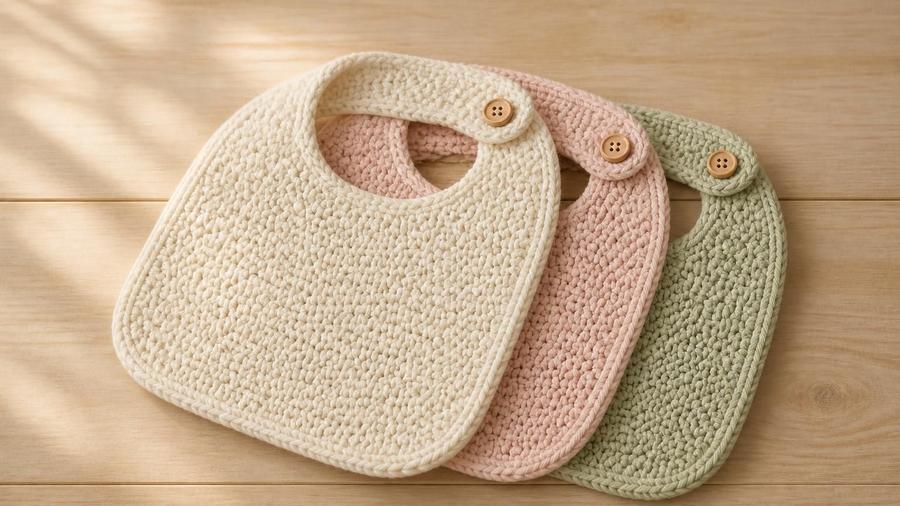
A bib is one of those projects I recommend to anyone who wants to make something for a baby but doesn't have weeks of spare time. It's small enough to finish in an evening, uses almost no yarn, and unlike a blanket or a garment, there's no sizing anxiety involved: a slightly bigger or smaller bib is still a perfectly functional bib. I've made dozens of these over the years, usually three at a time in coordinating colors, because once you've worked one the second and third go almost twice as fast.
The body is a simple rounded shape worked from the center out, the same basic technique you'd use for a coaster or the base of a hat, just stopped and shaped earlier to leave a neck opening rather than continuing into a full circle. A short strap with buttonholes finishes one shoulder, and a single button on the other side lets you adjust the fit as your baby grows, rather than needing separate bibs for every stage.
Below is the full pattern in US terms, along with sizing notes across three age ranges, yarn recommendations, and the small mistakes that make a bib look uneven rather than tidy. If you're new to working in the round, our magic ring tutorial covers the technique this pattern starts from.
Bibs also pair naturally with a couple of the other baby patterns on this site. If you're already making a set of these, our baby romper and diaper cover patterns use the same soft cotton and the same button-closure approach, so all three genuinely work as a coordinated gift set rather than three unrelated projects that happen to share a yarn shelf.
Materials
- About 60–90 yards of worsted-weight cotton yarn per bib
- 4mm (US G-6) crochet hook
- 1 button, about ¾in / 2cm diameter
- Yarn needle and scissors
Abbreviations (US terms)
| Abbr. | Means |
|---|---|
| sc | Single crochet |
| st(s) | Stitch(es) |
| inc | 2 sc in same stitch (increase) |
| rnd(s) | Round(s) |
See our abbreviations glossary for the full list including UK terms.
Gauge
Gauge isn't critical here since a bib is so forgiving of small size differences, but 14 sc and 15 rounds measures about 4in / 10cm square with a 4mm hook and worsted cotton as a rough guide.
Notes
- Sizes given are 0–6, 6–12, and 12–24 months (sizing notes below).
- Worked from the center out as a flat rounded shape, the same base technique as our coasters pattern.
- A great small project to make in multiples; three bibs use less yarn than one blanket.
Pattern
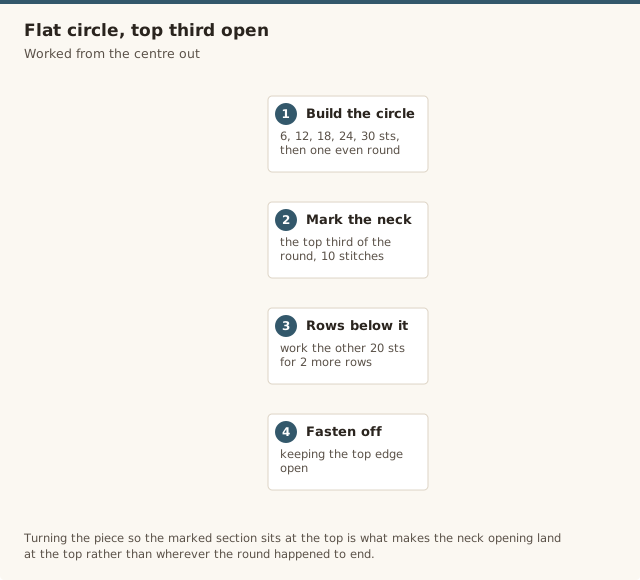
Magic ring, 6 sc. (6) → Inc around. (12) → [sc 1, inc] around. (18)
[sc 2, inc] around. (24) → [sc 3, inc] around. (30) → Sc even 1 round. (30)
Mark the top third of the round (10 stitches) as the neck area. Turn the piece so this marked section is at the top, then work only across the remaining bottom two-thirds (20 stitches) in rows for 2 more rows to build up the lower bib depth slightly, keeping the top edge open for the neck. Fasten off.
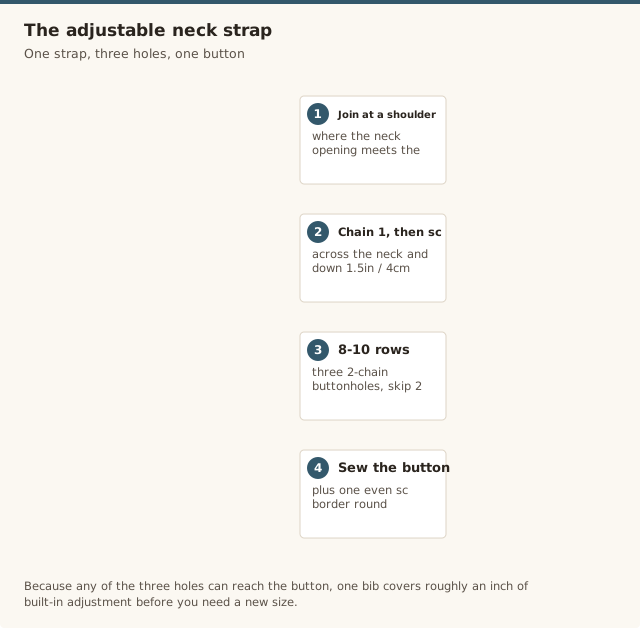
Join yarn at one shoulder point (where the neck opening meets the body). Chain 1, then work a strap of single crochet across the neck opening and down about 1.5in / 4cm past the opposite shoulder point, about 8–10 rows total. Near the end of the strap, place 3 evenly spaced 2-chain buttonholes (skip 2 stitches, chain 2 over the gap, continue). Fasten off.
Sew a button onto the opposite shoulder point of the body, positioned so any of the 3 buttonholes can reach it for an adjustable fit. Work 1 round of single crochet evenly around the entire outer edge of the bib body for a clean, finished border.
Sizing by age
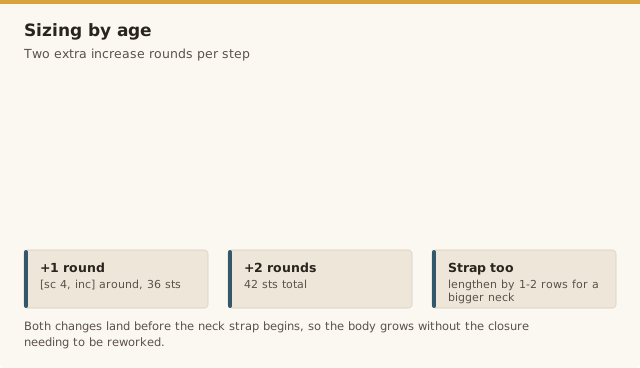
As written, this pattern fits roughly 0–6 months, with a body about 7in / 18cm across. For 6–12 months, work one more increase round before the neck shaping ([sc 4, inc] around, 36 sts) for a body about 8in / 20cm across. For 12–24 months, work two more increase rounds (42 sts total) for a body about 9.5in / 24cm across, and lengthen the neck strap by 1–2 rows to fit a bigger neck circumference.
Because the adjustable button strap already gives you roughly an inch of built-in wiggle room within each size, don't feel obligated to make a new bib the moment a baby moves from one age bracket to the next. Most babies get a genuinely comfortable extra month or two of use out of the smaller size before the neck strap runs out of adjustment room, which is part of why this pattern is worth having on hand even once your baby has technically moved into the next size bracket.
Choosing yarn for a bib
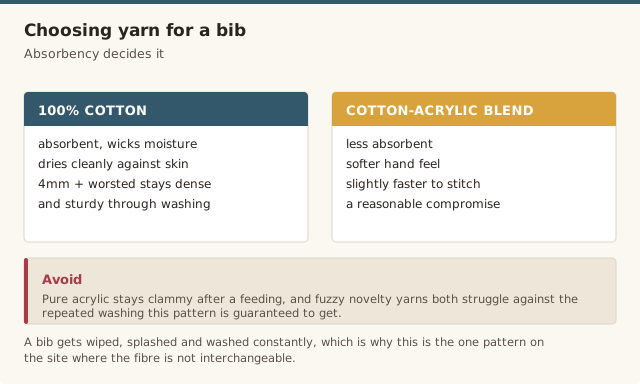
100% cotton is genuinely the right choice for this project specifically, more so than almost anything else on this site. A bib gets wiped, splashed, and washed constantly, and cotton is absorbent and dries cleanly against the skin in a way acrylic doesn't, since acrylic tends to stay clammy after a feeding rather than wicking moisture away. A 4mm hook with worsted cotton gives a dense, sturdy fabric that holds its shape through repeated washing. Our yarn weight guide covers cotton's handling characteristics if you haven't worked with it before.
If you'd rather work with a bulkier, faster-growing yarn, a cotton-acrylic blend is a reasonable compromise, trading a small amount of absorbency for a softer hand feel and slightly faster stitching. What you want to avoid is a pure acrylic or a fuzzy novelty yarn, both of which struggle against the repeated washing and wiping this particular pattern is guaranteed to get.
A good project for gift sets and stash yarn
Because each bib uses so little yarn, this is one of the best patterns on the site for using up small leftover balls from bigger projects. A half-skein of cotton left over from a dishcloth or a coaster set is usually more than enough for one full bib, which means you can build up a small stack of them almost as a byproduct of other projects rather than needing to plan a dedicated shopping trip.
It's also an easy pattern to personalize without much extra effort. A single round worked in a contrast color right before the final border, or a small embroidered initial added once the bib is finished, turns a plain bib into something that reads as a deliberate handmade gift rather than a quick, generic one. If you're making a set for a baby shower, varying just the trim color across an otherwise identical set of three bibs is often enough to make the whole gift feel considered.
Care & washing
Machine wash on a gentle cycle and tumble dry on low, or lay flat if you'd rather avoid any shrinkage risk altogether. Cotton holds up very well to frequent washing, which matters here more than almost any other pattern on this site, since a bib often needs cleaning after nearly every single use. If a stain sets in before you get to a wash, a quick soak in cool water before the stain dries fully makes a noticeable difference to how well it comes out in the regular cycle.
Common mistakes & fixes
Fix: count your stitches at the end of every increase round; a ruffled edge usually means too many increases were worked, while a cupped, bowl-like shape means too few.
Fix: hold the piece up to check the neck opening size before working the strap, and adjust how many stitches you marked off for the neck area if it feels off; it's easier to fix at this stage than after the strap is finished.
Fix: sew the button on after the strap is finished, holding the bib closed at your intended fit and marking the button's exact position with a pin before stitching it down.
Fix: the finishing round of single crochet around the outer edge should be worked snugly, not loosely; a loose edging round is the most common cause of curling after washing.
Fix: choose a soft, mercerized or combed cotton rather than a rougher craft cotton; the difference in feel against a baby's skin is significant, even though both are technically "cotton."
Our pick
Lion Brand 24/7 Cotton Yarn
A soft, machine-washable worsted-weight cotton with good stitch definition and a wide color range, ideal for a set of bibs.
View on Amazon →Frequently asked questions
Is a button closure safe for a baby bib?
Yes, as long as the button is sewn on very securely and checked regularly, the same standard care as any baby garment with a small hard attachment. This pattern uses a single button rather than a tie or cord around the neck, avoiding the strangulation risk long ties or ribbons can carry.
How does the adjustable neck work?
The neck strap has 3 buttonholes spaced about half an inch apart, so you can move the closure in or out as your baby grows or for a looser or snugger fit, without needing to make a new bib for each stage.
What size range does this bib pattern cover?
The pattern as written fits roughly 0-6 months. Sizing notes are included for scaling it up to 6-12 and 12-24 months by adding extra rounds to the body before the neck strap begins.
What's the best yarn for a baby bib?
100% cotton is the best choice for a bib specifically, since it's absorbent, wipes clean easily, and holds up to frequent washing far better than acrylic, which tends to stay damp against the skin after a feeding.
Can I make a set of bibs in different colors?
Yes, and it's one of the most practical reasons to make several. Since each bib uses a small amount of yarn and works up quickly, a set of 3 in coordinating colors, like the cream, blush, and sage shown in the photo, is a realistic weekend project.
How do I wash a crochet baby bib?
Machine wash on a gentle cycle and tumble dry low, or lay flat to dry if you'd rather avoid any shrinkage. Cotton holds up well to frequent washing, which matters for an item that needs cleaning after nearly every use.
CrochetGuides is a participant in the Amazon Services LLC Associates Program. As an Amazon Associate we earn from qualifying purchases, at no extra cost to you.