Free Crochet Coasters Pattern for Beginners
A quick round coaster using the same magic ring technique from our beanie pattern, sized down to fit a mug.
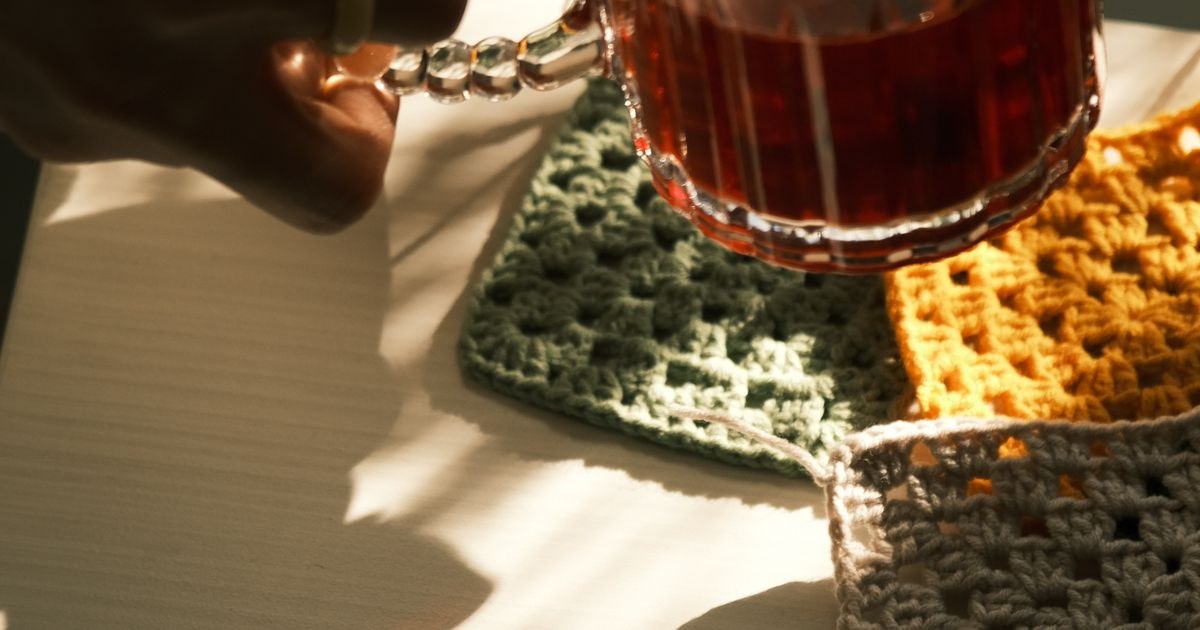
Coasters were the first project I ever made in a circle, and they're still the one I hand a brand-new student when they've just finished their first flat dishcloth and want to try working in the round. I remember one student who was nervous about the magic ring until I pointed out that a coaster is the lowest-stakes circle there is — if it comes out a little wobbly, it still holds a mug perfectly well. That reassurance is usually all it takes. These coasters use the same increase logic as a beanie crown, just stopped much earlier, so they double as a gentle introduction to shaping without any of the pressure of a wearable. Four of them in one evening, and you've learned a skill you'll use for years.
Cotton is the quiet hero of this project, and I've learned the hard way why it beats acrylic here. The first set I made for myself was a soft, pretty acrylic, and the first hot mug went straight through it and left a ring on the table — acrylic flattens and softens under real heat. Cotton absorbs the condensation and shrugs off a warm cup, which is exactly what a coaster is for. Four of these in one evening teaches you the circle, and you'll still be using them in a year.
Materials
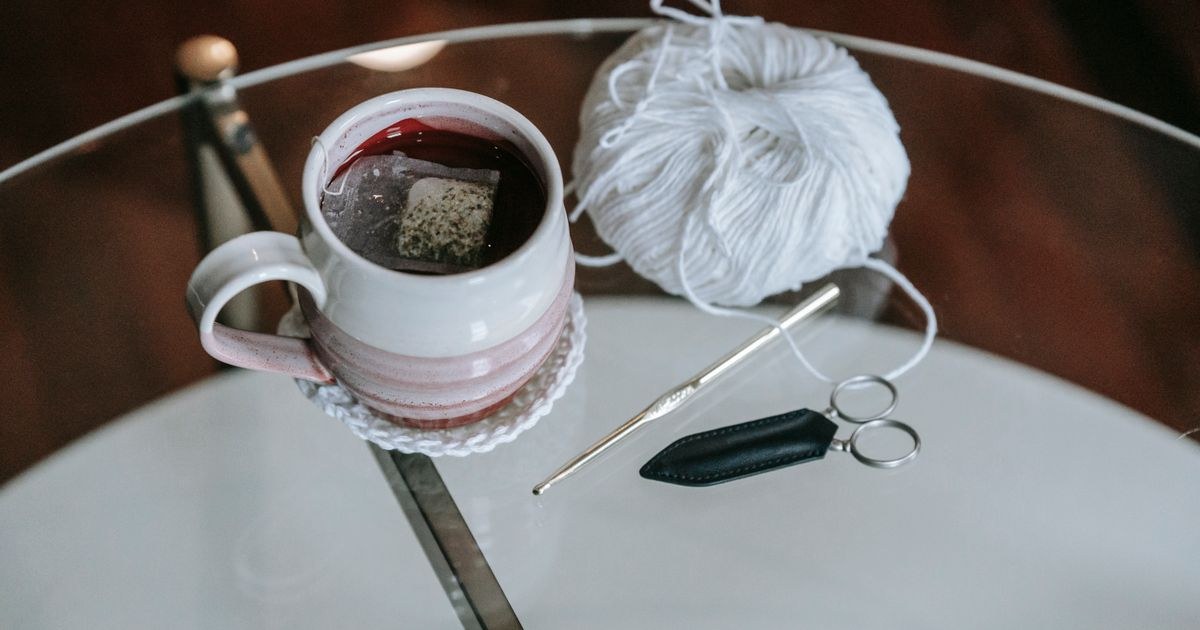
- 1 skein worsted-weight cotton yarn (about 60–80 yards for a set of 4)
- 4.5mm (US size 7) crochet hook
- Stitch marker, to track the start of each round
- Scissors
- Yarn needle, for weaving in ends
Abbreviations (US terms)
| Abbr. | Means |
|---|---|
| sc | Single crochet |
| st(s) | Stitch(es) |
| inc | 2 sc in same stitch (increase) |
| rnd(s) | Round(s) |
See our abbreviations glossary for the full list including UK terms.
Gauge
14 sc and 16 rows measures about 4in / 10cm square with a 4.5mm hook and worsted cotton. Gauge isn't critical here — a coaster a little larger or smaller still works fine under a mug.
Notes
- Written in US terms, worked in a continuous spiral — same technique as our beanie pattern. Use a stitch marker to track round starts.
- Makes one coaster; repeat 3 more times for a set of four.
- Cotton yarn is recommended over acrylic since it absorbs moisture better under a cold or warm drink.
- For a square alternative, see our granny square tutorial, which works up into a lovely matching set.
Pattern (make 4)
Make a magic ring, 6 sc into ring, place marker. (6 sts)
Inc in every st around. (12 sts)
[sc 1, inc] around. (18 sts)
[sc 2, inc] around. (24 sts)
[sc 3, inc] around. (30 sts)
Sl st into next st to close, or work one round of sc without increasing for a slightly firmer edge before closing.
Fasten off, leaving a 4in / 10cm tail. Weave in ends with a yarn needle. Repeat the entire pattern 3 more times for a set of four.
A tutorial on crocheting a basic round coaster, useful for seeing consistent tension and edging in a small flat project.
Our pick
Cotton worsted-weight yarn, 3-pack
Enough yarn for several sets of coasters in coordinating or contrasting colours from one order.
View on Amazon →Making a matching set and gifting
Coasters are one of the most giftable things you can crochet, because they're useful, quick, and nobody minds getting a set of four in a colour they didn't choose themselves. To make a set feel intentional rather than like practice, keep the tension even across all four and finish each the same way — the same edge round, the same colour — so they stack neatly and read as a set. A simple ribbon or a small stack tied with yarn makes a surprisingly polished present.
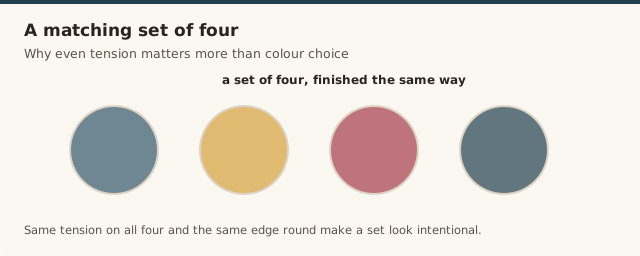
If you're batch-making for a housewarming or a teacher gift, a set of coasters pairs well with the other quick wins in our easiest first projects list, and the same cotton does double duty for a matching square from our granny square tutorial.
Care and washing
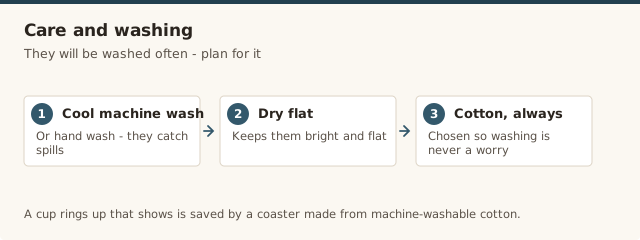
Because coasters catch condensation and the odd spill, they'll be washed often, and cotton handles that beautifully. Toss them in a cool machine wash or hand-wash them, and dry them flat — they'll come out just as bright as the day you made them. I make my coaster sets in machine-washable cotton precisely so I never have to be precious about them.
If a coaster starts to look a little fuzzy or stretched after months of use, a quick steam block with your hands brings the circle back to flat, and our guide to blocking crochet shows the method if you haven't blocked before. Make sure your ends are woven in securely, because a loose tail will work its way free after a few washes.
Sizing up to mug rugs or trivets
The same increase pattern that makes a coaster makes a mug rug or a trivet just by carrying on. Keep increasing in the same rhythm — one more plain stitch between increases each round — until the circle reaches the size you want, then finish with the same edge. A mug rug at six or seven inches still sits flat, and a trivet at eight to ten inches needs a thicker cotton or a double strand so it insulates properly.
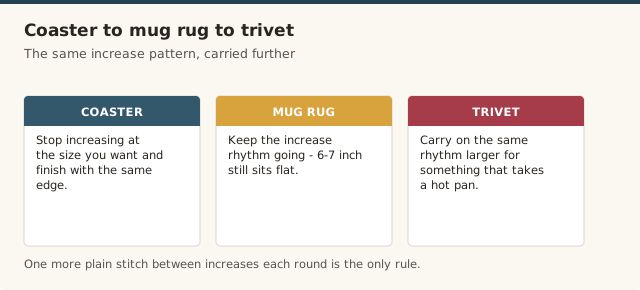
For anything meant to hold a hot pan, stick to cotton and work at a tight gauge, because acrylic will soften under real heat. If you only ever make the coaster size, that's fine too — the logic is identical, which is what makes this pattern a nice foundation for the crochet in the round technique generally.
Common mistakes & fixes
Fix: too many or too few increases were worked in a round. Recount after each round against the numbers in the pattern before moving on, and a marker at the round start helps you catch the drift early.
Fix: your tension is too tight, especially in the outer rounds. Loosen your grip slightly as you work the edge, and give the finished coaster a light steam block to flatten it.
Fix: the starting tail wasn't pulled tight enough. Tug it firmly after the first round and weave it back through the ring stitches before trimming, which locks the centre closed.
Fix: work at a tighter gauge or drop a hook size so the fabric is dense. A coaster should be solid enough to catch a spill, not let it pass straight through.
Fix: tension drifts between sessions. Use the same hook and yarn throughout, check each new coaster against the first one as you go, and finish each with the same edge round so they stack evenly.
Fix: weave the tail in through several stitches in different directions rather than one straight path, and leave it slightly long. A securely woven end should survive repeated washing without budging.
Frequently asked questions
What is the best yarn for crochet coasters?
Cotton worsted-weight yarn is the standard choice, since it absorbs moisture and holds its shape under a warm or cold drink, unlike acrylic which can flatten and stain more easily.
How big should a crochet coaster be?
A standard coaster measures about 4 inches (10cm) across, large enough for most mugs and glasses without extending far past the base of the cup.
How much yarn do I need for a set of coasters?
A set of four coasters uses roughly 60-80 yards of worsted-weight cotton yarn total, comfortably within a single skein with plenty left over.
Can I make crochet coasters square instead of round?
Yes — work a flat square in rows of single crochet or a granny square instead, keeping the same finished size of about 4in / 10cm. A square set looks just as good and uses the same cotton yarn.
How do I stop my crochet coasters from curling at the edges?
Curling usually comes from tension that's too tight or an edge round worked at a different tightness than the body. Blocking the finished coaster with a light steam or a damp press flattens it, and loosening your grip slightly as you work the outer rounds helps prevent it.
How do I keep a set of coasters all the same size?
Use the same hook and yarn for every coaster, and check each new one against the first as you work, since tension drifts slightly between sessions. Finishing each with the same edge round also helps them stack evenly, so the set looks deliberate rather than mixed.
Can I make these into a mug rug or trivet?
Yes — keep increasing in the same rhythm until the circle reaches the size you want, then finish with the same edge. For a trivet meant to hold a hot pan, stick to cotton at a tight gauge, or work a double strand, so it insulates properly instead of softening under heat.
CrochetGuides is a participant in the Amazon Services LLC Associates Program. As an Amazon Associate we earn from qualifying purchases, at no extra cost to you.