Free Crochet Baby Blanket Pattern for Beginners
A soft, beginner-friendly blanket made with a simple half double crochet repeat and a single crochet border, sized for the stroller, the crib, and tummy time.
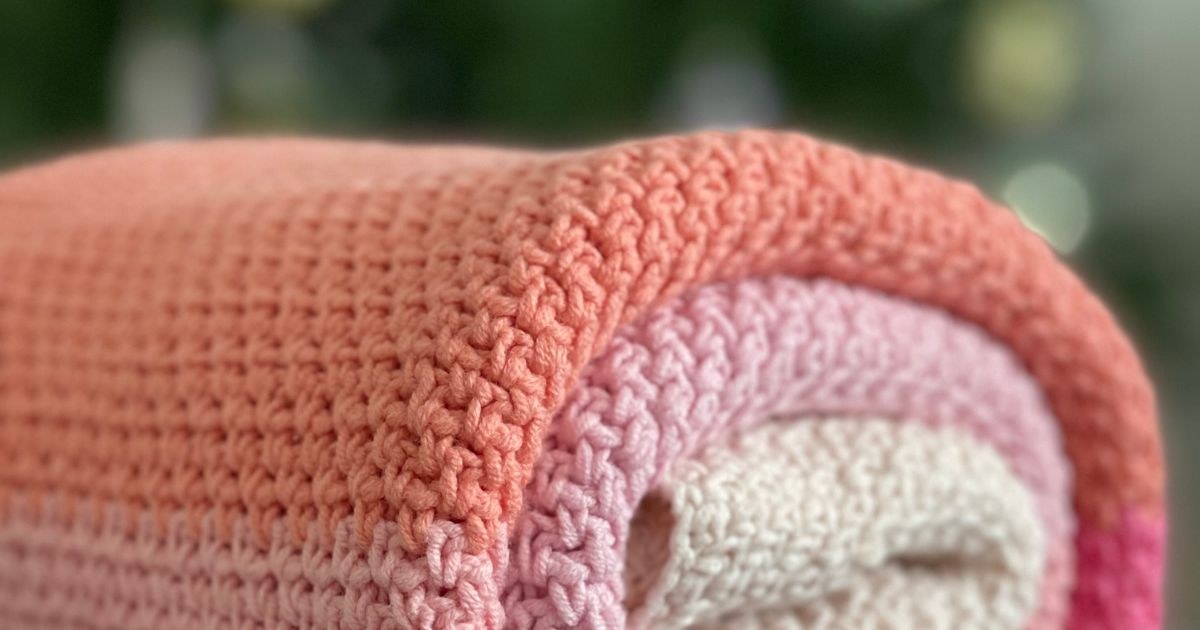
The first baby blanket I ever made was for my neighbour's daughter, and I still remember sitting on the bus with a half-finished rectangle of half double crochet spilling across my lap, counting stitches under my breath while the woman beside me offered, very kindly, to hold my yarn. It took a week of evenings, and when I handed it over at the baby shower, the mum-to-be cried. Not because the stitches were perfect — they weren't — but because it was soft, and warm, and clearly made with two hands and a lot of love. That's the thing about a baby blanket: it doesn't need to be complicated to be the most meaningful thing in the pile.
In my classes I always point beginners toward a blanket as their first big project. It's the same stitch repeated row after row, so by the time you reach the end you've genuinely mastered it, and the result is something a baby will use every single day for years. This one is a simple half double crochet repeat with a single crochet border — no colour changes, no fancy joins, nothing that will trip you up at 9pm after a long day. If you can chain and half double crochet, you can make this blanket. If you're unsure on either, our basic crochet stitches guide has slow walkthroughs for both.
Below I've written the pattern in US terms with a stitch count at the end of every row, plus my honest notes on yarn choice, sizing, washing, and the mistakes I've made so you don't have to. I've also flagged where baby safety changes the design decisions, because a blanket that looks lovely and a blanket that's genuinely right for a newborn aren't always the same thing.
Materials
- About 900 yards (roughly 4 standard skeins) of soft, machine-washable worsted-weight yarn
- 5mm (US H-8) crochet hook
- Two stitch markers (optional, but they keep your edges straight)
- Yarn needle and scissors
Abbreviations (US terms)
| Abbr. | Means |
|---|---|
| ch | Chain |
| hdc | Half double crochet |
| sc | Single crochet |
| sl st | Slip stitch |
| st(s) | Stitch(es) |
Written in US terms throughout. If you learned in UK terms, the stitch names differ — see our basic crochet stitches guide for the equivalents.
Gauge
12 hdc and 10 rows measures about 4in / 10cm square with a 5mm hook and worsted yarn. Gauge matters less here than on clothing, but a quick swatch tells you whether your finished blanket will come out near the intended size, and whether your tension is comfortable.
Notes
- The starting chain is any even number; we chain 82 for 80 stitches across.
- The
ch 2at the start of each row does not count as a stitch — work your first hdc into the first real stitch. - Keep a stitch marker in the first and last stitch of each row so the edges stay straight.
- For a newborn, keep the fabric close and breathable; the half double crochet here gives a dense, warm fabric without decorative holes.
Pattern
Chain 82.
Half double crochet in the 3rd chain from the hook, and in each chain across. Turn. (80 sts)
Place a stitch marker in the last stitch so you never lose the edge on the way back.
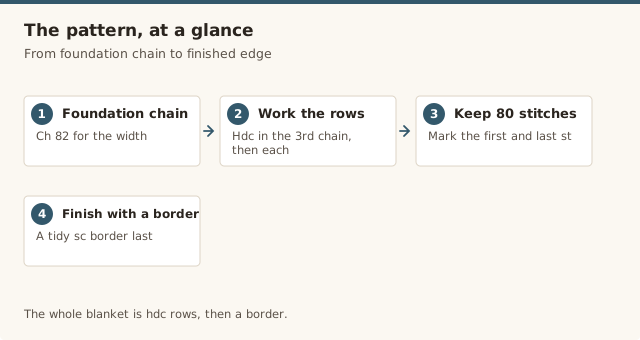
Chain 2 (does not count as a stitch), half double crochet in each stitch across. Turn. (80 sts each row)
Repeat until the piece measures about 30in / 76cm long, roughly 76 rows at this gauge. Count the stitches every few rows — it takes ten seconds and saves a long unravelling session later.
Chain 1, then single crochet evenly around all four edges, placing 3 single crochet in each corner so the corner turns cleanly. Join with a slip stitch to the first single crochet.
On the side edges, aim for one single crochet per row-end; it doesn't need to be exact, just consistent so the edge lies flat.
Chain 1, single crochet in each stitch around, placing 3 single crochet in each corner stitch. Join, fasten off, and weave in the ends.
Choosing safe yarn for babies
Yarn choice matters more for a baby item than almost any other project, because a blanket gets mouthed, spilled on, and washed constantly. A soft, machine-washable acrylic or cotton yarn labelled safe for babies is the easiest starting point — it survives the washing machine, dries quickly, and won't irritate the skin the way a scratchier wool might. I tend to reach for a cotton blend in warm weather and a soft acrylic in winter, but honestly the machine-washable part is the one thing I won't compromise on.
What I avoid is the tempting but risky stuff: novelty yarns with loose fibres, sequins, or eyelash fuzz, and anything mohair-like that can shed or tickle a newborn's face. I also steer clear of very open, lacy stitches for the youngest babies, no matter how pretty they look in photos — a tiny finger through a hole is a real, avoidable snag. If you want to understand how the weight of the yarn changes the feel and thickness of the finished fabric, our yarn weight guide walks through the options in plain English.
Sizing up or down
The nice thing about a plain half double crochet repeat is that it scales cleanly. The width is set by your starting chain, which needs to be an even number for this stitch, and the length is just however many rows you feel like working. To make a wider blanket, chain any larger even number and subtract two for your stitch count; to make a smaller one, such as a preemie or stroller size, chain less. At this gauge, about 12 half double crochet stitches equal 4 inches, so adding 12 chains adds roughly 4 inches of width.
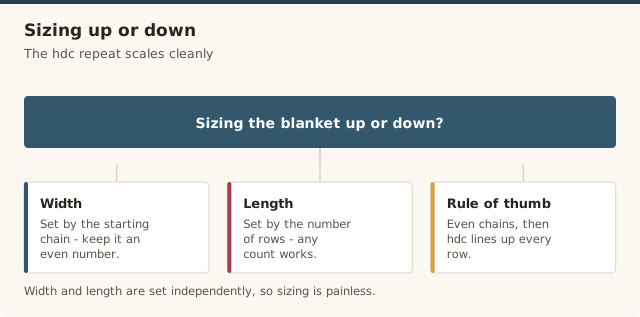
When I size up to a full cot blanket, I add a couple of extra skeins and check the width against the cot before I get too far in, because nobody wants to rip back forty rows of a blanket. Keep the border the same two single crochet rounds whatever the size — it gives the edges a tidy, finished look and stops the corners curling.
Care & washing
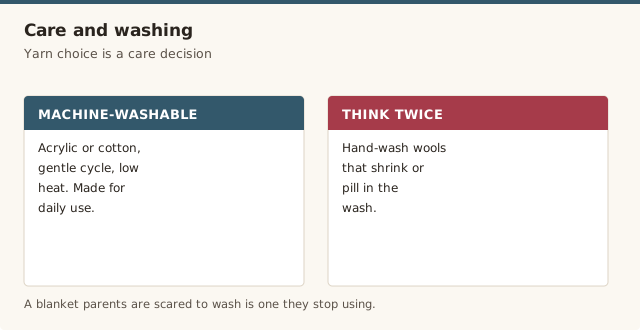
Because I make every baby blanket machine-washable, care is easy, and I always tell new parents that's the whole point — a blanket they're scared to wash is a blanket that gets used once and then folded away. Wash it on a gentle or delicate cycle in a mesh laundry bag with a mild, fragrance-free detergent, and lay it flat to dry rather than hanging it, which can stretch the border out of shape.
If your blanket has curled at the edges from tight tension or just from being carried around, a light block will smooth it out: dampen it, pin it flat to shape, and let it dry completely. Our how to block crochet guide shows the whole process, and it's worth doing before you gift the blanket so it arrives looking its best.
Gifting a handmade baby blanket
A handmade blanket is one of the few baby shower gifts that keeps giving — it becomes the car blanket, the pushchair cover, the thing that gets draped over a sleeping baby in every photo. When I gift one, I include a small card with the yarn care instructions and a note that it's machine-washable, because that single sentence is what makes the parents actually use it. If I know the family well, I ask about any skin sensitivities before choosing yarn, and I stick to colours that work for a boy or a girl so the blanket isn't boxed away if a second baby comes along.
One habit I've kept from my own early mistakes: include a gentle note about safe sleep, pointing the parents to current guidance from their pediatrician rather than assuming they know how and when to use a loose blanket with a newborn. It feels like over-explaining until you remember how much conflicting advice new parents are already fielding. And if you enjoy this project and want to make a matching set, our baby booties pattern uses the same washable yarn and beginner-friendly approach, so the whole set stays coherent.
Common mistakes & fixes
Fix: place a stitch marker in the first and last stitch of every row, and count your stitches every few rows — catching one dropped stitch early beats unravelling ten rows at the end.
Fix: in this pattern the
ch 2 does not count as a stitch, so work your first half double crochet into the first real stitch of the row, not the chain.
Fix: loosen your grip a touch, or go up a hook size to 5.5mm. A swatch is the cheapest way to check before you commit to eighty stitches a row.
Fix: for the youngest babies, keep the fabric close and breathable so tiny fingers can't catch in holes; reserve lacy textures for older children or decorative throws.
Fix: check the label before you start and choose a machine-washable acrylic or cotton blend — a baby blanket gets washed often, and this single choice decides whether it's used for years or folded away.
Fix: leave a tail of at least six inches, weave it through several stitches in two different directions, and only then trim close to the fabric so nothing can work its way free.
Our pick
Lion Brand Babysoft Yarn
A soft, machine-washable worsted-weight yarn in a wide range of gentle colours, ideal for a baby blanket you can throw in the wash without a second thought.
View on Amazon →Frequently asked questions
What size should a crochet baby blanket be?
A rectangular baby blanket of roughly 30 by 34 inches is a versatile size that works for the stroller, the crib, and tummy time, though anything from about 24 to 36 inches on a side is common. This pattern lands around 28 by 32 inches with the border.
How many chains do I need to start a baby blanket?
That depends on the stitch and yarn, but for this half double crochet blanket I chain 82, which gives 80 stitches across after the turning chain. To adjust, start with any even number of chains and skip the first two chains on row one.
What yarn is best for a baby blanket?
A soft, machine-washable acrylic or cotton yarn labelled safe for babies is the easiest choice, since a baby blanket gets washed constantly. Avoid novelty or fuzzy yarns with loose fibres, and steer clear of lacy, holey stitches for newborns.
Is a crochet blanket safe for a newborn?
Handmade blankets should be used according to current safe sleep guidance, which generally means keeping loose blankets out of a newborn's sleep space. A breathable, closely-worked blanket with no loose parts and no holes large enough for tiny fingers is the safest style to make, and it is always worth checking current guidance with a pediatrician.
Can I wash a crochet baby blanket in the washing machine?
Yes, if the yarn label says machine-washable. Use a gentle or delicate cycle with mild, fragrance-free detergent and a mesh laundry bag, then lay it flat to dry so the shape holds.
How long does it take to crochet a baby blanket?
For a beginner working on this half double crochet pattern, a few hours a week over a couple of weeks is realistic, though experienced crocheters often finish one over a weekend. The simple repeat makes it easy to pick up and put down.
What crochet stitch is easiest for a beginner baby blanket?
Half double crochet, which this pattern uses, is a great middle ground: it grows faster than single crochet and stays denser and warmer than double crochet, so the fabric is warm and breathable without big holes.
CrochetGuides is a participant in the Amazon Services LLC Associates Program. As an Amazon Associate we earn from qualifying purchases, at no extra cost to you.