Free Single Crochet Beanie Pattern for Beginners
Your first project with real shaping — a flat crown that grows into a wearable hat.
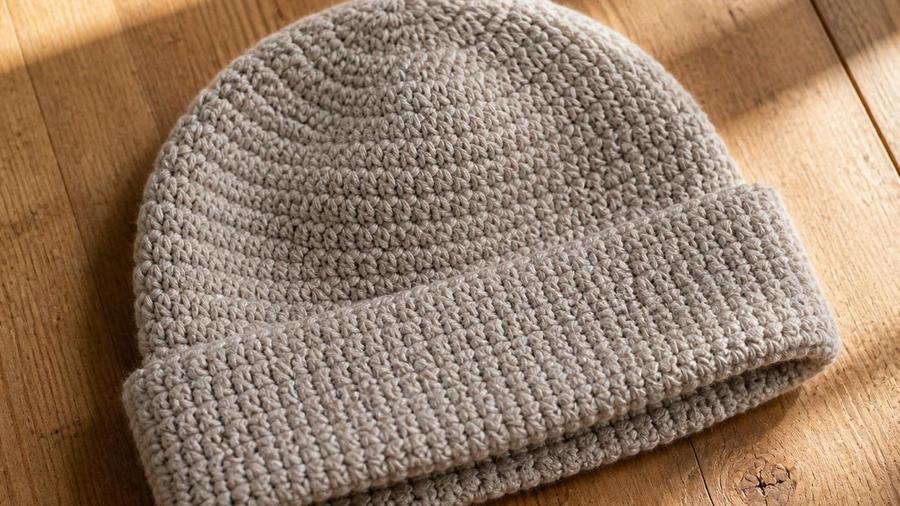
The first thing I ever crocheted that another person wore in public was a beanie, and I handed it over about as nervous as I've ever been. A beanie is deceptively simple — a flat circle that grows until you stop growing it, then straight rounds until it's long enough — but it's also the first project where shaping actually matters. Get the crown wrong and it ruffles or cups no matter how neat your stitches are. I've taught enough of them to know the beanie is where people finally understand increases, because you can see the flat circle forming in your hands round by round. Nail this one, and hats, amigurumi heads, and anything worked in spiral rounds all start to make sense.
Materials
- 1–2 skeins worsted-weight yarn (about 150–200 yards)
- 5.0mm (US size H) crochet hook
- Stitch marker, to track the start of each round
- Scissors
- Yarn needle, for weaving in ends
Abbreviations (US terms)
| Abbr. | Means |
|---|---|
| ch | Chain |
| sc | Single crochet |
| st(s) | Stitch(es) |
| inc | 2 sc in same stitch (increase) |
| rnd(s) | Round(s) |
For the full list including UK equivalents, see our abbreviations glossary.
Gauge
14 sc and 16 rows measures about 4in / 10cm square with a 5.0mm hook and worsted yarn. Gauge affects final fit here more than in a scarf — swatch first if you want a precise size.
Notes
- Written in US terms and worked in a continuous spiral — use a stitch marker to track where each round begins, since rounds are not joined with a slip stitch.
- This makes one adult size. To adjust: keep increasing the crown by one more round of increases for a larger size, or stop one round earlier for a smaller size.
- New to amigurumi-style spiral rounds? Our amigurumi guide explains the technique in more depth.
- Starting with a magic ring? Our magic ring tutorial walks through Round 1's first step in detail.
Pattern
Make a magic ring, 6 sc into ring, place marker. (6 sts)
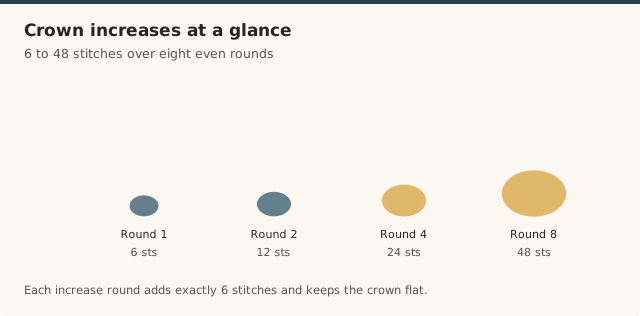
Inc in every st around. (12 sts)
[sc 1, inc] around. (18 sts)
[sc 2, inc] around. (24 sts)
[sc 3, inc] around. (30 sts)
[sc 4, inc] around. (36 sts)
[sc 5, inc] around. (42 sts)
[sc 6, inc] around. (48 sts)
Sc in every st around, no increases. Work 12 rounds straight, or until the hat measures about 2in / 5cm less than the wearer's head circumference — single crochet fabric stretches once worn.
Slip stitch into the next stitch to close, fasten off leaving a 6in / 15cm tail. Weave in ends with a yarn needle.
Resizing the fit
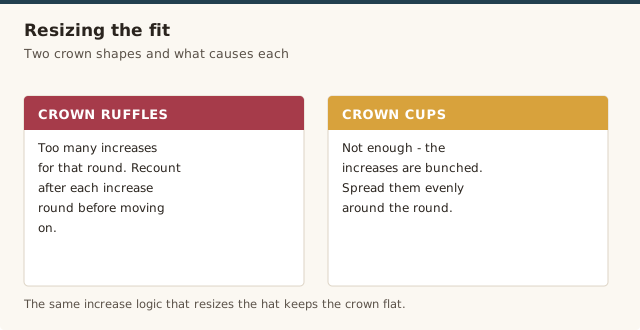
This pattern makes one standard adult size, but the same increase logic scales up or down easily once you understand what each round is doing: every increase round adds 6 stitches to the total, and the crown keeps its flat, non-ruffled shape as long as the increases are spread evenly around each round. For a child or a smaller adult, stop increasing after Round 7 (42 sts) instead of Round 8, then work straight rounds as normal. For an extra-large adult, add one more increase round after Round 8 — work [sc 7, inc] around for 54 sts — before switching to straight rounds. In both cases, the "stop 2in short of head circumference" rule for the straight body still applies.
If you want to use a different yarn weight than worsted, treat the stitch counts as a starting point rather than a fixed rule: crochet a small gauge swatch first, adjust your hook size until the fabric isn't stiff or floppy, then expect to add or remove a round or two of increases to land on the same finished circumference.
Common mistakes & fixes
Our pick
Stitch marker & tapestry needle kit
Locking stitch markers are essential for tracking round starts in a spiral pattern like this one, and the needle handles weaving in ends cleanly.
View on Amazon →A full walkthrough of a crochet beanie, useful for seeing how the crown decreases shape the top.
Frequently asked questions
How do I know when to stop increasing on a crochet beanie?
Stop increasing once the flat crown circle measures about 2 inches less than the wearer's head circumference, since single crochet fabric stretches slightly once worn.
How much yarn do I need for a crochet beanie?
A standard adult beanie uses roughly 150 to 200 yards of worsted-weight yarn, comfortably within a single 100-gram skein for most brands, with some left over.
Why is my beanie crown coming out ruffled instead of flat?
A ruffled crown means too many increases were worked for the round it's on. Recount your stitches after each increase round and compare to the pattern's stated count before continuing.
How do I resize this beanie pattern for a child or a larger adult?
Work one fewer round of increases (stop at Round 7) for a child or smaller adult, or one more round of increases (add a Round 9 following the same [sc __, inc] logic) for an extra-large adult. Then continue straight rounds until the body measures about 2 inches less than the intended head circumference.
Can I make this beanie with a different yarn weight?
Yes, but the stitch counts above are specific to worsted-weight yarn with a 5.0mm hook. With a different weight, crochet a small gauge swatch first and adjust your hook size until you're getting a fabric that isn't stiff or floppy, then expect to add or remove a round or two of increases to reach the same finished circumference.
How do I make a folded brim on a crochet beanie?
Work the straight-rounds section longer than you need — an extra 2 to 3 inches — then fold the bottom edge up and add a few small anchor stitches to hold it in place. The fold works best when the single crochet fabric is dense enough to hold its shape.
Why does my beanie keep stretching out and slipping off?
Single crochet stretches over time, so if the hat is slipping, it's likely a touch too large. Crochet with a smaller hook for a firmer fabric, or stop the crown increases one round earlier so the finished circumference is about 2 inches less than the head it's for.
CrochetGuides is a participant in the Amazon Services LLC Associates Program. As an Amazon Associate we earn from qualifying purchases, at no extra cost to you.