Best Crochet YouTube Channels for Beginners
Four established channels worth starting with, and what makes each one actually useful once you're past your first stitches.
I've lost count of the number of students who arrive at their first class having already spent an entire weekend glued to YouTube, more confused than when they started. The problem is never a lack of videos — it's that there are thousands, and they all explain the same stitch slightly differently, with different hooks, different yarn, and different terms. I still remember one beginner who had mastered a beautiful granny square from a US channel and then panicked when a UK pattern called the same stitch something else entirely. That's the moment I started paying real attention to which channels teach clearly and consistently. The four below are the ones I actually point my students toward, and the reasons each one earns its place.
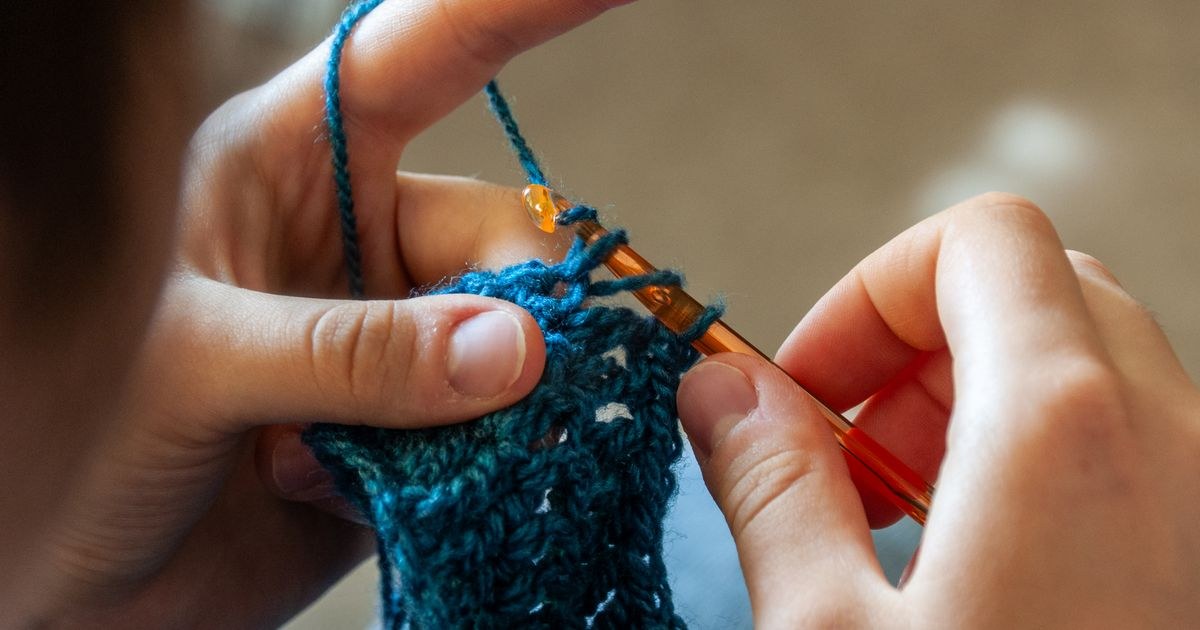
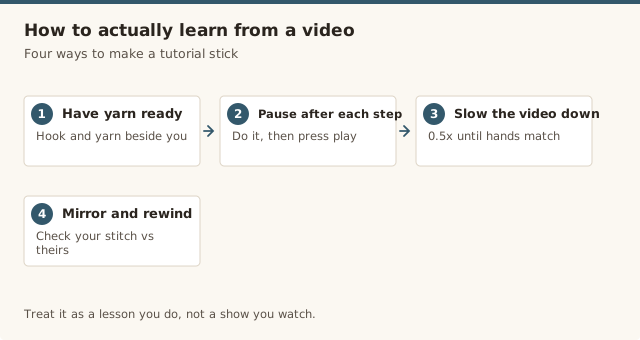
What I tell every new student is that a video only teaches you if you watch it with your hook in your hand, not curled up on the sofa. The people who make the fastest progress are the ones who pause, rewind, and crochet along at half speed until the movement is in their fingers. A channel can't read your tension the way a teacher in the room can, so the habit that replaces me is stopping the video every few seconds and doing the stitch yourself before you press play again.
Channels worth starting with
The Crochet Crowd
Hosted by Mikey Sellick, this long-running channel covers everything from absolute basics to full patterns, with a large back catalogue of stitch tutorials and free patterns to work through once you're ready.
HappyBerry Crochet
Hosted by Laura Eccleston in the UK, this channel explains stitches using both UK and US terminology, which is useful if you're not sure yet which system you'll end up following in patterns. It has a dedicated beginner playlist that starts from zero.
Bella Coco
Known for calm, clearly-paced tutorials that focus on one technique at a time, this channel is a good fit if you prefer a slower, more methodical teaching style over fast-paced content.
Red Heart Yarns
Run by the yarn company itself, this channel regularly publishes beginner tutorials alongside pattern videos, and tends to be well-produced and consistent, since it's backed by an established brand rather than an individual creator.
What to watch first
Whichever channel you pick, look for a dedicated beginner playlist rather than searching individual videos. Most of the channels above have one, covering roughly the same order: how to hold the hook and yarn, chain stitch, single crochet, and reading a basic pattern. Our own guide to reading a pattern and hook buying guide pair well as reference material alongside video tutorials, and our basic crochet stitches guide covers the written steps for each stitch you'll see on screen.
How to actually learn from a video
The mistake most beginners make is watching a tutorial the way they'd watch television. Instead, keep your hook and yarn out and crochet along, pausing after each step to do the stitch yourself before you play the next few seconds. Most channels let you drop the playback speed to 0.75x or 0.5x, and that single button does more for a beginner than any amount of rewatching at full speed, because it gives your eyes time to catch the exact yarn-over and hook positions.
Write down the stitch names as they're spoken rather than trying to remember them, especially if the channel teaches in a different terminology to the one you've seen before. A short note of what each stitch is called in both US and UK terms — which our abbreviations glossary lays out — will save you the confusion I saw in that granny-square student, and it only takes a minute.
Video tutorials vs written patterns
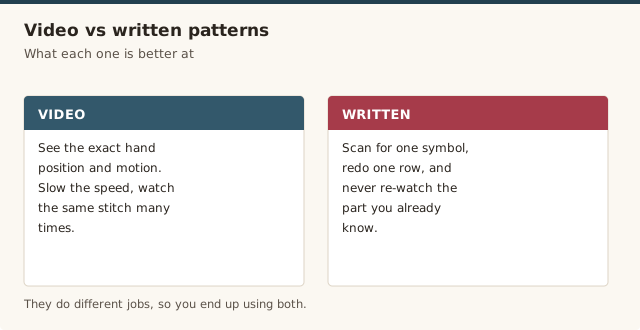
Neither one is better — they do different jobs. Video is unmatched for learning the physical motion of a new stitch, because you can watch the hand position and how the yarn flows over the hook. Written patterns win once you know the stitches, because you can glance down to find your place instead of scrubbing back and forth through a video to locate the one row you forgot. I've found most people learn the motion from video, then switch to a written pattern for the actual project.
If you've been leaning entirely on video and feel stuck, that's often why — there's no reference to glance at. Pairing a channel with our guide to reading a pattern gives you both sides: watch to learn, read to execute. The two reinforce each other, and you'll stop feeling lost the moment a written instruction references a stitch you've only ever seen on screen.
Picking a follow-along project
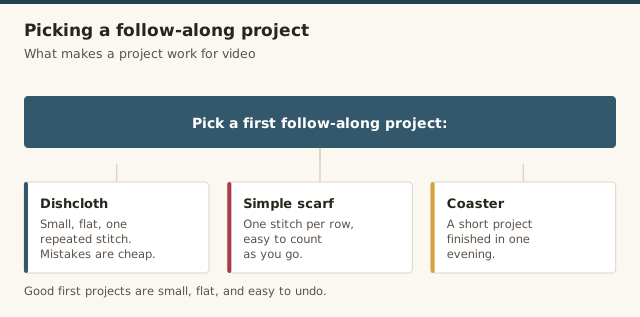
Your first video project should be something small and flat, where every stitch is visible and a mistake is cheap to undo. A dishcloth, a simple scarf, or a coaster are all better choices than a garment or a stuffed toy, which hide their stitches and punish you for the small errors you're still making. Start with whatever the channel's own beginner playlist suggests, and resist the urge to jump to a pretty cardigan tutorial in week one.
Once a flat project feels automatic, amigurumi and wearables open up, and the same channels usually have dedicated playlists for each. If that's where you're headed, our easiest first projects list and basic stitches guide pair well with the videos, giving you written backup for the exact techniques you'll see on screen.
Common mistakes & fixes
Fix: pick one channel for the absolute basics and stay with it until the fundamentals feel automatic. Different teachers hold the hook and yarn slightly differently, and switching too early just multiplies confusion.
Fix: drop the playback speed to 0.75x or 0.5x. At half speed the yarn-over and hook positions become obvious, and most beginners find they can follow along without constantly rewinding.
Fix: this is the US vs UK terminology split. Check which system each source uses and keep our abbreviations glossary open so you can translate as you go rather than guessing.
Fix: start with the channel's own beginner playlist and build up one skill at a time. A project you can finish is worth far more than an ambitious one that stalls halfway and never gets completed.
Fix: crochet along with the video, pausing after each step to do it yourself. The muscle memory only forms when your hands are actually moving, not just your eyes.
Fix: save videos to a playlist as you go, or note the timestamp of the exact stitch you needed. A few seconds of noting down where something is saves a full rewatch next time you need it.
Frequently asked questions
Is it better to learn crochet from YouTube or a written pattern?
Video is usually easier for learning the physical motion of a new stitch, since you can watch hand position and yarn tension directly. Written patterns are faster to reference once you already know the stitches, since you don't need to scrub through video to find your place.
Do I need to watch a UK or US terminology channel specifically?
Not necessarily, but it helps to know which system a channel teaches in, since the stitch names differ between US and UK terms. Some channels state both, which is useful if you plan to follow patterns from either system later.
Should beginners follow one channel or watch several?
Sticking with one channel for the absolute basics avoids conflicting explanations of the same stitch. Once the fundamentals feel comfortable, branching out to other channels for specific patterns or techniques works well.
Which crochet YouTube channel is best for absolute beginners?
For someone starting from zero, channels like Bella Coco and HappyBerry Crochet are popular because they pace things slowly and clearly, while The Crochet Crowd is a strong all-rounder with a big beginner back catalogue. The best choice depends more on whose teaching style you find easiest to follow than on the channel itself.
Is it normal to rewind a crochet tutorial over and over?
Completely normal — most beginners rewatch the same few seconds of a stitch many times before the hand movement clicks. Slowing the playback speed to 0.75x or 0.5x is one of the most useful things a beginner can do, since it makes the exact yarn-over and hook positions far easier to follow.
How do I find a channel that matches my learning style?
Watch one beginner lesson from two or three different channels and notice which pace and teaching voice you can follow without rewinding. Some people prefer slow, methodical delivery, others a more casual style — the right channel is the one whose explanations click for you, not the one with the biggest subscriber count.
Can I learn amigurumi from YouTube too?
Absolutely — several of the channels above have dedicated amigurumi playlists that walk through the magic ring, increases, and decreases for stuffed toys. Video is especially helpful for amigurumi, since sewing the pieces together is far easier to understand when you can watch the needle placement.
CrochetGuides is a participant in the Amazon Services LLC Associates Program. As an Amazon Associate we earn from qualifying purchases, at no extra cost to you.