Big yarn, a big hook, and one simple stitch — this is the fastest genuinely cozy blanket I teach.
Updated 2026 · US terms · About 40 x 50in / 102 x 127cm
I made my first chunky blanket on a dare, honestly. A student in one of my evening classes said she wanted a blanket finished before her flight home in four days, and I told her that was impossible for anyone who'd only been crocheting for six weeks. Then I remembered super bulky yarn existed, handed her a 10mm hook, and watched her finish a lap throw in two evenings with hours to spare. She cried a little on the last row, not from difficulty but from disbelief that something so soft and substantial had come from her own hands that fast.
That's the whole appeal of a chunky throw: the yarn and the hook do most of the visual work. Every stitch is single crochet, the same stitch most people learn in their very first class, just worked in yarn so thick that each one covers an enormous amount of ground. The texture you see in photos, those fat nubby ridges running across the fabric, isn't a special stitch at all. It's what plain single crochet looks like when you work it into the back loop only, row after row, at this scale.
Below is the exact pattern I use, written in US terms with a stitch count on every row, plus honest notes on the yarn and hook that actually work at this size, how to resize it, and the handful of mistakes that turn a cozy throw into a stiff, uneven one. If you're new to reading a pattern at all, our guide to reading a crochet pattern covers the basics first.
About 650 yards (roughly 4–5 skeins) of super bulky (weight 6) yarn
10mm (US N/P-15) crochet hook
Two stitch markers (optional, but they keep your edges straight)
Yarn needle and scissors
Abbreviations (US terms)
Abbr.
Means
ch
Chain
sc
Single crochet
BLO
Back loop only
sl st
Slip stitch
st(s)
Stitch(es)
Written in US terms throughout. If you learned in UK terms, our basic crochet stitches guide has the equivalents.
Gauge
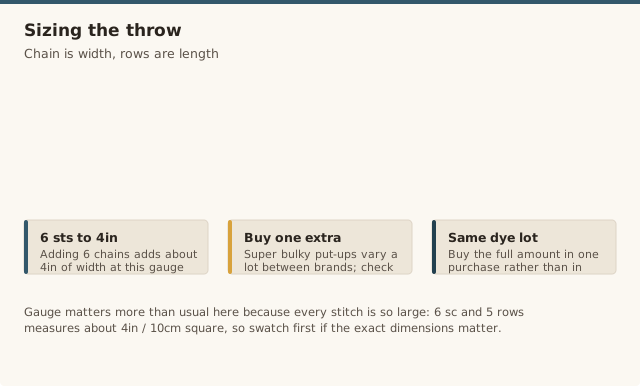
6 sc and 5 rows measures about 4in / 10cm square with a 10mm hook and super bulky yarn. Gauge on a chunky project like this affects finished size more than usual, since each stitch is so large — swatch first if the exact dimensions matter to you.
Notes
The starting chain is any number; we chain 46 for 45 stitches across.
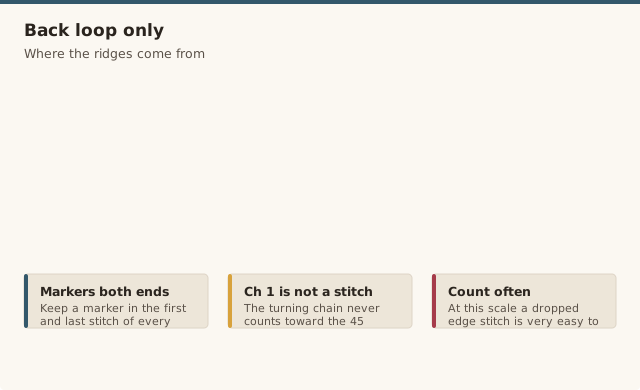
Working every row in the back loop only (BLO) is what creates the ridged, nubby texture — don't skip this or the fabric will look flat and plain.
The ch 1 at the start of each row does not count as a stitch.
Keep a stitch marker in the first and last stitch of each row so the edges stay straight, since a dropped edge stitch is much more visible at this scale than in a standard-weight project.
Pattern
Foundation
Chain 46.
Row 1
Single crochet in the 2nd chain from the hook, and in each chain across. Turn. (45 sts)
Place a stitch marker in the last stitch so you never lose the edge.
Rows 2–58
Chain 1 (does not count as a stitch), single crochet in the back loop only of each stitch across. Turn. (45 sts each row)
Repeat until the piece measures about 50in / 127cm long, roughly 58 rows at this gauge. Because the stitches are so large, count them often — a single missed stitch is easy to feel but easy to lose track of.
Border
Chain 1, then single crochet evenly around all four edges, placing 3 single crochet in each corner so it turns cleanly. Join with a slip stitch to the first single crochet, fasten off, and weave in the ends.
A single border round is usually enough at this yarn weight; the fabric is already dense enough that it won't curl the way a finer-weight blanket can.
Choosing yarn & hook size
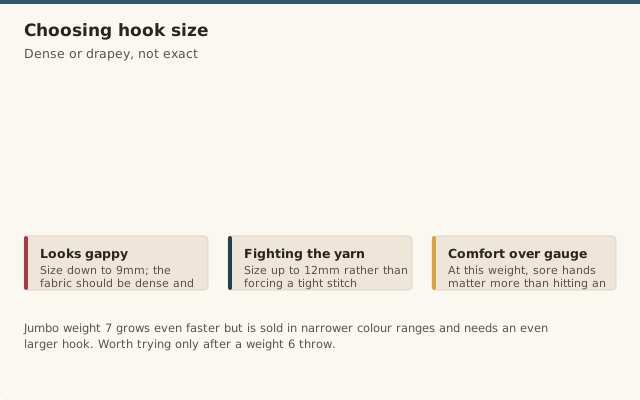
Super bulky (weight 6) yarn is the sweet spot for this pattern: thick enough to grow fast and look dramatically textured, but still findable in a wide range of colours from most yarn brands. I use a 10mm hook, which sits toward the looser end of what most super bulky labels recommend, since a slightly looser gauge here makes the finished throw drapier and less stiff. If your stitches feel like you're fighting the yarn, sizing up to 12mm loosens things further; if the fabric looks gappy and holey rather than dense, size down to 9mm.
Jumbo (weight 7) yarn is the next step up and grows even faster, but it's a more specialized product, usually sold in smaller colour ranges and needing an even larger hook, often 15mm or bigger. I'd recommend it only once you've made one chunky throw at weight 6 and know you love the scale. For anything in between, our yarn weight guide breaks down every standard weight with real comparisons.
Sizing up or down
This pattern scales the same way any single crochet rectangle does: the chain sets the width, and the number of rows sets the length. At this gauge, roughly 6 stitches equal 4 inches, so adding 6 chains adds about 4 inches of width. For a full sofa throw rather than a lap blanket, I'd chain closer to 70 and expect to use 9 or 10 skeins rather than 5.
Because super bulky yarn is sold in relatively small put-ups compared to how much ground it covers, always check the yardage on your specific skein rather than assuming it matches another brand, and buy one extra skein beyond your calculated estimate. Our guide to estimating yarn walks through the swatch-and-scale method if you're changing the size significantly.
Care & washing
Check your yarn's ball band before washing, since super bulky yarns span a wide range of fiber content and not all of them are machine washable. If yours is, use a gentle cycle in a large-capacity machine (a chunky blanket takes up a lot of drum space) and always lay it flat to dry rather than hanging it, since the sheer weight of wet super bulky yarn will stretch the fabric out of shape if it hangs. Our guide to washing crochet items covers fiber-specific care in more depth.
Styling a chunky throw
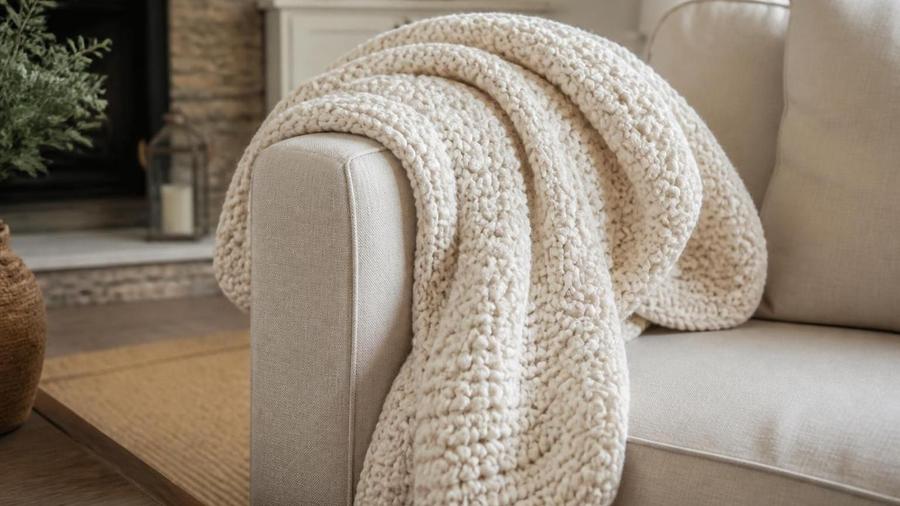
Part of why this style has become so popular in home decor is how much visual texture a single throw adds to a plain sofa or armchair. I fold mine in thirds and drape it over one arm rather than laying it flat across the back, which lets the ridged texture catch the light and shows off the scale of the stitches instead of hiding them. A neutral cream or oatmeal colourway, like the one pictured, works with almost any existing decor, while a bolder colour makes the throw itself the focal point of a room.
If you're making more than one, working each in a slightly different neutral shade and layering them together on the same chair reads as intentional rather than mismatched, and it's a good way to use up partial skeins from other chunky projects. A throw this size also works well folded at the foot of a bed instead of on a sofa, especially in a bedroom that could use a bit more texture without adding another patterned item.
Common mistakes & fixes
Mistake: working into both loops instead of the back loop only, which loses the ridged texture entirely.
Fix: check every row that you're only catching the back loop — the ridge you're building on the previous row should stay visible and untouched on the right side of the fabric.
Mistake: using a hook that's too small for the yarn, leaving your hands sore after a short session.
Fix: go up in hook size rather than forcing a tight stitch through a small hook repeatedly. At this yarn weight, comfort matters more than hitting an exact gauge number.
Mistake: losing track of the stitch count because each stitch takes up so much visual space that a small error is easy to overlook.
Fix: count your stitches at the end of every row, not just occasionally. It takes seconds at this scale and catches a dropped stitch before it's several rows old.
Mistake: running out of yarn one skein short, since super bulky put-ups vary a lot between brands.
Fix: check the yardage printed on your specific skein rather than assuming it matches another brand's super bulky yarn, and buy from the same dye lot in one purchase.
Mistake: hanging the finished blanket to dry after washing.
Fix: always dry a chunky blanket flat. The weight of wet super bulky yarn will stretch a hanging blanket permanently out of shape within hours.
Our pick
Yarn
Bernat Blanket Big Yarn
A soft, budget-friendly super bulky yarn made specifically for fast blanket projects, with a wide colour range and reliable yardage per skein.
What yarn weight is best for a chunky crochet throw?
Super bulky (weight 6) is the standard choice and what this pattern uses, giving a thick, cozy fabric that grows quickly. Jumbo (weight 7) yarn works too and grows even faster, but it's harder to find in a wide colour range and uses a proportionally huge hook, often 15mm or larger.
How long does a chunky throw blanket take to crochet?
This is one of the fastest blanket projects there is, since the huge yarn and hook cover far more area per stitch than a standard-weight blanket. Most crocheters finish a lap-sized throw in a single weekend, working just a few hours a day.
Why does my chunky crochet fabric look holey instead of nubby and dense?
This usually means the hook is too large for the yarn, or the stitches are worked too loosely. Check your gauge swatch against the pattern, and go down half a hook size if your stitches look loose and gappy rather than dense.
What size hook do you need for super bulky yarn?
Most super bulky (weight 6) yarn labels recommend a 9mm to 10mm hook (US M/N-13 to N/P-15). This pattern uses a 10mm hook, which gives a slightly looser, drapier fabric than the tightest end of that range.
How much yarn do I need for a chunky throw blanket?
This lap-throw sized pattern uses roughly 600 to 700 yards of super bulky yarn, which is typically 4 to 5 large skeins depending on the brand. Always buy an extra skein beyond your calculated estimate, since super bulky yarn is sold in small put-ups and running out mid-project is common.
Can beginners make a chunky crochet blanket?
Yes, this is one of the most beginner-friendly blanket styles there is. It uses only single crochet worked in the back loop, one of the first stitches most people learn, and the large scale of the yarn makes it easy to see your stitches clearly as you work.
Is a chunky crochet blanket heavy?
Yes, noticeably more than a blanket made in worsted weight yarn, since super bulky yarn packs a lot of fiber into every stitch. That weight is part of the appeal for many people, giving a warm, weighted-blanket-like feel, but it's worth knowing before you start if you want something lighter.
Nora has been teaching crochet for 12 years, from absolute beginners to people coming back to the craft after decades away. She started CrochetGuides to write the clear, honest instructions she wishes she'd had when she was learning — the ones that actually work the first time.
CrochetGuides is a participant in the Amazon Services LLC Associates Program. As an Amazon Associate we earn from qualifying purchases, at no extra cost to you.