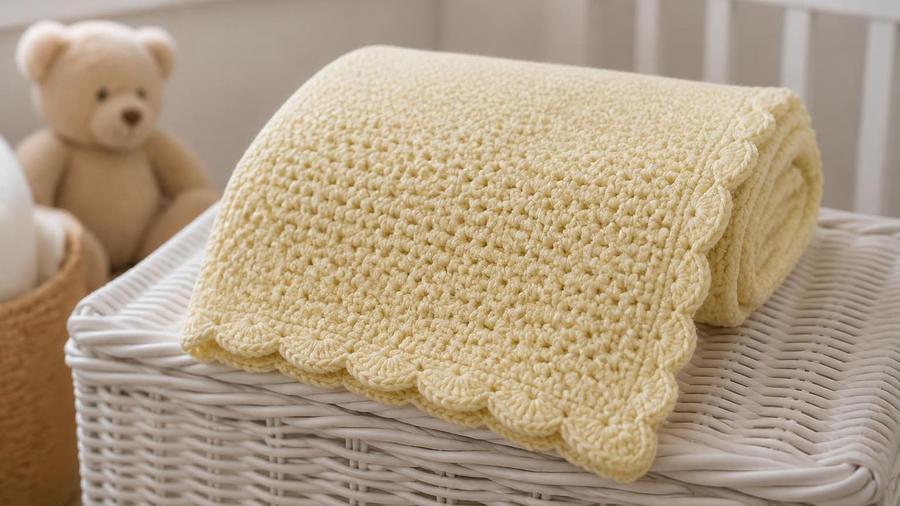
One plain stitch for the body, one repeating shell for the edge — a blanket that looks far more finished than the two skills it actually took to make it.
Updated 2026 · US terms · About 30 x 34in / 76 x 86cm with border
Of all the baby blankets I've taught, this is the one I hand to the most nervous beginners, the ones who've told me on the phone beforehand that they're "not really crafty" and just want to make one nice thing for a friend's shower. The body is nothing but single crochet, the very first stitch most people ever learn, worked in perfectly straight rows with nothing to trip over. Then, right at the very end, one round of a shell-stitch border turns a plain rectangle into something that looks like it came out of a boutique.
I designed it this way on purpose. A beginner doesn't need a complicated stitch pattern to make something beautiful; they need one reliable stitch to build confidence, and one small, contained challenge to feel proud of. The shell border here is exactly that: it's worked only once, around the outside edge, so if you find it fiddly the first few repeats, you've got the whole rest of the blanket's worth of single crochet practice behind you already, and only a single round left to get comfortable with something new.
This is a distinct pattern from the other baby blankets on this site: it isn't the taller, faster-growing half double crochet blanket in our other baby blanket pattern, and it isn't the smaller comfort blanket with an attached amigurumi head in our baby lovey pattern. This one is a plain single crochet body specifically built to showcase a scalloped edge, and I'd reach for it specifically when the recipient (or the gift-giver) wants something that photographs well and looks intentional, without asking a beginner to learn three new techniques at once.
Baby safety note: keep the body in the dense single crochet shown here rather than substituting a lacier stitch for a newborn, so tiny fingers can't catch in holes, and follow current safe sleep guidance from a pediatrician about how and when a loose blanket is used in the crib. See the FAQ below.
About 950 yards (roughly 4 standard skeins) of soft, machine-washable worsted-weight yarn
5mm (US H-8) crochet hook
Two stitch markers (optional, but they keep your edges straight)
Yarn needle and scissors
Abbreviations (US terms)
Abbr.
Means
ch
Chain
sc
Single crochet
dc
Double crochet
sl st
Slip stitch
st(s)
Stitch(es)
Written in US terms throughout. If you learned in UK terms, our basic crochet stitches guide has the equivalents.
Gauge
14 sc and 16 rows measures about 4in / 10cm square with a 5mm hook and worsted yarn.
Notes
The starting chain needs to divide evenly for the shell border to come out symmetrical; we chain 76 for 75 stitches across, which works cleanly with the shell repeat used here.
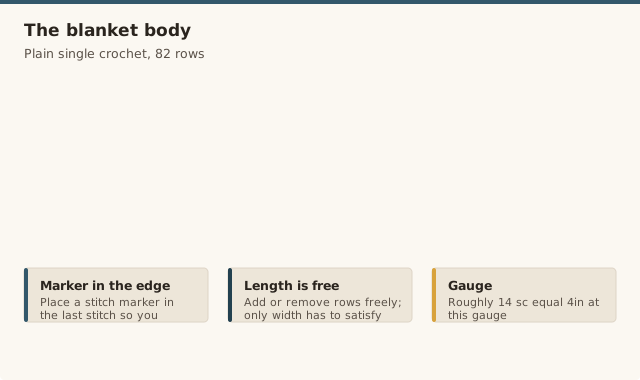
The ch 1 at the start of each body row does not count as a stitch.
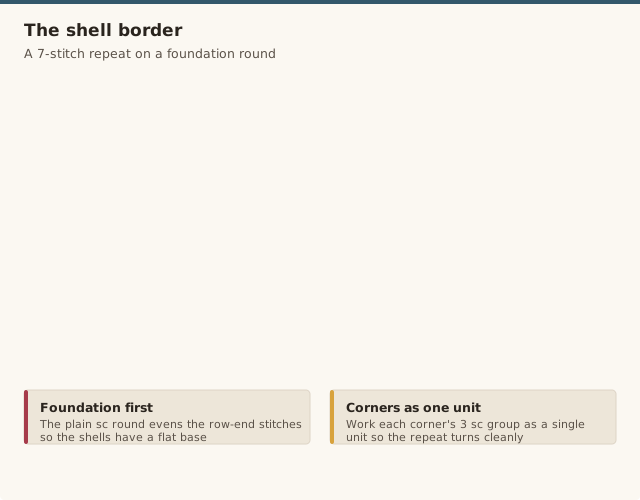
Work the border in two rounds: a plain single crochet foundation round first, then the shell round on top of it. Don't skip the foundation round — it evens out the row-end stitches so the shell repeat has a consistent base to work into.
Pattern
Foundation
Chain 76.
Row 1
Single crochet in the 2nd chain from the hook, and in each chain across. Turn. (75 sts)
Place a stitch marker in the last stitch so you never lose the edge.
Rows 2–82
Chain 1 (does not count as a stitch), single crochet in each stitch across. Turn. (75 sts each row)
Repeat until the piece measures about 30in / 76cm long, roughly 82 rows at this gauge.
Border, Round 1 (foundation)
Chain 1, then single crochet evenly around all four edges, placing 3 single crochet in each corner so the corner turns cleanly. Join with a slip stitch to the first single crochet.
Border, Round 2 (shells)
Chain 1. *Skip 2 stitches, 5 double crochet in the next stitch, skip 2 stitches, slip stitch in the next stitch; repeat from * around, working through each corner's 3-stitch group as one unit so the shell pattern turns the corner smoothly. Join with a slip stitch to the first slip stitch, fasten off, and weave in the ends.
The shell border, explained
A shell is just a fan of stitches, in this case 5 double crochet, all worked into the same single point, which makes the stitches spread out and curve since they're competing for the same base. Skipping 2 stitches on either side of that point, then anchoring the whole shell with a slip stitch, is what creates the visible gap between each fan and gives the border its scalloped, wave-like edge.
The trickiest part for most beginners isn't the shell itself but making the repeat come out even all the way around, especially at corners. Because this pattern's stitch count and shell repeat are designed to divide evenly, following the counts as written should land you back at your starting point cleanly; if you've resized the blanket, count your foundation round stitches first and adjust the corner groupings slightly rather than the shell repeat itself, so the shells stay a consistent size throughout. It's worth working one full practice repeat on a scrap swatch first if you've never made a shell stitch before, just so your hands know the rhythm before you commit to a full round on the real blanket.
Choosing safe yarn for babies
A soft, machine-washable acrylic or cotton yarn labelled safe for babies is the easiest starting point for this project, since the blanket will be washed constantly. I avoid novelty yarns with loose fibres or eyelash fuzz, both because they irritate a baby's skin and because they blur the crisp shell shape on the border, which relies on clean, defined stitches to read clearly. Our yarn weight guide covers how different weights affect the finished fabric if you want to swap from the worsted weight used here.
Sizing up or down
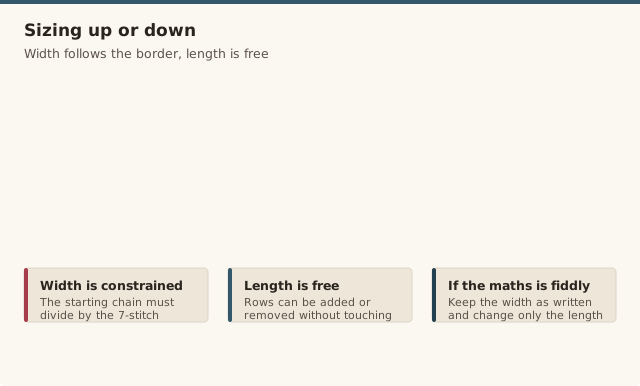
To resize this blanket, change your starting chain by a number that keeps the shell repeat dividing evenly, since the border round depends on a consistent stitch count to land back at the start cleanly. At this gauge, roughly 14 single crochet stitches equal 4 inches, so plan any width change in multiples that work with both the gauge and the 7-stitch shell repeat (2 skipped, 1 shell stitch, 2 skipped, 1 slip stitch). If the arithmetic feels fiddly, it's simplest to keep the width as written and only add or remove rows to change the length, since length has no effect on the shell repeat at all and can be adjusted freely.
Care & washing
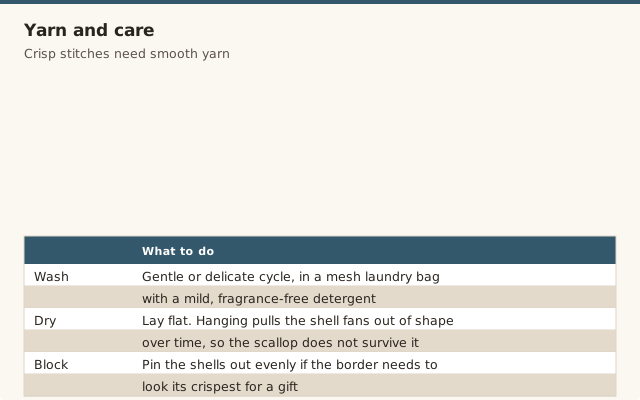
Wash on a gentle or delicate cycle in a mesh laundry bag with a mild, fragrance-free detergent, and lay the blanket flat to dry rather than hanging it. The shell border especially benefits from drying flat, since hanging can pull the fans out of shape over time. Our guide to blocking crochet covers how to pin the shells out evenly if you want the border looking its crispest for a gift.
Common mistakes & fixes
Mistake: skipping the plain single crochet foundation round and working the shells directly into the blanket body.
Fix: always work the foundation round first. It evens out the row-end stitches along the sides, giving the shell round a consistent base and preventing the border from puckering.
Mistake: the shell repeat not landing evenly at the end of the round, leaving a mismatched partial shell.
Fix: count your foundation round's total stitches before starting the shell round and check it divides evenly by the 7-stitch repeat; adjust the corner stitch groupings slightly rather than the shell count itself if it's off by a stitch or two.
Mistake: working the 5 double crochet shell too tightly, so the fan doesn't spread and lie flat.
Fix: loosen your tension specifically for the shell stitches, or go up half a hook size for just the border round if your shells consistently look cupped rather than flat.
Mistake: treating the turning chain as a stitch on the plain single crochet body rows.
Fix: the ch 1 at the start of each body row does not count as a stitch; work your first single crochet into the first real stitch of the row.
Mistake: choosing a fuzzy or novelty yarn that blurs the definition of the shell stitches.
Fix: use a smooth, machine-washable worsted-weight yarn. The shell border's appeal depends on crisp, visible stitch definition that a fuzzy yarn tends to obscure.
Our pick
Yarn
Lion Brand Babysoft Yarn
A soft, machine-washable worsted-weight yarn with clean stitch definition, ideal for showing off a shell border clearly.
What is the easiest border for a crochet baby blanket?
A shell-stitch scalloped border is one of the easiest decorative borders, since it's just one repeating group of stitches worked into a plain single crochet edge. It looks far more finished than a plain border for barely any extra effort.
How do you crochet a scalloped shell border?
Work a foundation round of single crochet first, then on the next round, skip two stitches, work five double crochet into the next stitch, skip two stitches, and slip stitch into the next stitch. Repeat that sequence all the way around to create the scalloped shell shape.
What size should an easy baby blanket be?
This pattern finishes around 30 by 34 inches including the border, a versatile size for the crib, the stroller, and tummy time. Anywhere from 24 to 36 inches on a side is a common baby blanket range.
Why is my shell border coming out uneven?
This almost always means the single crochet foundation round wasn't divisible evenly by the shell repeat, or a stitch was skipped or added somewhere along the edge. Count your foundation round stitches before starting the shell round and adjust the corner stitch counts slightly if needed so the repeat comes out even.
What yarn is safe for an easy baby blanket?
A soft, machine-washable acrylic or cotton yarn labelled safe for babies is the standard choice, since this blanket will be washed constantly. Avoid novelty or fuzzy yarns with loose fibres, and keep the body of the blanket in the dense single crochet stitch shown here rather than substituting a lacier stitch for a newborn.
Is this easy baby blanket pattern different from your other baby blanket patterns?
Yes. This one uses a single crochet body with a scalloped shell border. Our half double crochet baby blanket pattern uses a taller, faster-growing stitch with a plain single crochet border, and our baby lovey pattern is a smaller comfort blanket with an attached amigurumi head rather than a plain rectangle.
Can I wash a crochet baby blanket in the washing machine?
Yes, if the yarn label says machine-washable. Use a gentle or delicate cycle with mild, fragrance-free detergent and a mesh laundry bag, then lay it flat to dry so the shell border keeps its shape.
Nora has been teaching crochet for 12 years, from absolute beginners to people coming back to the craft after decades away. She started CrochetGuides to write the clear, honest instructions she wishes she'd had when she was learning — the ones that actually work the first time.
CrochetGuides is a participant in the Amazon Services LLC Associates Program. As an Amazon Associate we earn from qualifying purchases, at no extra cost to you.