How to Fix Uneven Tension in Crochet
If your rows get looser as the evening goes on, or your gauge swatch never matches your actual project, the fix is usually in your grip, not your ability.
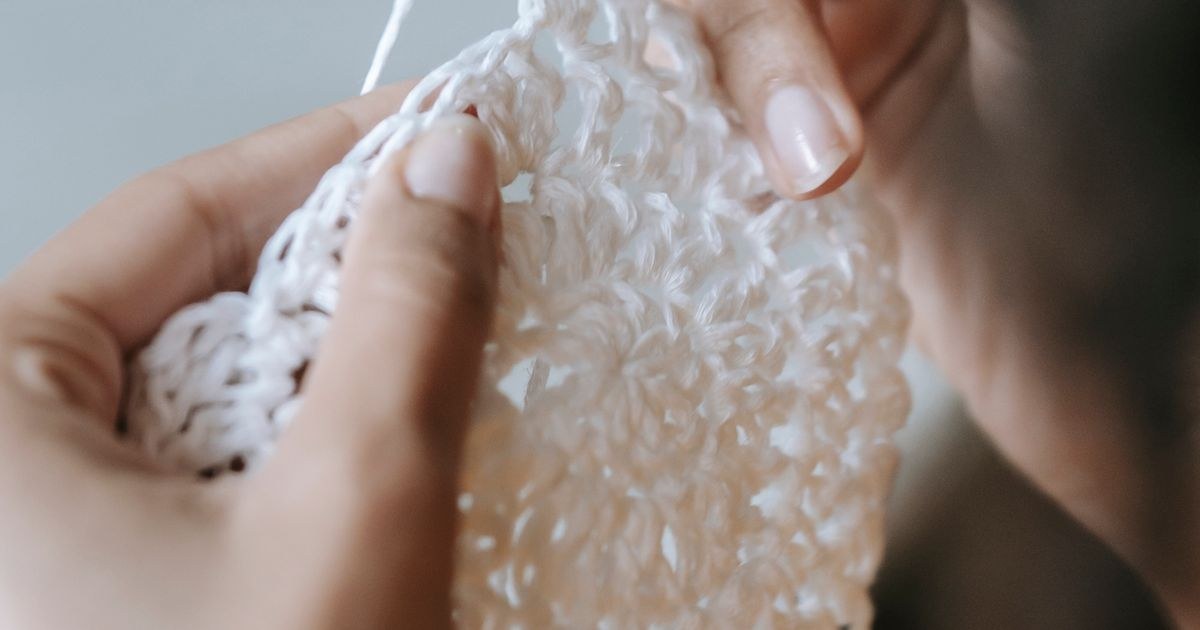
A student once brought me a scarf that was noticeably wider at one end than the other, shaped almost like a fan. She'd checked her stitch count on every row and it never changed, so she was baffled about how the width had shifted. What had actually happened was completely ordinary: she'd started the project tightly, focused and a little nervous about a new stitch pattern, and by the last third had relaxed into it enough that her tension had loosened noticeably, row by row, without her ever consciously deciding to hold the yarn differently.
Tension drift like that is one of the most common things I see in class, and it's also one of the most misunderstood, because it doesn't feel like a technique problem from the inside. It feels like bad luck, or evidence that you're just not a "consistent" person. In reality, tension is a physical habit, built from how your hand grips the hook and how the yarn runs through your fingers, and like any physical habit it responds directly to noticing it and practicing it, not to trying harder in the moment.
This guide covers why tension varies within a single project, how to figure out whether the cause is your grip, your yarn hold, or something about the specific stitch you're working, and what to actually do about a project where the tension has already gone uneven. It ends with a few short drills that build lasting consistency, the same ones I give students who've struggled with this for years and finally see it click.
What crochet tension actually is
Tension is how much resistance you put on the yarn as it feeds through your fingers and around the hook, and it determines how tightly or loosely each stitch sits. Tighter tension produces smaller, denser stitches and a stiffer fabric; looser tension produces larger, more open stitches and a softer, sometimes floppier fabric. Neither is "correct" on its own — what matters is that your tension stays consistent enough, throughout a project, that a pattern's gauge and finished measurements hold true.
Tension is entirely a function of your own hand mechanics, which is why two people using the identical hook and yarn will often produce swatches of noticeably different sizes. It's also why a pattern's gauge instruction always comes with a caveat to check your own swatch rather than trust the hook size alone.
Why tension varies within a single project
Uneven tension almost always comes down to one of four things changing partway through a project, and it's worth figuring out which one is yours before you try to fix anything.
- Fatigue. For most crocheters, the hand's grip gradually relaxes the longer you work in one sitting, which loosens tension row by row without any conscious change in technique. This is the single most common cause of the "wider at one end" effect.
- Concentration. New or unfamiliar stitches often get worked more tightly, because focusing hard on getting the motion right tends to tense the whole hand, not just the fingers doing the work. As the stitch becomes familiar, that extra tightness eases off.
- Distraction and stop-start sessions. Picking a project up and putting it down across many short sessions, especially while watching something or talking, makes it harder to return to the exact same grip each time, which shows up as visible bands of tighter or looser rows.
- Switching yarn or stitch pattern mid-project. A change in yarn texture, or moving from a dense stitch to an open one, changes how much resistance your fingers feel even if your grip itself hasn't changed, which can look like a tension problem but is really a material or stitch-pattern change.
How your grip and yarn hold affect tension
There are two grips in common use for the hook — the pencil hold, gripping it like a pencil from above, and the knife hold, gripping it overhand like a knife — and neither one is inherently more consistent than the other. What matters more is how you hold the working yarn in your other hand, since that's what actually controls tension.
The most common method wraps the yarn around your pinky finger, under your middle finger, and over your index finger, using the index finger to control how much resistance the yarn feels as it feeds through. Some crocheters instead wrap the yarn once around their index finger only, or use their whole hand in a looser wrap. Any of these can produce even tension; the problem isn't which method you use, it's changing between methods, or gradually loosening your wrap, partway through one project.
If you're not sure how your hold compares, watch your non-hook hand for a few rows near the start of a session and a few rows near the end. If the yarn is visibly looser around your fingers later on, that's your fatigue pattern showing up directly, and it's the thing to correct for rather than the stitches themselves.
Using a gauge swatch to diagnose your tension
A gauge swatch isn't just a pre-project chore, it's a diagnostic tool. Work a swatch of at least 4x4 inches (10x10cm) in the pattern's stated stitch, then measure how many stitches and rows fit into 4 inches (10cm) and compare that to the pattern's stated gauge.
| Your swatch | What it means | What to do |
|---|---|---|
| More stitches than stated | Your tension is tighter than the pattern expects | Go up a hook size and re-swatch |
| Fewer stitches than stated | Your tension is looser than the pattern expects | Go down a hook size and re-swatch |
| Matches on stitches, off on rows | Your row height differs even though stitch width is right | Adjust turning chain height or check you're not splitting stitches |
Beyond matching a specific pattern, working a swatch at the start and end of a session is a quick way to catch drift before it becomes visible in the actual project — if the two swatches come out different sizes, you now know your grip changed over that session, and by how much.
Fixing tension in a piece you've already started
If you're partway through a project and notice the tension has shifted, the right fix depends on how visible the change is.
For mild variation — the kind you can see if you look closely but that doesn't obviously distort the shape — blocking is usually enough. Wet blocking relaxes the fibers and evens out small differences in stitch size, especially on wool or cotton, and is worth trying before you consider frogging anything. Our guide to blocking a crochet project covers the full process.
For more significant drift, like a scarf that's visibly wider at one end, blocking alone won't fully correct it, because the stitches themselves are different sizes, not just differently shaped. In that case, identify roughly where the tension shifted (comparing widths every ten rows or so is an easy way to narrow it down), and frog back to just before that point. It's a harder decision to make partway through a project, but it's much less work than finishing a piece you're not happy with and discovering blocking can't rescue it.
If you're not sure how far back the shift started, stitch markers placed every ten rows as you go make this kind of troubleshooting much faster on your next project, since you can measure section by section instead of guessing.
Drills that build lasting consistency
Tension consistency is a muscle-memory skill, and like any muscle-memory skill it improves fastest with short, focused, repeated practice rather than trying to "concentrate harder" during an actual project.
- The five-swatch drill. Work five identical small swatches, one right after another, in the same stitch and yarn. Measure each one. Most people see the sizes converge by the third or fourth swatch as their hand settles into a rhythm.
- The interrupted swatch. Work a swatch, stop for five minutes, then finish it. Compare the tension before and after the break. This directly tests how much your grip resets between sessions, which is exactly the scenario that causes visible banding in real projects.
- Row-count checks. Every ten rows on an actual project, measure the width against your gauge swatch. Catching a half-stitch drift at row ten is a five-minute fix; catching it at row eighty means deciding whether to live with it or frog back.
- Slow-motion stitches. When learning a new stitch, work the first few repeats slower than feels necessary, paying attention to how much resistance you're putting on the yarn. New stitches are worked tighter than needed far more often than too loose, precisely because concentration tenses the whole hand.
Common mistakes & fixes
Fix: re-check your gauge partway through a long project, especially if you've taken a break of more than a few days, since grip habits can shift between sessions as easily as within one.
Fix: deliberate mid-row correction usually overshoots and creates a second inconsistency layered on top of the first. It's more reliable to reset your grip fully at the start of the next row than to patch individual stitches.
Fix: work through the discomfort with your established hold for that session if possible, and experiment with a new method only between projects, in a dedicated swatch, so you're not introducing a variable mid-piece.
Fix: test with a short swatch at the start and end of a session before assuming your materials are the issue. Materials can make fatigue worse, but they're rarely the root cause of drift on their own.
Fix: take a short break every twenty to thirty minutes and consciously reset your grip when you pick the work back up, rather than crocheting for hours straight and hoping tension holds on its own.
Frequently asked questions
Why is my crochet tension so uneven?
Uneven tension is usually caused by your grip changing over the course of a project, most often loosening gradually as your hand relaxes and fatigues, or tightening when you're distracted or crocheting in short, stressed bursts. It's rarely a sign you're doing something fundamentally wrong.
Does tension get looser or tighter the longer you crochet?
For most people, tension loosens gradually the longer they crochet in one sitting, as the hand's grip relaxes with fatigue. Some people tighten instead, especially when concentrating hard on a new stitch or pattern, so it's worth noticing which direction your own tension drifts.
How do I fix rows that are already uneven?
Blocking evens out mild variation by relaxing and reshaping the fibers, and works well on wool or cotton. For more significant unevenness, identify where the tension shift happened and frog back to that point, since blocking alone won't fully correct a clearly visible band of tighter or looser rows.
What's the best way to hold yarn for consistent tension?
There's no single correct method, but consistency matters more than which one you choose. Wrapping the yarn around your pinky and over your index finger is the most common approach and gives steady, adjustable resistance, but any hold you can repeat the same way every stitch will produce more even tension than switching methods mid-project.
Can a different hook fix uneven tension?
A hook with a grip and shaft you find comfortable can reduce hand fatigue, which is one of the biggest drivers of tension drift over a long project. It won't fix inconsistent tension on its own, but it removes one of the contributing causes, especially on projects you work in long sessions.
How do I know if my tension is too tight or too loose?
Work a gauge swatch and compare your stitch and row count to the pattern's stated gauge over 4 inches (10cm). More stitches than stated means your tension is tighter than intended; fewer means it's looser. If you're not following a specific pattern, tight tension usually shows as stiff, hard-to-work-into fabric, while loose tension shows as a floppy, holey result.
Will practicing swatches actually improve my tension?
Yes. Working short, repeated swatches builds the same muscle memory as any other repetitive hand skill, and most crocheters see a noticeable improvement in consistency within a few practice swatches, particularly if they check their stitch count against a ruler each time rather than practicing without feedback.
CrochetGuides is a participant in the Amazon Services LLC Associates Program. As an Amazon Associate we earn from qualifying purchases, at no extra cost to you.