How to Read a Yarn Label
Every ball band carries the same handful of numbers. Here is what each one means, which two decide the size of what you make, and what still has to be checked with a swatch.
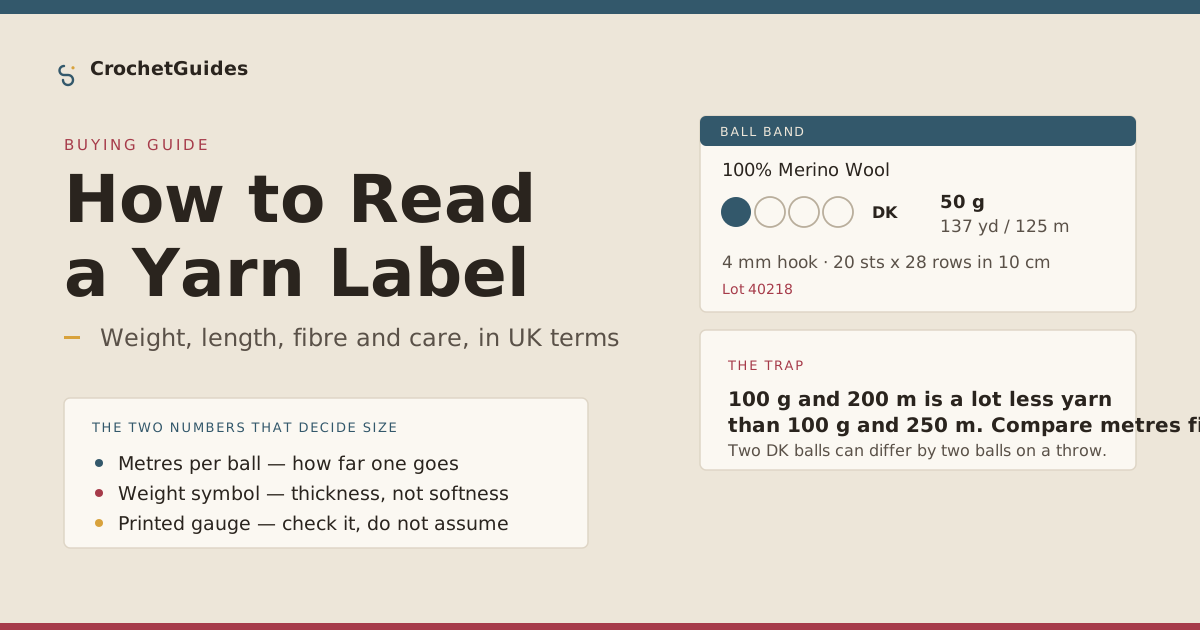
A yarn ball band is about five centimetres long and it answers nearly every question you need to answer before you buy. It tells you what the yarn is made of, how thick it is, how much you are getting, what hook the maker tested it with, and how to wash it. Almost nobody reads all of it, which is why a lot of projects end up the wrong size.
This guide walks the band from top to bottom, in the order the information matters when you are choosing yarn for a specific pattern. It works for UK and US labels, since the same facts appear on both with different names.
What is printed on the band
Eight pieces of information appear on almost every ball band. They are not equally important, and the two most important ones are rarely the first two you look at.
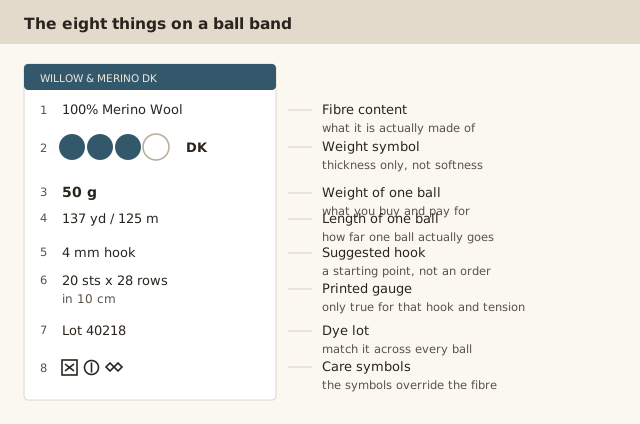
Read them in this order and you will never be surprised by a ball: fibre content, then weight symbol, then length, then everything else. The rest of this guide follows that sequence.
Fibre content
The fibre list is a percentage breakdown that must add up to 100. It tells you how the finished fabric will behave far more reliably than the weight symbol does, and it is the first thing worth reading.
Percentages are listed in descending order, so the fibre named first is the largest component. 100% merino is pure wool. 80% merino, 20% acrylic is mostly wool with acrylic added for strength and to reduce cost and shedding. 70% acrylic, 30% wool is the other way round, and it will feel and wear differently from the first one despite looking similar on the shelf.
| Fibre | Washing | Drape and stretch | Worth knowing |
|---|---|---|---|
| Merino wool | Hand wash cool, dry flat | Soft, springy, warm | Superwash versions are machine washable but still felt if washed hot or dried |
| Acrylic | Machine wash cool | Light, firm, little drape | Hardest-wearing and cheapest; pills over time |
| Cotton | Machine wash cool | Stiff, grows when worn | Crocheted cotton relaxes and lengthens after a few wears |
| Alpaca blend | Hand wash cool, do not wring | Heavy, fluid, very warm | Grows noticeably in length when hung; block flat, never on a hanger |
| Mohair blend | Hand wash cool | Airy, fuzzy halo | The halo makes a dense fabric look open; use a larger hook than you think |
One fibre detail catches people out: superwash merino has been treated so it will not felt in a normal wash. It is not indestructible. Hot water, agitation and tumble drying will still felt it, and a project that shrinks will not come back. If you are buying superwash for a baby blanket, that is a sensible choice precisely because the risk of an accidental hot wash is high.
Our guide to yarn types covers the fibre families in more depth, and how to wash crochet items has the washing instructions fibre by fibre.
The weight symbol
The weight symbol is a row of filled circles, one to six, with a word beside it. One filled circle is lace weight. Two is sport or fine. Three is DK, double knit. Four is worsted or aran, five is chunky, and six is bulky. The letters exist because UK and US shops disagree about what to call each step.
What the symbol does not do is describe softness. It measures the diameter of the spun yarn. This matters more than it sounds, because two DK yarns can be completely different yarns:
- A woollen-spun DK is soft, fuzzy and warm. It hides the shape of the stitch you are working.
- A worsted-spun DK is smoother and more defined. It shows off texture stitches and drapes more cleanly.
- A cotton DK is firm, matte and crisp. It holds a sharp edge where wool would not.
All three are DK. They need different hooks, they block differently, and they do not wash the same way. Our guide to yarn weight covers the categories in full, including where DK sits between sport and worsted.
Ball weight and length
These are the two numbers that decide how big your project ends up, and they are the two most often confused. Both are on the band and they mean different things.
- Ball weight (50 g, 100 g) is what you pay for and how heavy the ball feels in your hand.
- Length (125 m, 250 m) is how much actual yarn the ball contains.
Two balls of different weight can contain the same length, which is how a 100 g ball can hold less yarn than a 50 g ball. Thickness is the variable that separates them.
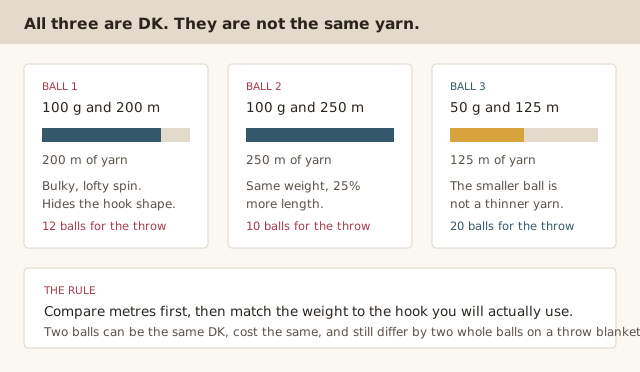
When you are buying yarn for a pattern, do the division before you go shopping. Take the metres the pattern needs and divide by the metres per ball. If the answer is 10.5, buy eleven balls, not ten, because running out three rows from the end is a miserable way to lose a project.
Our guide to estimating how much yarn you need covers the swatch-based method, which is more reliable than any label figure when you are substituting.
The hook size and the printed gauge
The band usually suggests a hook size and prints a gauge next to it. Both are useful, and both are frequently over-trusted.
The suggested hook assumes the maker's own tension. A tighter crocheter working the same hook makes denser fabric with a different stitch count, and the finished piece comes out smaller than the pattern intended. The printed gauge is true only for the hook printed beside it, in the stitch the manufacturer used, at their tension. Change the hook by even half a millimetre and the printed gauge stops applying.
The reliable order is: work a swatch in the stitch the pattern uses, measure honestly, and adjust the hook until your gauge matches. If it is off, change the hook, not the stitch count in the pattern. How gauge actually works covers the measurement properly, and the hook size conversion chart helps when you need to go up or down a size.
Substituting yarn
Substituting means using a different yarn in a pattern written for another. It is completely legitimate and it is where most sizing disasters happen, because the weight symbol is a much weaker guide than it looks.
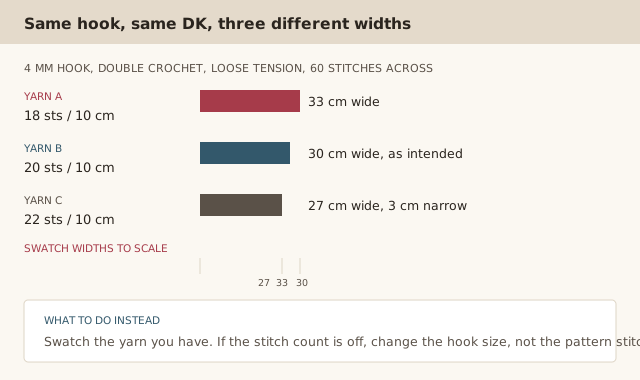
Three DK yarns on a 4 mm hook can easily differ by four stitches per 10 cm. Across a panel needing 60 stitches, that is the difference between 33 cm and 27 cm of finished width. On a cardigan, that is a garment that does not close or one that does not meet in the middle.
A workable substitution checklist, in order:
- Match the weight symbol. This is necessary but nowhere near sufficient.
- Compare metres per 100 g, not metres per ball. A 50 g ball and a 100 g ball of the same yarn tell you the same thing once you normalise.
- Check the fibre. A wool to cotton swap changes both the wash routine and how much the finished fabric grows.
- Swatch and measure before you commit to the whole project.
Nm, Tex and wraps per inch
Alongside the symbol system, some labels print a linear density number instead. All three systems measure thickness and all three scale so that higher means thinner, but they are not interchangeable at a glance.
| System | What the number means | Typical DK equivalent |
|---|---|---|
| Nm (metres per kilogram) | Metres of yarn in one kilogram | Around Nm 2.8–3.2 |
| Tex (grams per 1000 m) | Grams needed for 1000 metres of yarn | Around Tex 300–350 |
| Wraps per inch | How many times the yarn wraps round a 1 inch ruler | About 8–9 wpi |
The practical point is that only one of these appears on any given ball, and UK, US and European brands use different ones. If a pattern specifies a weight you cannot match, converting between the systems is faster and more reliable than guessing from the colour. Higher numbers mean thinner yarn in all three, which is the one reliable shortcut.
Dye lot and care
Two small items are worth reading before you open the ball.
The dye lot or batch number identifies the dye batch. Yarns dyed in the same batch match closely; different batches of the same colourway can differ visibly, especially in variegated and hand-dyed skeins. If a project needs several balls, buy them all at once and check the lot numbers match. Many shops will not hold a lot across visits, so for a large project it is worth asking.
The care symbols are the standard washing pictograms and they override whatever you would assume from the fibre. A symbol usually sits on the band or on a hanging tag rather than printed as text, which is why it is easy to miss. Check them before buying if the item will be washed often or by someone else, such as a baby blanket or a gift. Full detail is in how to wash crochet items without ruining them.
What the label cannot tell you
Some things genuinely are not on the band, and no amount of reading will produce them.
- How the yarn behaves after washing. Shrinkage, felting and growth only show up once the piece has been through a wash. Buy a spare ball and test it.
- How it handles your tension. The printed gauge describes the maker, not you.
- Whether the colour suits the rest of your project. Lighting and screen differences make photos unreliable. If it matters, see the actual yarn.
- How evenly it is spun. A slubby or thick-thin yarn looks rustic in the ball and uneven in the fabric. This is a description the label may simply omit.
None of these are reasons to avoid buying yarn. They are reasons to buy one ball first, work a small swatch, and wash it before committing to a full blanket.
Frequently asked questions
What is the most important number on a yarn label?
Length in metres or yards, because that is what determines how much you can make. The weight symbol only tells you how thick the yarn is. Two yarns can share the same weight symbol and still differ by a quarter of their length, which on a blanket is worth two whole balls.
What does the yarn weight symbol actually tell me?
Thickness, measured as the diameter of the spun yarn, and nothing else. It does not describe softness, warmth, drape or how much the yarn springs back. A merino DK and a stiff cotton DK carry the same symbol while behaving completely differently in a finished piece.
Should I follow the hook size on the ball band?
Treat it as a starting point rather than an instruction. It assumes a particular tension and a particular stitch, and the maker's own swatching is not the same as yours. Work a swatch in the stitch the pattern uses and adjust the hook until your gauge matches. If you follow the band blindly, a tighter crocheter can end up with a piece several centimetres too small.
Is DK the same as worsted or light yarn?
They are close but not identical. DK is usually sold as 8-ply in the UK and typically runs 280 to 320 metres per 100 g. US light or worsted yarn runs roughly 200 to 250 metres per 100 g. Working DK at the hook suggested for worsted produces a denser, firmer fabric that often comes out smaller than intended.
Can I substitute one DK yarn for another?
Yes, but check the metres per 100 g and then swatch. Two DK yarns can differ by several stitches per 10 cm on the same hook, which is several centimetres on a finished panel. Substitute, swatch, and if the gauge is off, change the hook rather than the pattern.
What do Nm, Tex and wraps per inch mean?
They are three different linear density systems used in different markets. Nm is metres per kilogram, Tex is grams per 1000 metres, and wraps per inch counts how many times the yarn wraps around an inch ruler. Higher numbers mean thinner yarn in all three, but only one of them is printed on any given ball, so you often need to convert.
CrochetGuides is a participant in the Amazon Services LLC Associates Program. As an Amazon Associate we earn from qualifying purchases, at no extra cost to you.