Single Crochet vs Double Crochet: What's the Difference?
Two of the most common crochet stitches, and how to tell which one a project actually needs.
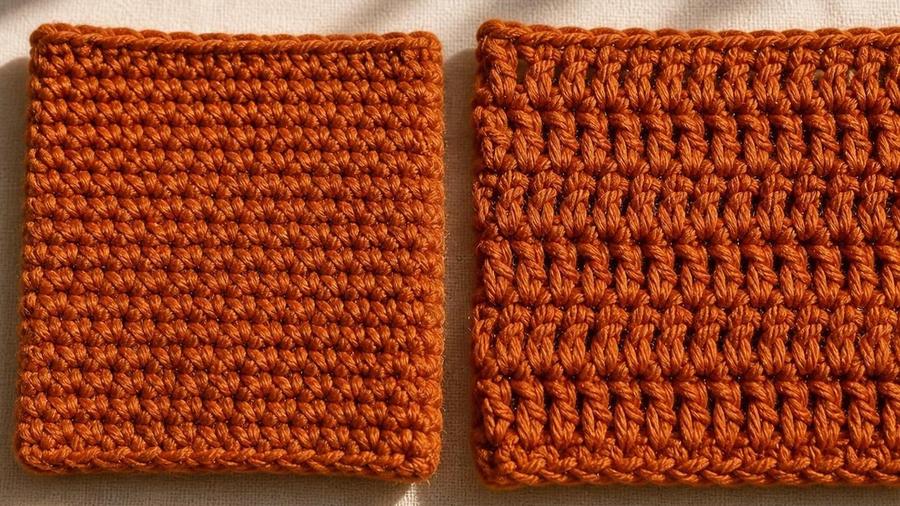
Early on I taught a beginner who could make the neatest single crochet you've ever seen, but panicked the moment a pattern asked for double crochet — she was convinced she'd skipped a whole level of skill. The truth was she already knew both stitches; she just hadn't been shown why they behave differently in fabric. I had her work two small swatches side by side, one of each, and the difference clicked instantly: single crochet stood up dense and sturdy, while double crochet grew twice as fast and draped soft and open. It's the comparison I've repeated in every beginner class since, because picking the wrong one is exactly how a first blanket turns out stiff, or a first toy comes out holey.
How to work single crochet
Steps
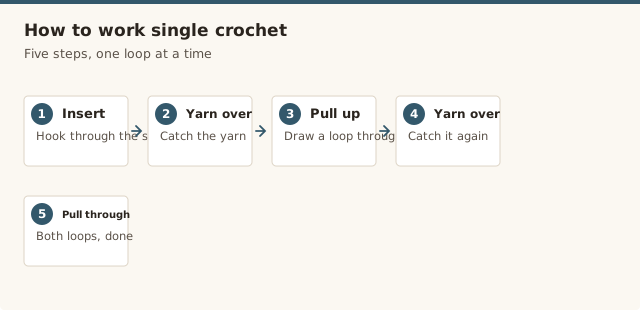
- Insert your hook into the next stitch.
- Yarn over and pull up a loop (2 loops now on the hook).
- Yarn over again and pull through both loops on the hook (1 loop remains — stitch complete).
How to work double crochet
Steps
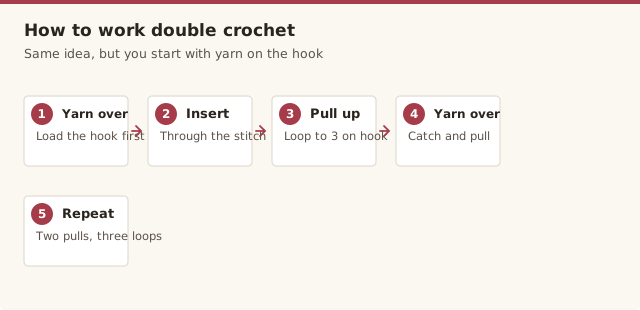
- Yarn over before inserting your hook — this extra wrap is what makes the stitch taller.
- Insert your hook into the next stitch, yarn over, and pull up a loop (3 loops now on the hook).
- Yarn over and pull through the first 2 loops only (2 loops remain).
- Yarn over again and pull through the remaining 2 loops (1 loop remains — stitch complete).
Side-by-side comparison
If you only read one thing on this page, read this table. Every line is a real difference between the two stitches, not filler — the notes underneath explain each one in full.
| Single crochet | Double crochet | |
|---|---|---|
| How tall it is | the base row | roughly twice as tall |
| How it grows | slower — easier to control tension while you learn | roughly twice as fast, row for row |
| Fabric | dense and gap-free | softer drape with small visible gaps |
| Loops on the hook | 2 at the peak | 3 at the peak |
| Extra wrap | none before inserting | yarn over first — this is what makes it taller |
| Turning chain | chain 1, does not count as a stitch | chain 3, does count as the first stitch |
| Use it for | amigurumi, dishcloths, tight bags | blankets, garments, quick makes |
| Learn it first? | yes — almost everyone starts here | once your tension is steady |
Every difference, explained
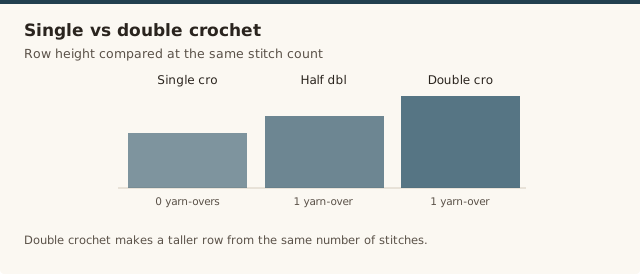
- Height: double crochet stands roughly twice as tall as single crochet.
- Density: single crochet makes a dense, gap-free fabric; double crochet leaves small visible gaps between stitches.
- Speed: double crochet grows a project roughly twice as fast, row for row.
- Best for: single crochet suits amigurumi, dishcloths, and tight bags; double crochet suits blankets, garments, and quick makes.
- Turning chain: single crochet uses a chain 1 that doesn't count as a stitch; double crochet's chain 3 does count as the first stitch of the row.
Where half double crochet fits in
There's a third stitch worth knowing about once single and double both feel comfortable: half double crochet (hdc). It's worked like double crochet's first two steps — yarn over, insert the hook, yarn over and pull up a loop — but then finishes in one motion by pulling through all three loops on the hook at once, instead of two separate steps.
The result sits genuinely in between: taller and faster than single crochet, denser and less holey than double crochet. It's a common choice for scarves and garments that want some drape without the more open, lacy look full double crochet produces — our half double crochet scarf pattern is built entirely around it.
Which should you learn first?
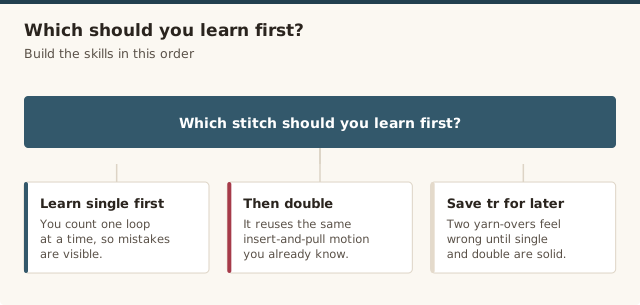
Most crocheters learn single crochet first, since its slower growth makes tension easier to control while you're still getting comfortable with the hook. Our basic crochet stitches guide and easiest first projects both start there before introducing double crochet — and if you're drawn to single crochet's density, our amigurumi guide builds entirely on it.
Common mistakes & fixes
Fix: this almost always comes down to the turning chain. In double crochet, the chain 3 counts as the first stitch of the row, so the first "real" stitch goes into the second stitch, not the first — and the last stitch of the row goes into the top of the previous row's turning chain, which is easy to skip entirely.
Fix: some gap between double crochet stitches is normal, but a very loose yarn-over going into each stitch exaggerates it. Try dropping to a hook one size smaller, which tightens the fabric without changing the stitch pattern.
Fix: this is usually a tension mismatch rather than a stitch-count error. Since double crochet naturally sits looser than single crochet, deliberately loosening your tension slightly on the row just before or after a switch helps the transition blend rather than pucker.
A side-by-side look at both stitches, useful for seeing the height and texture difference in real time.
Frequently asked questions
Is double crochet the same as UK treble crochet?
Yes — UK stitch names shift up one level from US terms (UK dc = US sc, UK tr = US dc), which is why "US terms" matters. See our abbreviations glossary for the full comparison.
Which stitch uses more yarn?
Double crochet grows faster per stitch, but single crochet fabric is denser, so total yarn used for a given finished size ends up fairly similar — density matters more than stitch height.
Can I mix single and double crochet in the same project?
Yes, this is common and gives texture — granny squares, for example, alternate double crochet groups with chain spaces.
Where does half double crochet fit between the two?
Half double crochet sits between single and double in both height and density, using a yarn-over-first step like double crochet but pulling through all three loops at once instead of two separate steps. It's a good middle ground for projects like scarves that want more drape than single crochet without the more open look of double crochet.
Why does my double crochet fabric look holey compared to the pattern photo?
Some visible gaps between double crochet stitches are normal and expected, not a mistake. If the holes look larger than the photo, check your yarn-over tension going into each stitch, and try a hook one size smaller, which tightens the fabric without changing the stitch itself.
Which is better for a beginner's first project, single or double crochet?
Single crochet is the easier place to start, since its shorter stitches grow slowly and make it simpler to keep your tension even and see where each stitch goes. Double crochet is not much harder once you're comfortable, and it makes faster progress, but its taller stitches and counting the turning chain can trip up a first project.
How do I switch from single to double crochet mid-project without a seam?
Work the last single crochet as normal, then chain 2 and turn if you're starting a double crochet row; the chain 2 counts as the first double crochet. Keep your tension slightly looser on the transition rows, since double crochet naturally sits more open than single crochet and the switch can otherwise pucker.
CrochetGuides is a participant in the Amazon Services LLC Associates Program. As an Amazon Associate we earn from qualifying purchases, at no extra cost to you.